To reach a global audience, you need newsworthy content that attracts international press and earns worldwide coverage. In our study of 290 Fractl campaigns from 2014 onward, we secured over 4,000 international placements, enabling deeper brand awareness in new markets.
In this article, we dive into the types of content, formats, and strategies that are most effective in attracting press across cultural and linguistic boundaries. You’ll walk away with actionable insights to optimize your content marketing strategy, enhance brand awareness, and rank in search and social media globally.
Why Global Press Matters for Your SEO and Marketing Strategy
Securing coverage from international media outlets isn’t just about prestige. It also fuels SEO, builds brand authority, and drives traffic from new markets.
Here are a few of the specific benefits of acquiring global press:
- Backlinks from global publishers strengthen domain authority and improve rankings in search engine algorithms.
- Localized media coverage helps you reach entrepreneurs, startups, bloggers, and target audiences in different regions.
- International press acts as social proof, making your brand more interesting to influencers, local media, and content creators.
- It opens doors for lead generation, especially for e-commerce, SaaS, or small business brands that aim to scale globally.
In short, the global press is a pillar of a holistic digital marketing and content creation system.
Global Reach at a Glance: Mapping Our Impact
Our numbers demonstrate that compelling, high-quality content combined with smart promotion yields strong media coverage worldwide:
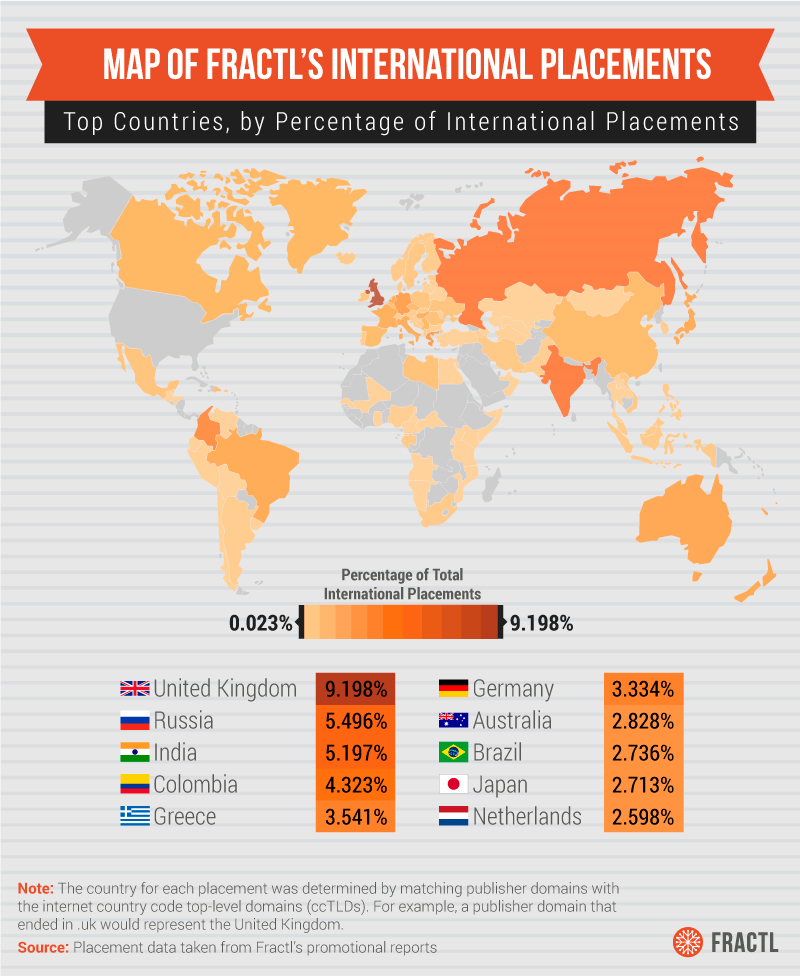
- Fractl’s content has been published in over 130 countries.
- The United Kingdom, Russia, and India consistently rank among the top countries covering our content.
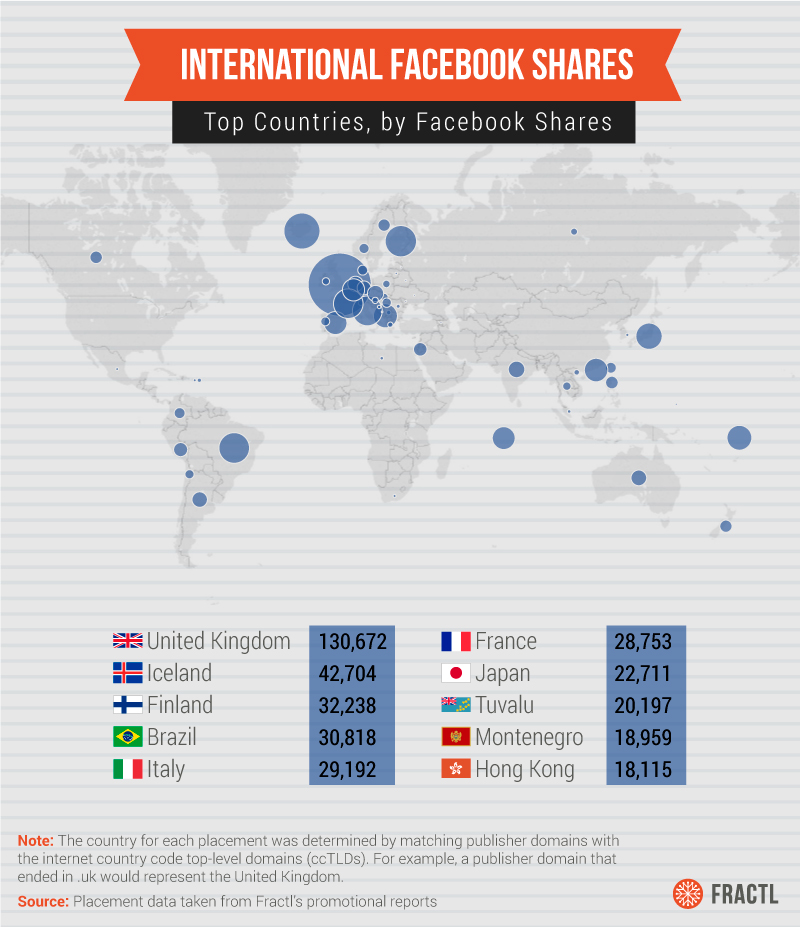
- On Facebook alone, our international placements have led to over 500,000 shares in non‑U.S. markets.
What Vertical Topics Attract International Publishers
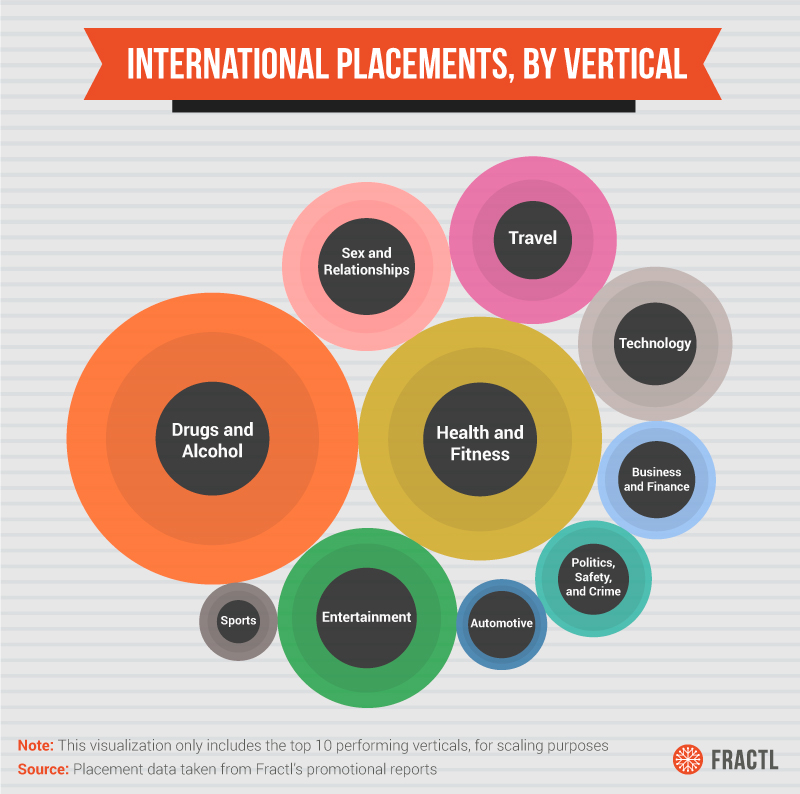
Specific content verticals consistently earn more international media coverage, primarily when they address globally relevant issues and use credible, cross-border data. Case in point: Drugs and alcohol, and health and fitness.
Breaking verticals down by topic
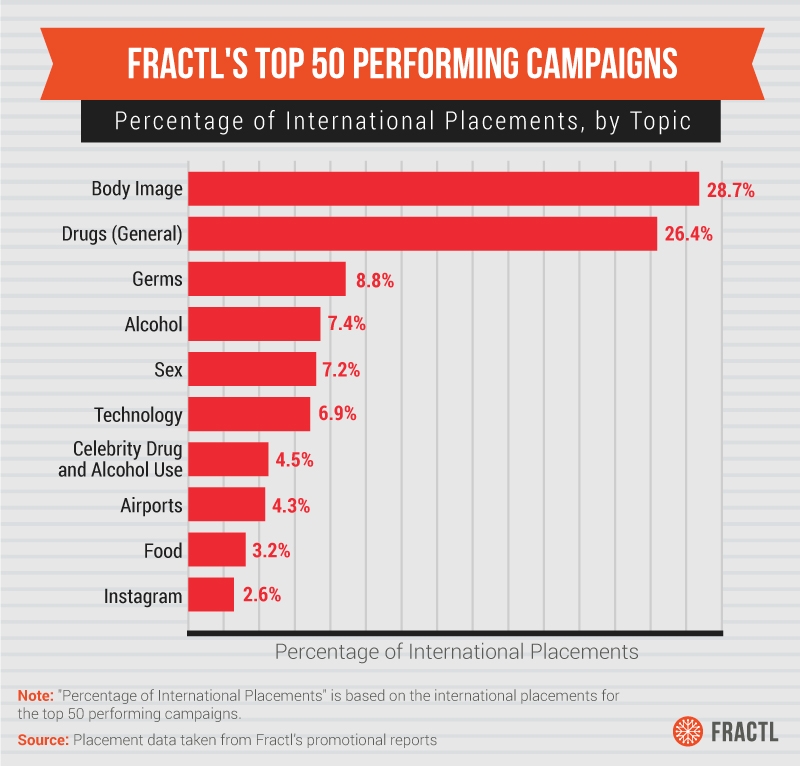
Certain topics consistently dominate international placements, particularly body image. Fractl campaigns in this vertical earned the highest percentage of international placements.
The Domestic-International Link
Our analysis revealed a clear link between domestic and international success. Campaigns that perform well at home are far more likely to attract global media coverage, especially when their framing isn’t limited to the U.S.
Domestic Success Correlates With International Reach
We found that the 50 campaigns with the highest domestic placements were also the top performers internationally, pointing to a correlation between domestic coverage and global reach.
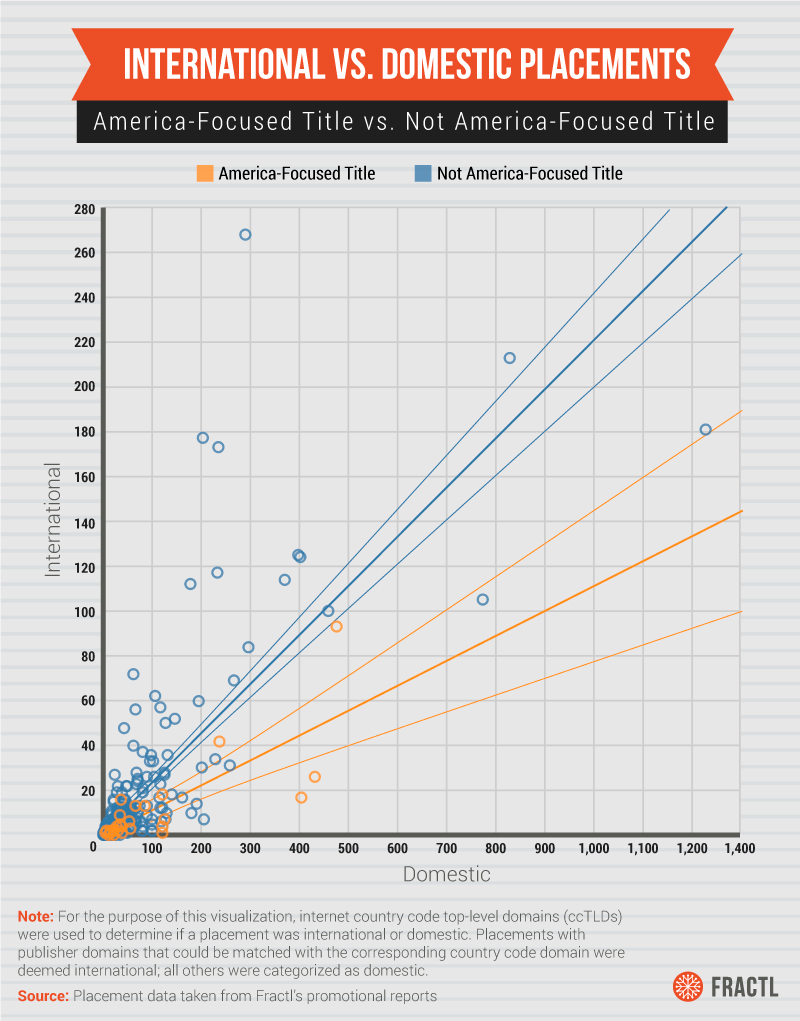
Avoid U.S.-Only Titles
The chart below visualizes the strong correlation between domestic and international media coverage. It compares campaigns with at least 25 international placements, distinguishing those with America-focused titles from those with more globally framed headlines.
Campaigns that avoided a U.S.-centric angle consistently performed better internationally — even when domestic placements were high.
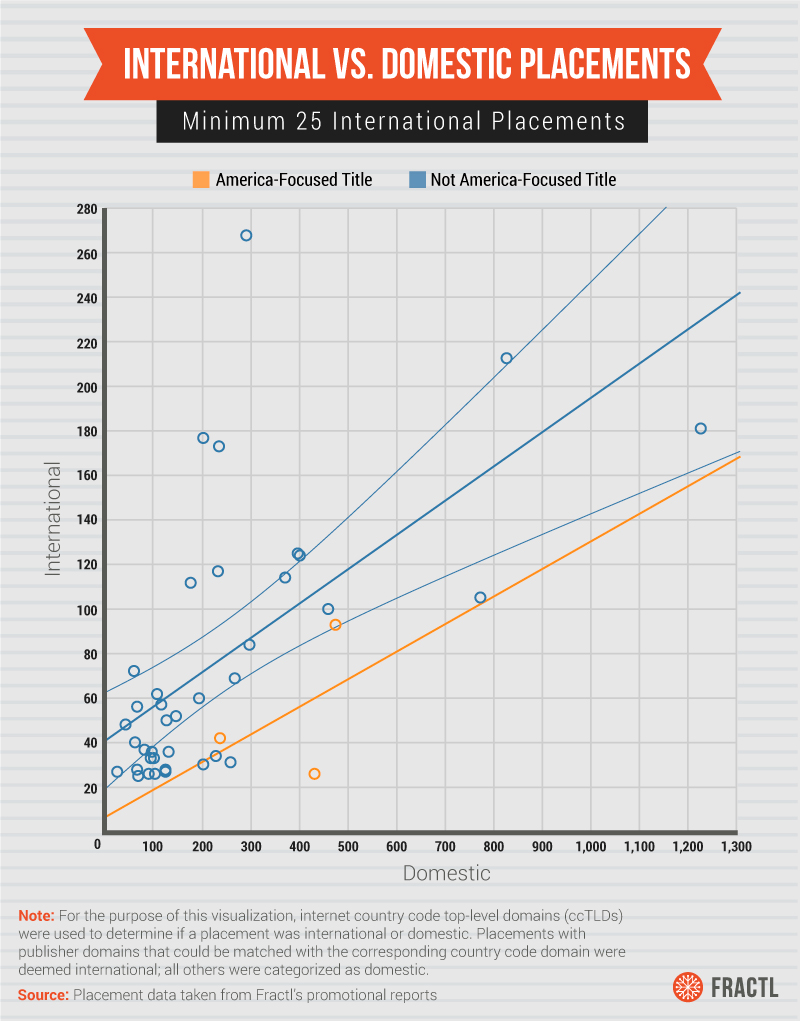
Key takeaway: Universal framing drives broader global engagement. If your goal is global media coverage, avoid framing your content as U.S.-centric, even if your data is U.S.-based.
Best Formats To Capture International Press
The way you package content is equally as important as what you say. Our analysis uncovered clear format preferences among global media outlets.
Top Format Picks
When pitching to international media, align your content format with what editors find most engaging to boost your chances of coverage significantly. Here are some top options:
- Filled and shaded maps. Visualize regional differences across countries, continents, and other areas.
- Images, photos, and illustrations. Universally understandable, ideal when language is a barrier.
- Infographics and data visualization. Combine visuals with key metrics to tell a story at a glance.
Filled maps let international publishers use their local context, even if you didn’t call them out directly. That flexibility is powerful.
The chart below illustrates which data formats led to the highest percentage of international placements among Fractl’s top 50 performing campaigns. Filled maps and images dominate, reinforcing the idea that visual formats with broad, language-independent appeal are most effective for global coverage.
Formats like bar graphs, illustrated charts, and doughnut graphs performed moderately well, while traditional charts, videos, and infographics trailed significantly — suggesting that visual clarity and immediate comprehension matter more than complexity.
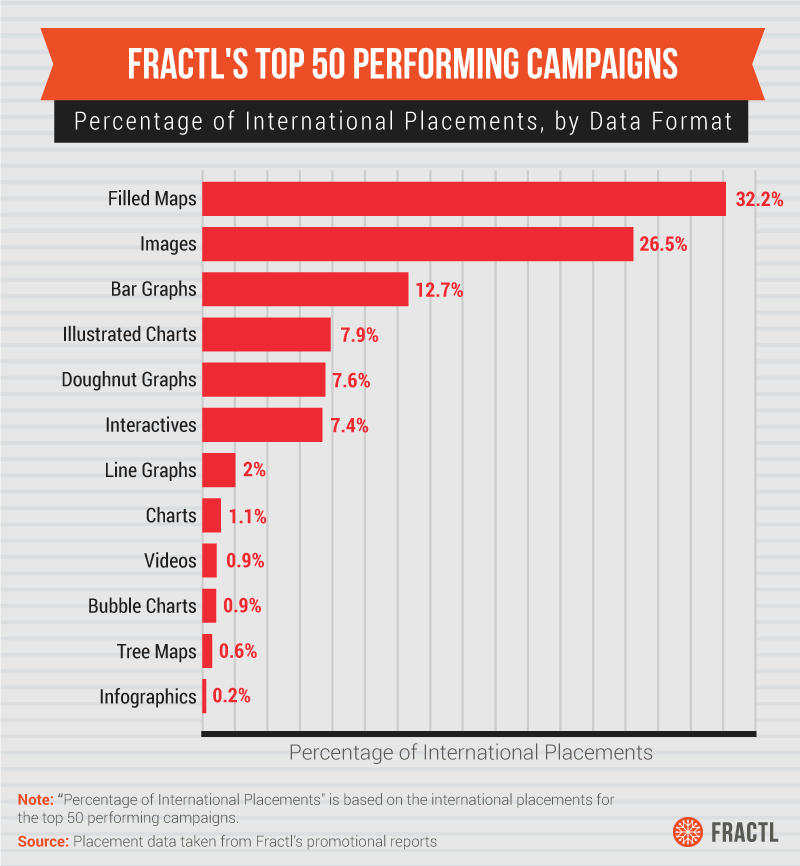
This data makes it clear: If your goal is international press, lean into maps and imagery.
The chart below cross-analyzes data format versus topic for Fractl’s top 50 performing campaigns, offering deeper insight into what combinations perform best globally.
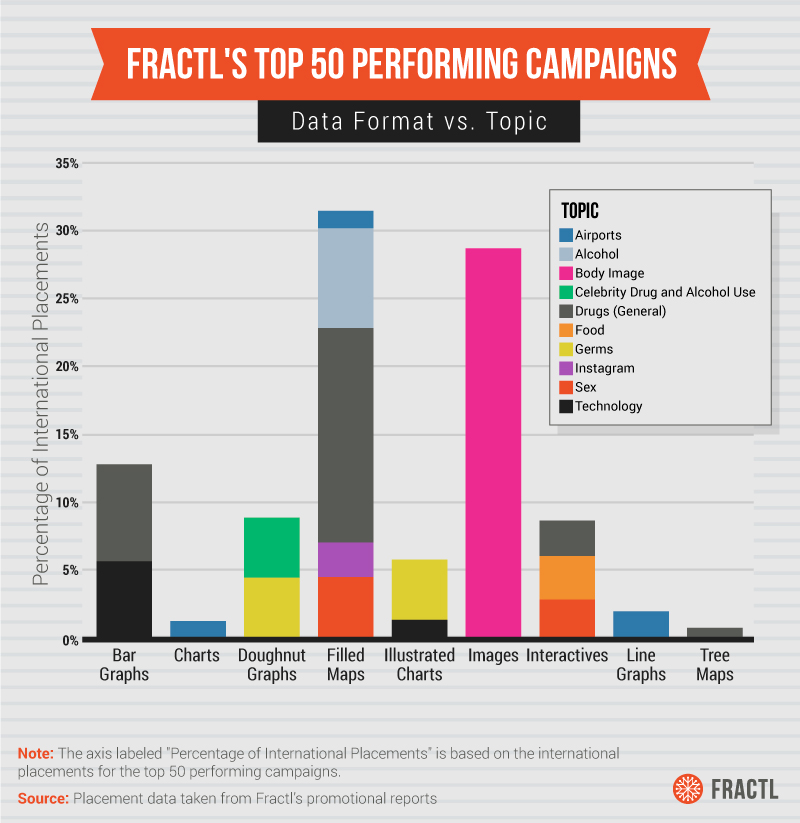
This confirms that filled maps were most effective for topics like drugs and alcohol, where geographic comparison adds value. Meanwhile, images dominated in body image-related content, showing how visual storytelling can cut across cultural and language barriers.
Doing the Data Work Right: What Data Sources International Publishers Prefer
The data sources you choose can make or break your campaign’s global appeal — international publishers prioritize credibility, clarity, and, when possible, cross-border relevance.
Multinational vs. Single-Nation Data
Intuitively, data drawn from multiple countries should perform better, but surprisingly, more than half of our best international campaigns did not have a multinational data source. Still, when international data is available, it increases appeal.
Credibility Is Key
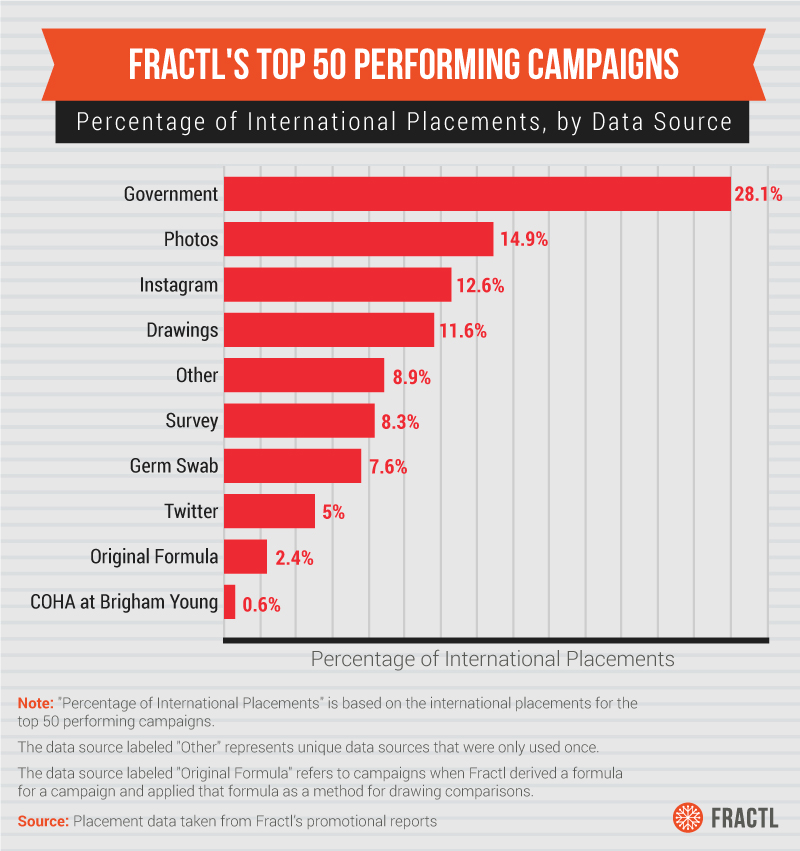
International outlets favor official government sources and well-recognized institutions. After that, they prefer photos, imagery, and other visual content (such as Instagram posts) as data sources. X and text-only social data tend to perform less well.
Best Practices for Data Sources
Strong international stories start with trustworthy, recognizable data. How you source and present that data plays a major role in building credibility across borders.
When finding sources:
- Use regional, European Union (EU), United Nations (UN), or Organisation for Economic Co-operation and Development (OECD) sources when possible.
- Where public data is scarce, partner with local institutions or non-governmental organizations (NGOs).
- Supplement with visual media (photos, maps, charts, etc.).
- Cite sources clearly and explicitly to build trust.
If the data aren’t there, most times, neither is the story, nor are the key takeaways from the analysis. It doesn’t matter how innovative or groundbreaking a topic or idea is if it can’t be proven. International publishers clearly have tendencies when it comes to what data sources they like to publish.
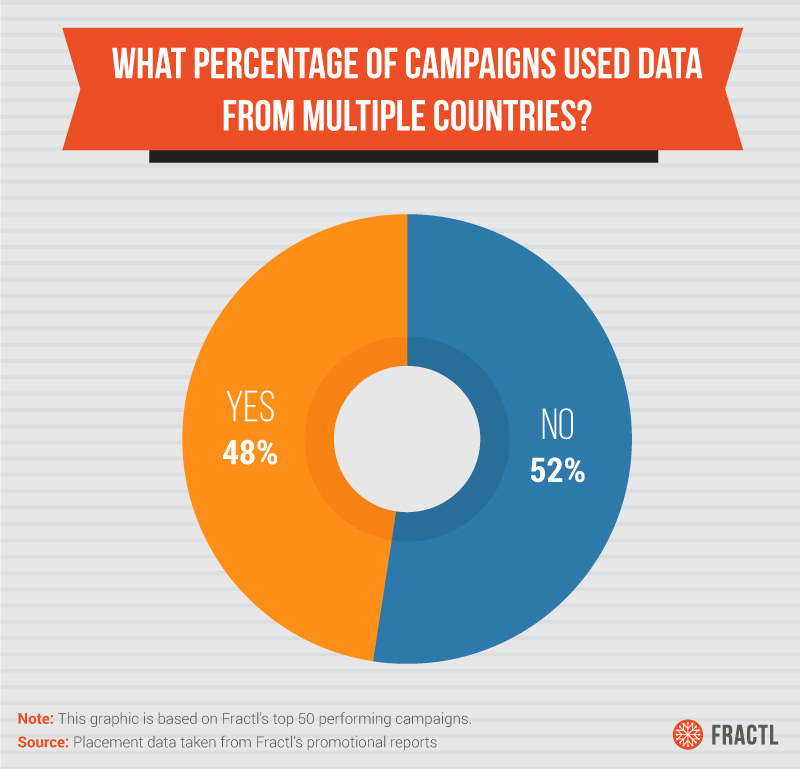
We also looked at whether or not the majority of these campaigns pulled data from multiple countries. It stands to reason that this would instantly make content more appealing to publishers outside of the U.S. However, more than half of our best-performing international content did not have a strategic, multinational focus.
Steps To Create Press-Worthy Global Content
Creating content that earns international media attention requires more than a good idea. Following is a repeatable process you can use to blend strategy, storytelling, and smart promotion.
1. Brainstorm Global Relevance
To consistently land international coverage, teams need a clear, strategic workflow, not just inspiration.
- Start from universal themes (e.g., mental health, gender, climate).
- Then, narrow those themes into topics that align with your expertise or brand.
- Consider cultural differences, local regulations, or demographics that will make the story more intriguing in target regions.
2. Collect or Partner for Data
Credible, comparative data is the foundation of global stories, whether you’re sourcing it yourself or collaborating with reliable partners.
- Choose official or trusted sources, especially those from governmental or open sources.
- If you can’t find multinational data, segment national data but present it in a global comparison.
- Consider localization to use as examples — e.g., gather complementary local stats or social data.
3. Choose the Right Format
The format you choose can make or break your pitch, especially when appealing to editors across different languages and cultures.
- Employ filled maps and images when applicable.
- Use infographics or interactive visuals for complex datasets.
- Avoid formats that rely heavily on text, unless you pair them with engaging visual elements.
4. Write a Universal Narrative
Writing for a global audience requires stripping away assumptions and crafting a story that resonates across cultures.
- Keep titles and headlines neutral (don’t limit to one country).
- Use clear, concise language that minimizes idioms and local references.
- Use a strong lede or hook that appeals across borders.
- Integrate your target keywords (SEO, global marketing, content creation, outreach, localization, etc.).
5. Promote Mindfully
To get global coverage, you need to share your content with everyone.
- Pitch to international journalists, bloggers, and media outlets (not just the U.S.).
- Use translators or native-language writers to help with outreach.
- Leverage LinkedIn, work with local influencers and micro-influencers, and use local social media platforms.
6. Measure and Iterate
Once your content is live, analyze its performance across regions to build on momentum and improve your next international campaign.
- Track both domestic and international placements.
- Monitor referring domains, traffic, and keyword performance via tools like Ahrefs.
- Use geography and demographics of coverage to refine your next campaigns.
- Apply learned media coverage to future content creation and marketing strategy.
Real-World Examples and Mini Case Studies
To see what works in practice, here are a few examples of global content campaigns that successfully earned international coverage. Each one showcases a different approach and highlights the impact of format and narrative in securing press across borders.
Adobe Express: The Vibiest Cities in the UK
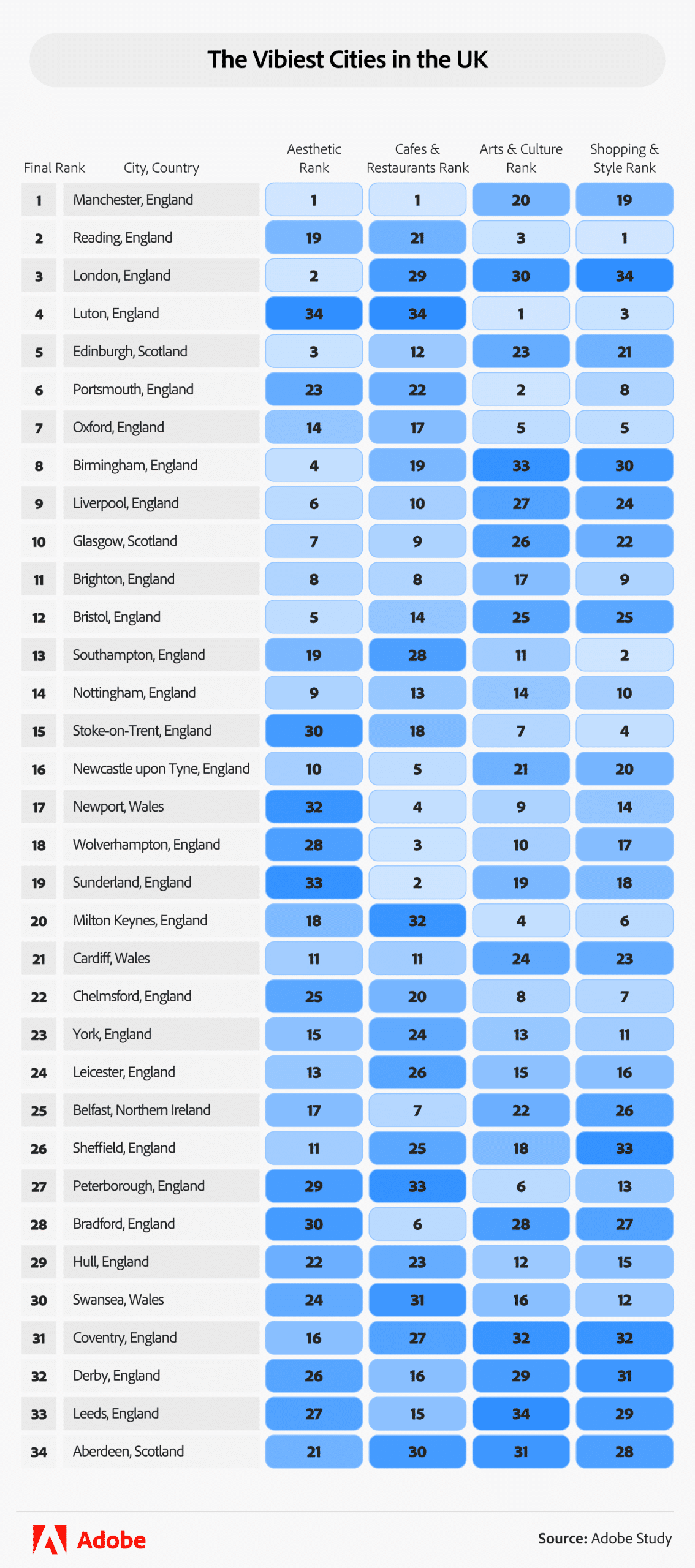
Our 2025 campaign for Adobe Express, “Vibiest Cities in the UK,” analyzed Instagram and Yelp data from 34 UK cities to reveal where culture, creativity, and community thrive most. By quantifying social buzz and local venues — from cafes to galleries — the campaign offered an engaging, data-driven look at urban “vibe.” Its accessible topic and regional insights helped it earn coverage in major local outlets such as the Daily Record and Manchester World, showing how visually appealing, lifestyle-focused data stories can resonate across audiences and media markets.
Fractl’s Gig Platform Client
In a campaign for a gig economy platform, Fractl used data journalism to tell a research-driven story about freelance job growth. The project married credible data with strategic outreach, ultimately doubling backlinks in just six months.
While not as visually rich as the others, this example illustrates that international press can still be earned through rigorous analysis and a compelling narrative arc. It also shows how SEO objectives can align with content strategies, proving that global interest often follows quality insights, even without highly visual formats.
Common Pitfalls To Avoid
Even strong content ideas can fall flat if they’re packaged or promoted without a global lens. When planning and executing your campaign, try to stay away from these common missteps that can limit international reach:
- Using titles that limit appeal to one country
- Leaning too heavily on text or narrative without visual support
- Relying on obscure or weak data sources
- Not adjusting outreach to international markets
- Forgetting to localize when pitching (language, cultural norms)
Bringing It All Together: How To Scale Your Content for Global Reach
Creating content that attracts international media is neither magic nor mystery — it’s an intersection of solid data journalism, compelling visuals, and strategic content marketing. By starting with global relevance, choosing strong data sources, and formatting your work for cross-cultural appeal, you can expand your brand’s reach far beyond your home market.
If you’d like help ideating, executing, or promoting global campaigns (including SEO, link building, and international outreach), let’s talk. Explore our portfolio and case studies to see examples of how we help scale presence globally.
Methodology
We analyzed 290 Fractl campaigns (2014 to present) and logged over 4,000 international placements. We mapped publisher domains to country codes (ccTLDs); unmatched domains defaulted to domestic classification.