Search engine optimization (SEO) powers visibility online, yet many professionals — including business owners — still don’t fully understand how SEO works or why it matters. We surveyed 977 Americans (394 of whom were business owners) to gauge real-world knowledge about SEO concepts, strategies, and impact.
The findings exposed a widespread SEO knowledge gap, with nearly half of the respondents unsure about fundamental concepts like backlinks and organic search. This article unpacks the results, explores how those gaps could affect your SEO strategy, and outlines how better content optimization, keyword research, and technical SEO practices can help close that gap — driving stronger search engine results and business growth.
Do Business Owners Understand SEO the Least?
Among the 977 people surveyed, business owners made up about 40% of participants. Despite their role in shaping digital marketing and content strategy, nearly 25% of business owners reported being either vaguely or not at all familiar with SEO.
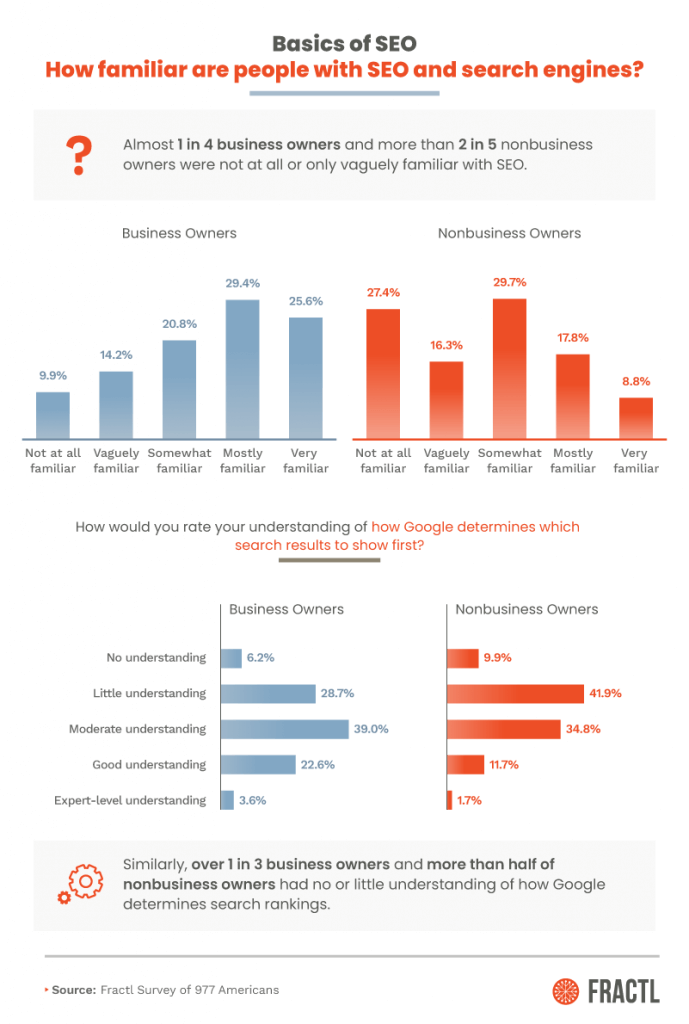
This lack of knowledge means many aren’t optimizing their sites effectively or using SEO tools like Google Search Console or Ahrefs to improve visibility. They may also be missing key opportunities to:
- Improve site structure and internal linking
- Boost site speed and technical SEO performance
- Target the right audience through better keyword research
The silver lining is that business owners who learn about SEO can gain a competitive edge in their industry, improve search rankings and conversion rates, and increase organic traffic.
Most People Failed the SEO Quiz — Including Business Owners
We tested participants about their actual knowledge. They were quizzed on SEO concepts to see how well they truly understood search engine optimization.
The results: Both the general public and business owners largely failed the quiz.
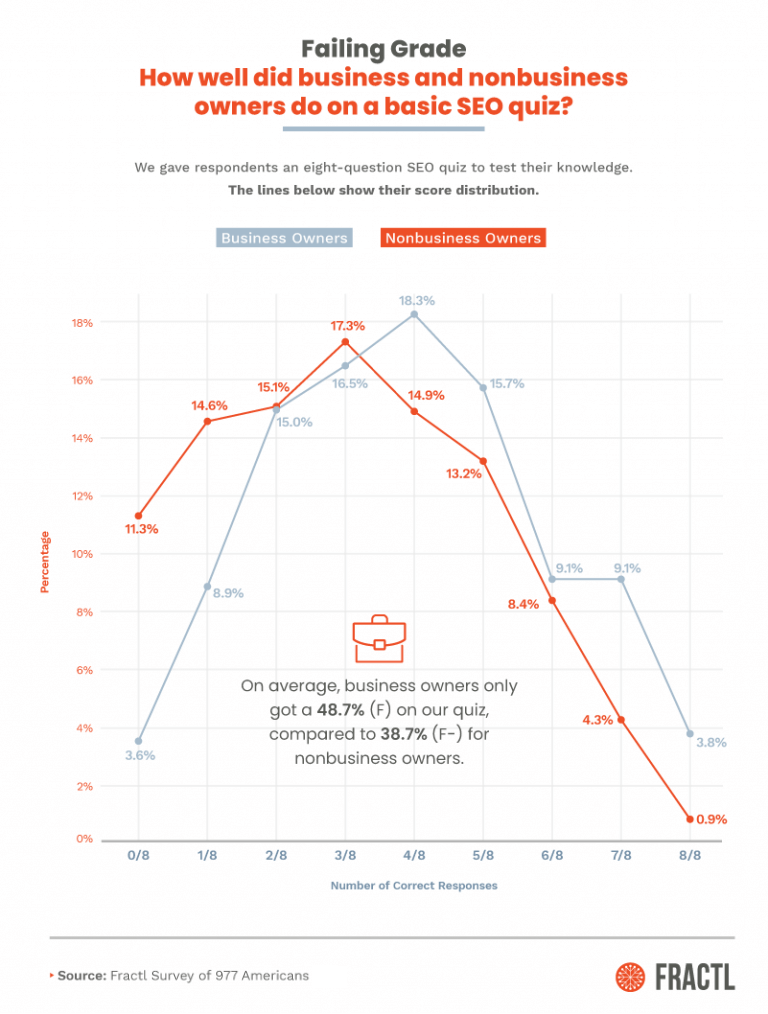
While people may claim they “know” SEO, the quiz highlighted that even those who use digital marketing tools every day often lack a basic understanding of SEO metrics and what influences keyword rankings.
Specifically, the survey found:
- Many struggled to correctly define organic traffic, mistaking it for any unpaid site visit rather than search-engine-driven traffic.
- Others misunderstood backlinks, failing to recognize them as inbound links from other sites — a critical ranking factor in SEO.
Familiar Words, Misunderstood Concepts: The SEO Lingo Problem
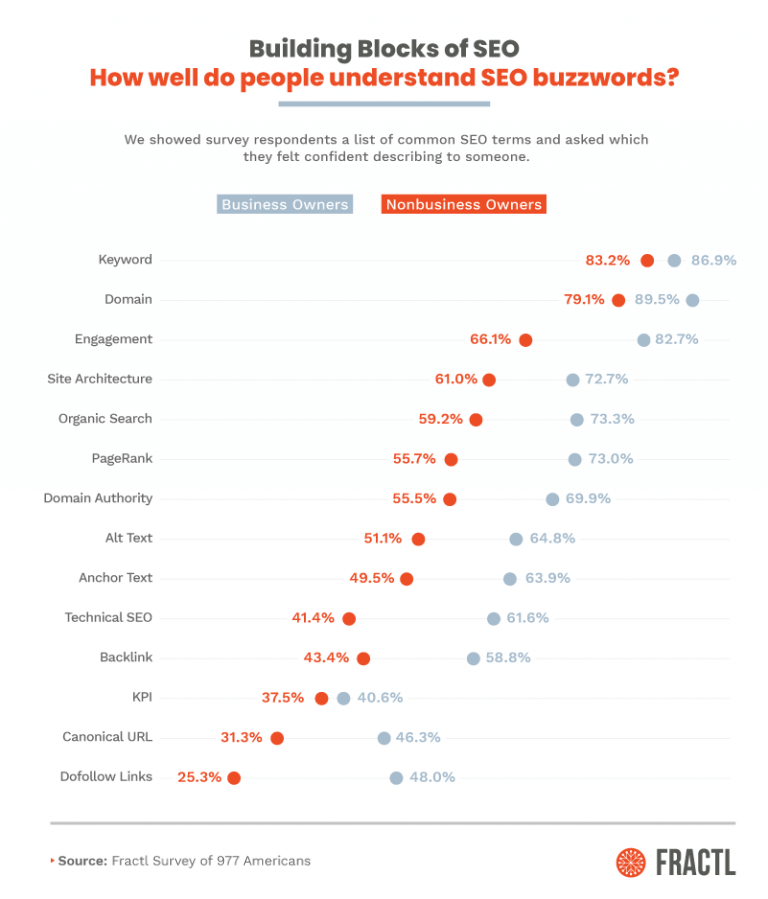
Many people recognize SEO buzzwords, but our data shows a major disconnect between name recognition and actual understanding, especially when it comes to concepts that influence how content ranks.
Keyword Familiarity Doesn’t Equal SEO Fluency
The survey revealed that while most respondents were familiar with the term “keywords,” few could confidently explain more technical terms, and that matters.
Those terms include:
- Organic search. Half of the respondents answered incorrectly, and 23.1% admitted they didn’t know what the term meant.
- Backlinks. Nearly 39% of respondents answered incorrectly, and 28.6% were unfamiliar with the term.
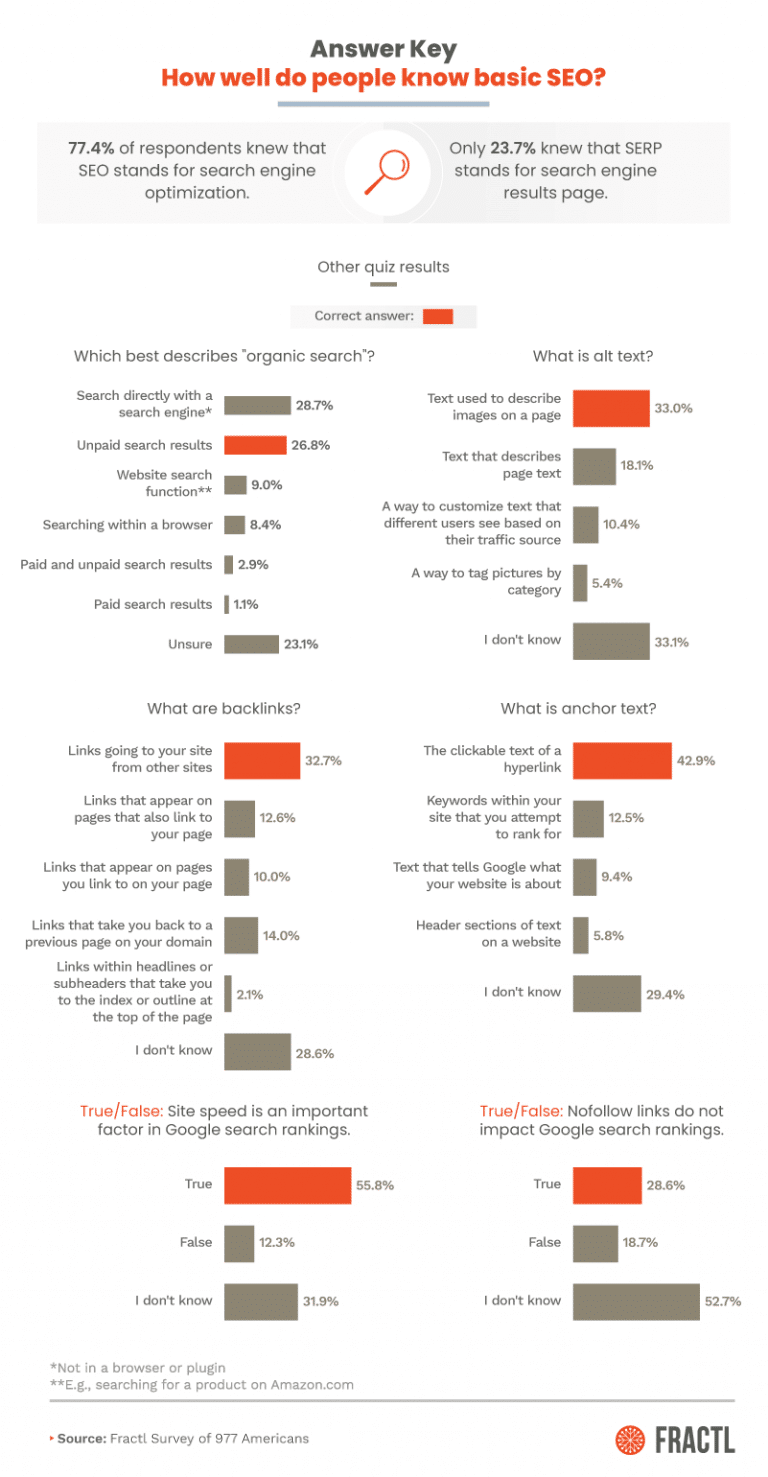
These terms are foundational in SEO. If marketers or content creators don’t understand what drives organic search rankings — or how backlinks influence site authority — they can’t build an effective SEO content strategy. This affects how competitors rank, especially those investing in link building and technical site audits.
Why SEO Knowledge Gaps Matter More Than Ever
As SEO continues to shape how people find, trust, and engage with content online, not knowing how it works puts businesses at a serious disadvantage.
Misunderstanding SEO Undermines Your Digital Marketing Strategy
When key players don’t understand how SEO works, businesses may skip basic yet vital tactics:
- Running a content audit to evaluate and improve existing content
- Performing competitor analysis to uncover what types of content competitors rank for
- Using on-page SEO techniques to optimize landing pages for search intent
This lack of understanding leads to poorly executed SEO content, weak organic rankings, and missed opportunities to reach potential customers.
SEO Expertise Builds Authority, Rankings, and Growth
SEO experts know that visibility on search engine results pages (SERPs) is driven by:
- Quality content aligned to user needs
- Consistent internal linking and structured web pages
- A blend of technical SEO, backlinks, and search intent optimization
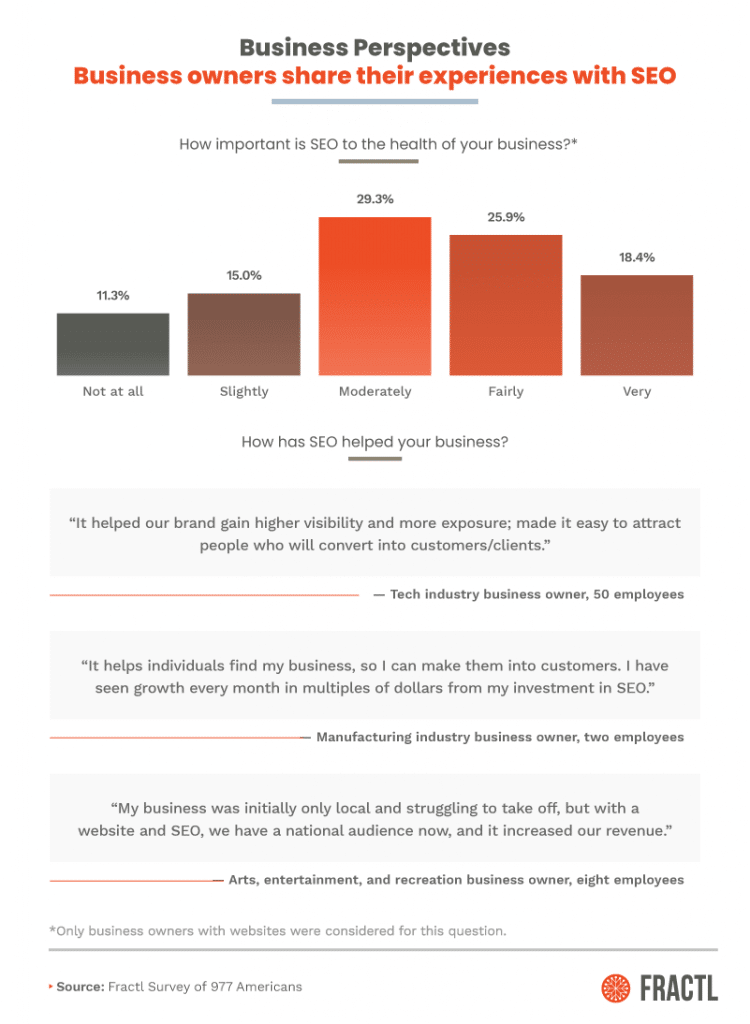
Businesses that close their SEO knowledge gap can transform their online presence — leading to stronger engagement, better content performance, and more qualified organic traffic.
Better SEO Starts With Education and Strategy
Closing the SEO knowledge gap isn’t just about knowing the right terms; it’s about building a strategy rooted in real understanding, supported by consistent execution and ongoing measurement.
Bridge the Gap With Foundational SEO Understanding
The study highlights that simply “knowing the terms” isn’t enough. True SEO fluency means understanding how keyword research connects to search intent — and how metrics and tools like Google Analytics and SEMrush help benchmark SEO performance.
To get started, businesses should:
- Train internal teams on SEO basics, including technical SEO and content optimization.
- Use templates and checklists to ensure consistent quality across content creation.
- Establish a documented SEO strategy that covers optimization goals, link building, and high-quality content planning.
Use Insights From This Survey To Drive Your Next Steps
By understanding what most people — even business leaders — don’t know about SEO, you can target your own weak spots. Focus on:
- Enhancing existing content rather than only creating new content.
- Benchmarking progress using keyword rankings and SERP position data.
- Prioritizing high-impact areas like backlinks, internal linking, and fast-loading landing pages.
Awareness Is Just the Beginning
Our survey was clear: Even those responsible for shaping a company’s marketing strategy often lack key SEO knowledge. But that gap presents a major opportunity. By investing in SEO education and aligning your digital strategy with proven best practices — content optimization, technical SEO, and content gap analysis — you’ll rank higher, drive more qualified traffic, and outpace competitors who still don’t “get it.”
If SEO still feels confusing, start small. Review your web pages. Identify where your competitors rank and where you don’t. Look at your backlinks and on-page structure. Use that data to guide your next move. The businesses that win in organic search aren’t always the biggest; they’re simply the ones that know how SEO works.