




Table of Contents
- You’re Not Aligning With the Publisher, Reader, and Brand
- Your Pitch Isn’t Working
- Your Content Isn’t Publisher-Ready
- You’re Not Packaging It for Success
- Examples of What Works
- Make Your Content Worth Publishing
You’ve created content you’re proud of. Maybe it’s a well-researched data study, an in-depth article, or a visual campaign designed to resonate with a target audience — but despite your enthusiasm, the pitch goes ignored, your inbox stays empty, and the power to publish feels firmly out of your hands..
If no one wants to publish your content, it’s likely not just due to a single problem; it might be a breakdown in strategy across multiple areas. In this guide, we’ll cover exactly why publishers are rejecting your content and how to fix it while using outreach, digital marketing, and content publishing best practices to get your work seen.
You’re Not Aligning With the Publisher, Reader, and Brand
The most successful digital marketing strategies balance three things:
- Your agenda. Build brand visibility, promote your new products or services, and earn passive income through increased visibility.
- The publisher’s agenda. Deliver high-quality, relevant, nonfiction stories that attract and retain loyal audiences.
- The reader’s agenda. Find informative, emotionally compelling, and useful content across various communication channels.
When content pitches fail, it’s often because they lean too heavily on one agenda; usually the brand’s. Editors don’t want to host overly promotional content or a credit card sales pitch disguised as a story. Entrepreneurs must focus on building trust and serving all stakeholders.
Your Pitch Isn’t Working
Even strong content can fail without the right introduction. A compelling pitch is your foot in the door, but a weak one will get it slammed shut. Fractl partnered with BuzzStream to survey more than 500 high authority publishers on which subject lines are most effective for outreach.
We found four common reasons why your pitches aren’t landing and how to fix them.
Your Subject Line Doesn’t Stand Out
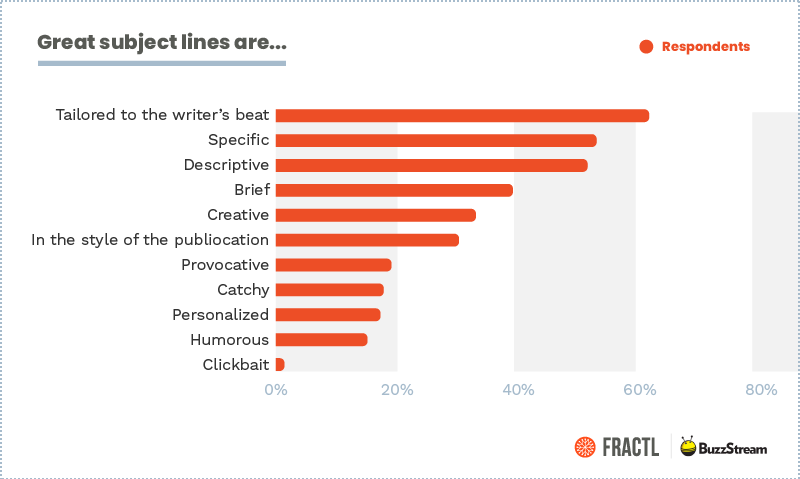
Subject lines are like metadata for your pitch. According to Fractl’s research, the best ones:
- Are 10 words or fewer
- Clearly describe the content format or value
- Avoid clickbait or exaggerated phrasing
Use clarity over cleverness. For example, “New Study: Microsoft Users Rank Top Features” is better than “Unbelievable Results!”
You’re Targeting the Wrong Publication or Person
Targeting is critical in multichannel strategies. Ensure your pitch:
- Aligns with the recipient’s editorial responsibilities
- Matches their preferred content formats (like audio, longform, or playlist-style summaries)
- Speaks to the outlet’s primary audience of business owners, indie creators, or service providers
Your Pitch Lacks Personalization
Generic pitches tank outreach campaigns. Improve your messaging by:
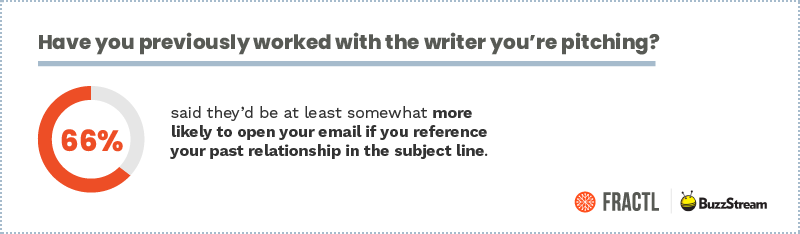
- Referencing previous articles or podcast appearances
- Tailoring content to their web page structure or preferred publishing flow
- Mentioning why their audience will care
You Haven’t Built a Real Relationship
Relationship-building is vital for successful content publishing. Connect with editors on platforms like LinkedIn and X. Share their work and engage meaningfully to build rapport before pitching your own.
Your Content Isn’t Publisher-Ready
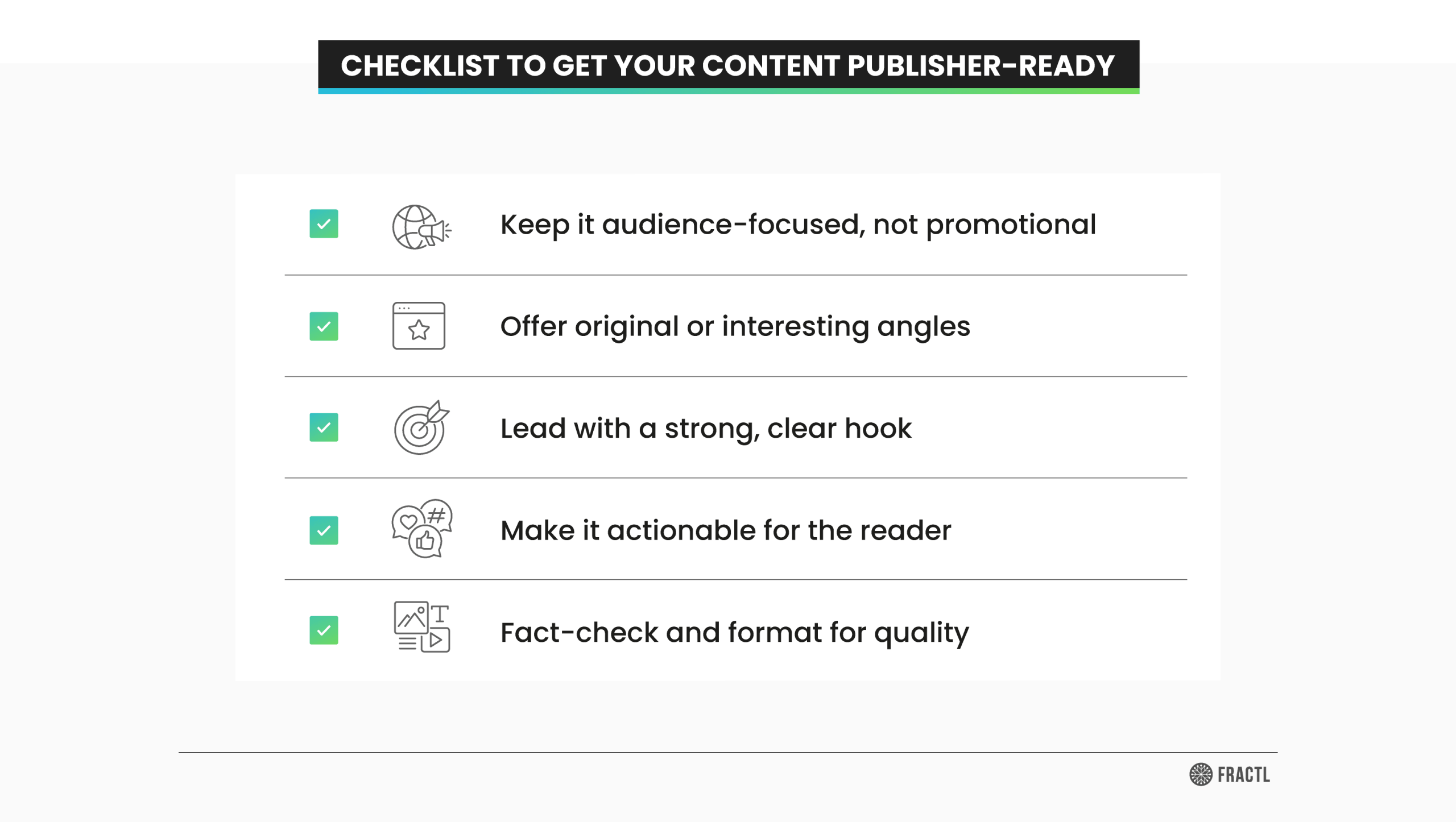
Getting published means offering content that’s unique, high-quality, and reader-centric.
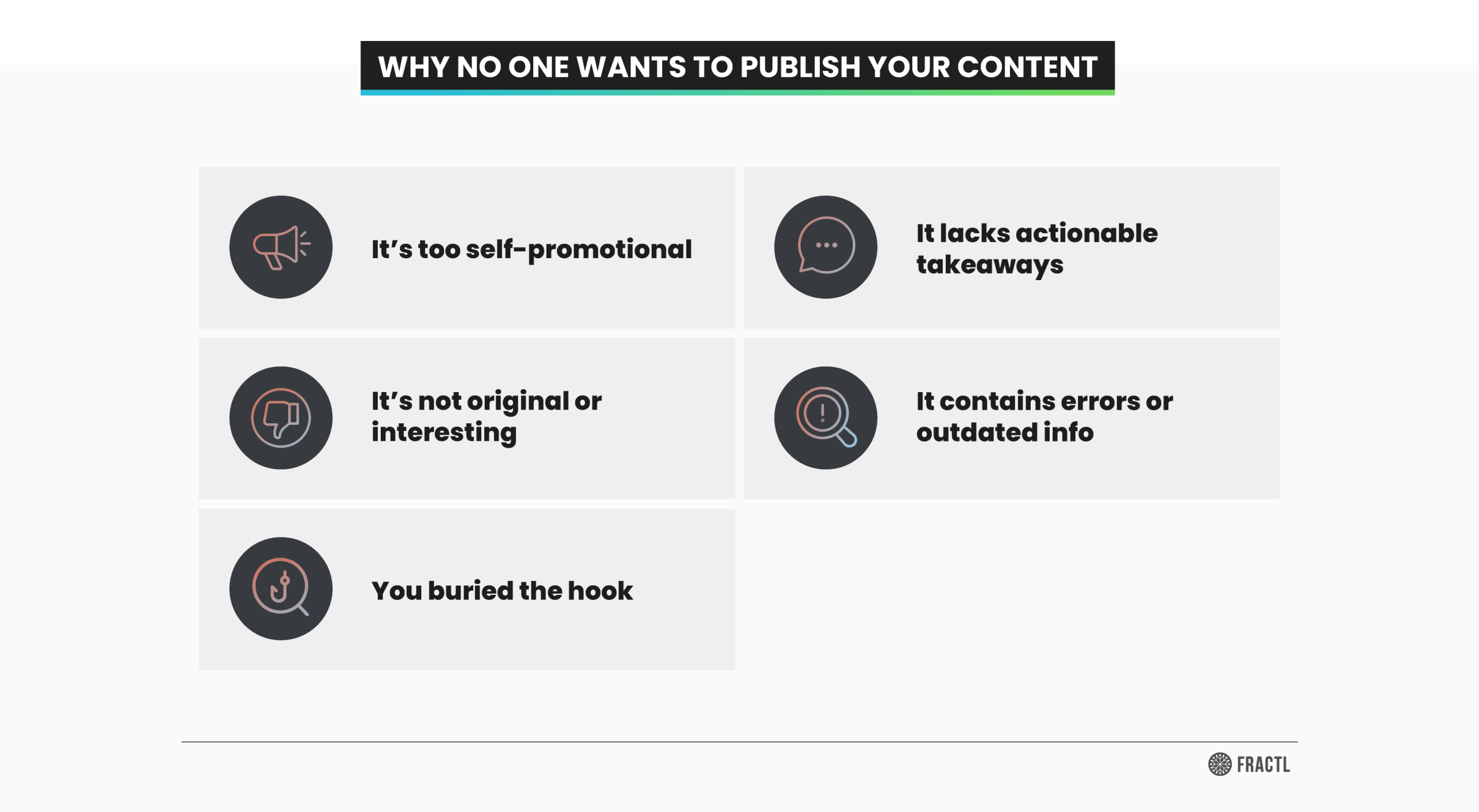
It’s Too Self-Promotional
Most editors won’t host content that focuses solely on promoting your service, credit card offer, or e-book. Position your content around:
- Broader industry trends. For example, “The Rise of Subscription-Based Retail: What It Means for Small Businesses.”
- Tips for entrepreneurs or business owners. For instance, “7 Budgeting Mistakes Every First-Time Founder Should Avoid.”
- Cases that inform rather than advertise. For example, “How Mid-Sized Retailers Reduced Checkout Abandonment by 18%” vs. “Why [Our brand’s] Checkout Software Is the Best for Retailers.”
It’s Not Original or Interesting
In saturated content ecosystems, originality is everything. Increase your chances with:
- Exclusive research or playlists of curated insights. For instance, “2026 B2B Marketing Trends: Insights From 500 Industry Leaders.”
- Personal stories or case studies. For example, “From Hobby to Side Hustle: How I Built a Profitable Digital Product Store.”
- Data-driven takes on trending nonfiction topics. An example title could be “How Gen Z Shops for Insurance: Survey of 1,000 Policyholders.”
You Buried the Hook
Your hook should be front and center. Whether it’s a quote from a Spotify playlist study or insights from a new app launch, make it clear why your story matters.
Use the inverted pyramid style to:
- Lead with strong, data-backed conclusions. An example would be “Remote Workers Are 25% More Productive, New Study Finds.”
- Follow with background and methodology. For example, “Surveyed 2,000 Professionals Across 5 Industries.”
- Highlight your most newsworthy insight in the first 2–3 sentences. For instance, “One in three consumers now avoids brands with no sustainability plan.”
It Lacks Actionable Takeaways
Give readers something to do. Actionable content builds authority and encourages sharing across social media and digital platforms. For example:
- “5 Marketing Strategies for Launching a Self-Published Audiobook” could be a checklist or how-to guide.
- “How To Automate Client Onboarding for Service Providers” may be a step-by-step tutorial.
- “3 Ways To Improve Conversion Rates Without Redesigning Your Site” may include quick optimization tips.
It Contains Errors or Outdated Info
High authority publishers vet facts rigorously. Ensure:
- All stats are current (preferably from the past 12 months)
- Sources are trustworthy (DA 70+)
- Content is formatted for readability with an accurate table of contents
You’re Not Packaging It for Success
Presentation can be just as important as the quality of the content.
- Add visuals. Use graphs, embedded videos, or GIFs from tools or platforms.
- Format with structure. Use subheaders, bulleted lists, and clear calls-to-action (CTAs).
- Design with the publisher in mind. Match their style and structure, especially for playlists, self-published sections, or mobile-first content.
Examples of What Works
Here are campaigns Fractl produced that highlight powerful digital storytelling:
- Velotric E-Bikes. A growth-focused campaign that blended brand storytelling with lifestyle content, boosting visibility through targeted content and digital PR, ultimately resulting in a 435% increase in organic traffic.
- Payless Power. Data-driven storytelling in the energy sector, using industry insights and journalistic content to position a utility brand as a thought leader, which has driven nearly $975K in added organic traffic value.
- Porch. Tangential storytelling on home and lifestyle themes that earned wide media pickup and helped humanize a service-oriented platform — generating 931 unique domain links.
Each used emotionally resonant messaging, strong design, and in-depth research — elements essential to great content strategy.
Make Your Content Worth Publishing
To get your content published, approach your campaign like an entrepreneur building a product launch:
- Balance the agendas of publishers, readers, and your brand.
- Personalize your outreach messaging.
- Optimize for readability, accuracy, and format.
- Focus on publishing content that delivers a genuine, valuable user experience.
Want to turn your content into a passive income stream or fuel a digital PR playlist of success stories? Start by thinking like a publisher and creating compelling content like a pro.
Explore how Fractl supports brands, service providers, and business owners in building content that earns visibility across the web.