




Table of Contents
- Pillar Pages That Earned the Most Links
- Pillar Pages That Earned the Most Traffic
- Pillar Pages That Earned Links and Traffic
- What Makes a Pillar Page Work
- How To Measure a Pillar Page
- Decide What Each Pillar Page Should Earn
- Methodology
- FAQ
Key Takeaways
- Link-earning pillars give publications a comparison or dataset to cite. For example, Payless Power’s guide to 2026 electricity rates by state, with a table covering every state, has 100 referring domains.
- Traffic-earning pillars answer a common question directly. Tawkify’s Hinge vs. Tinder comparison opens with an at-a-glance table and draws 924 visits a month.
- The pillars that earned both help people make a decision. Clarify Capital’s guide to whether you should get a small business loan pairs a readiness checklist with a loan comparison table, and it has 98 referring domains and 1,223 visits a month.
- Cluster links are what make a long page a pillar. Payless Power’s Texas energy rates guide links to about 22 narrower articles, one in nearly every section.
A pillar page is a long, ungated page that covers one broad topic and links out to narrower articles on its subtopics, so readers and search engines can see how the pieces fit together. Pillar pages anchor topic clusters, the groups of narrower articles that each go deep on one subtopic.
I’ll walk through 15 pillars I built for Fractl, grouped by what it earned, with its referring domains, monthly traffic, what worked, and what you can learn from each.
| Pillar page | Referring domains | Monthly organic visits | What it earned most |
|---|---|---|---|
| Tawkify’s best Indian dating apps and sites | 212 | 21 | Links |
| Clarify Capital’s hard money loans guide | 166 | 14 | Links |
| Clarify Capital’s dental practice growth guide | 133 | 18 | Links |
| Clarify Capital’s PayPal Working Capital guide | 128 | 181 | Links |
| Payless Power’s 2026 electricity rates by state | 100 | 6 | Links |
| Payless Power’s Texas energy rates guide | 0 | 939 | Traffic |
| Tawkify’s Hinge vs. Tinder comparison | 2 | 924 | Traffic |
| Payless Power’s power outage guide | 1 | 810 | Traffic |
| Clarify Capital’s world’s largest industries ranking | 6 | 646 | Traffic |
| QS Supplies’ toilet and sink combo units guide | 3 | 631 | Traffic |
| Utilities Now’s no-credit-check electricity guide | 0 | 579 | Traffic |
| Clarify Capital’s small business loan decision guide | 98 | 1,223 | Both |
| Tawkify’s PDA meaning guide | 40 | 490 | Both |
| Clarify Capital’s same-day business loans guide | 121 | 418 | Both |
| Clarify Capital’s no-doc business loans guide | 99 | 321 | Both |
Source: Ahrefs, September 30, 2026
Pillar Pages That Earned the Most Links
Publications link to a page when it gives them something they can’t easily produce themselves, like a state-by-state dataset or a side-by-side comparison table.
Tawkify: Best Indian Dating Apps and Sites
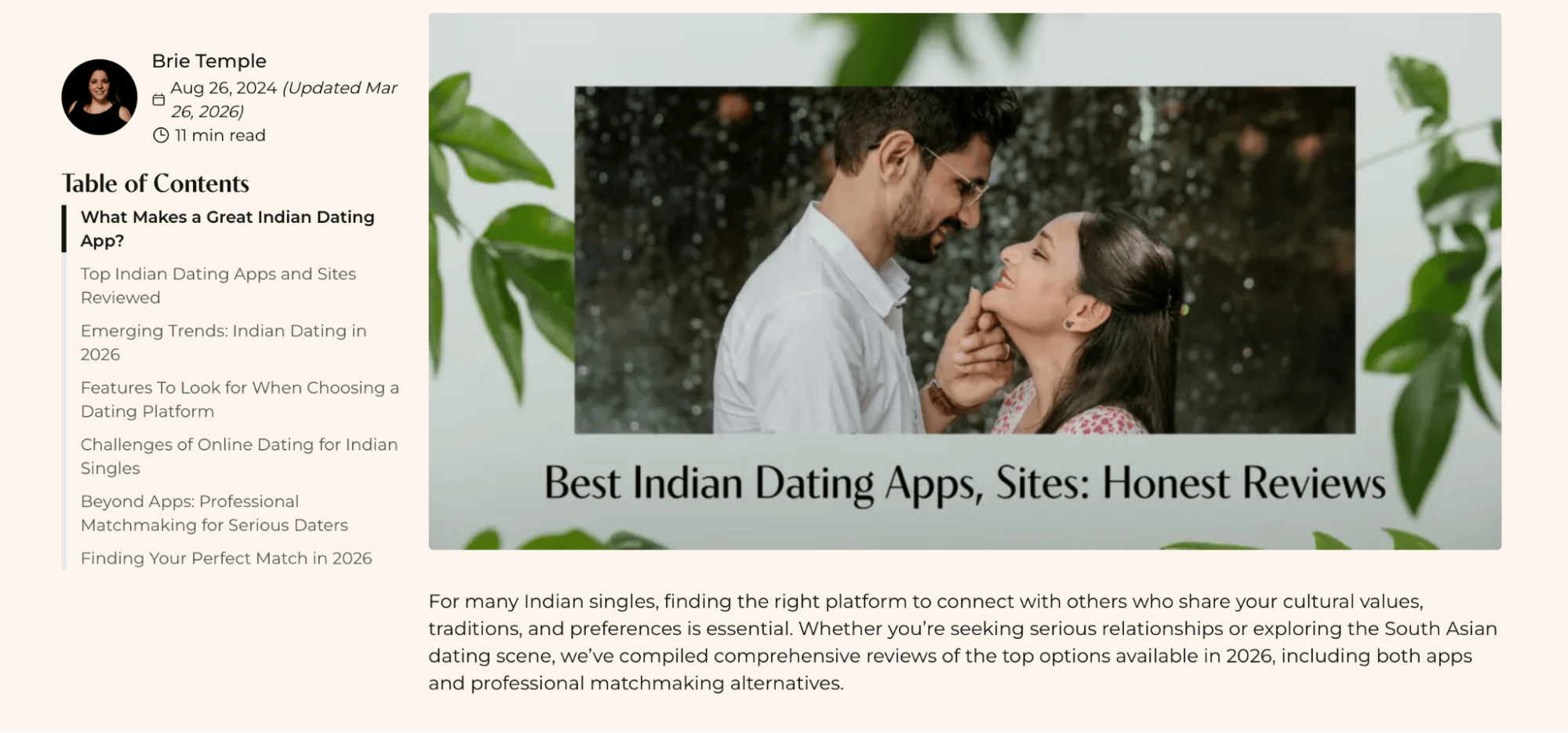
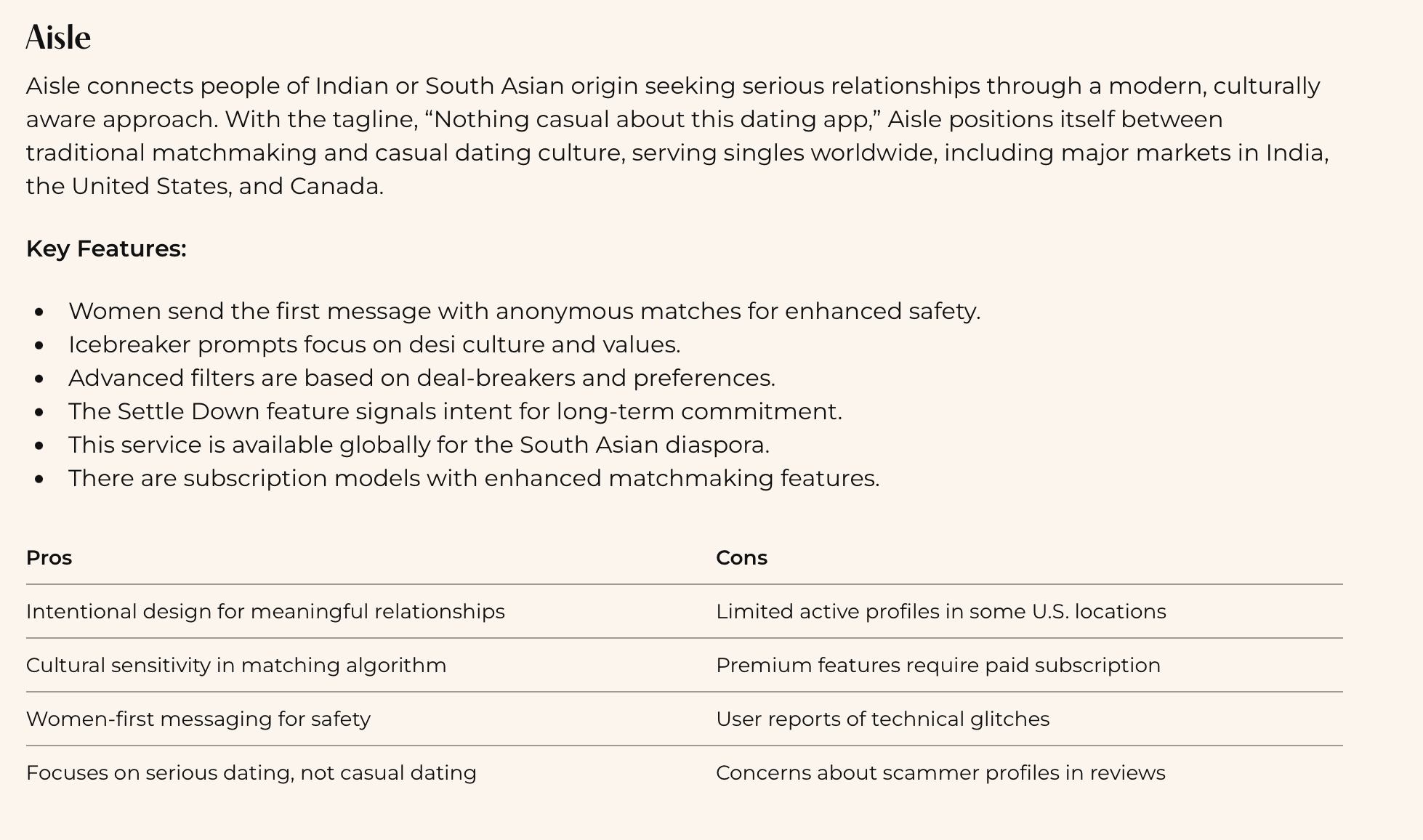
For Tawkify, a matchmaking service, we refreshed a roundup of the best Indian dating apps and sites for singles looking for a partner who shares their cultural values, adding context on which apps are popular in India and which are popular in the U.S. It reviews six apps, from Aisle to TrulyMadly, and closes by pointing serious daters toward professional matchmaking. The page has 212 referring domains, the most in the set, and draws 21 visits a month.
Tips To Learn From This Pillar
- Use one template for every item. Each app gets a short intro, a list of key features, and its own pros and cons table.
- Call out one standout figure per item. A “Notable:” line flags the detail that sets each app apart.
- Close with your own service. A final section moves readers who want more than an app toward professional matchmaking.
Clarify Capital: Hard Money Loans Explained
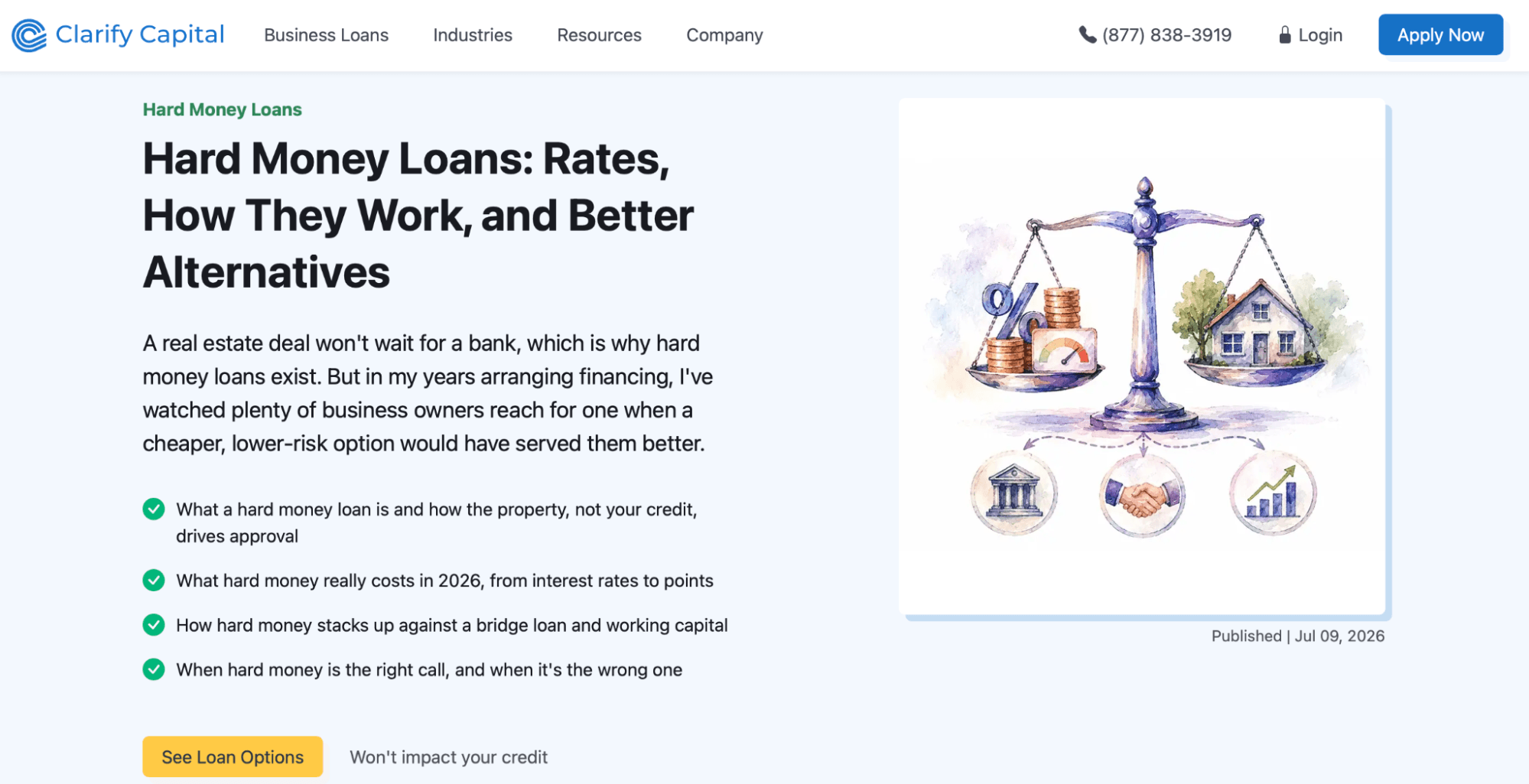
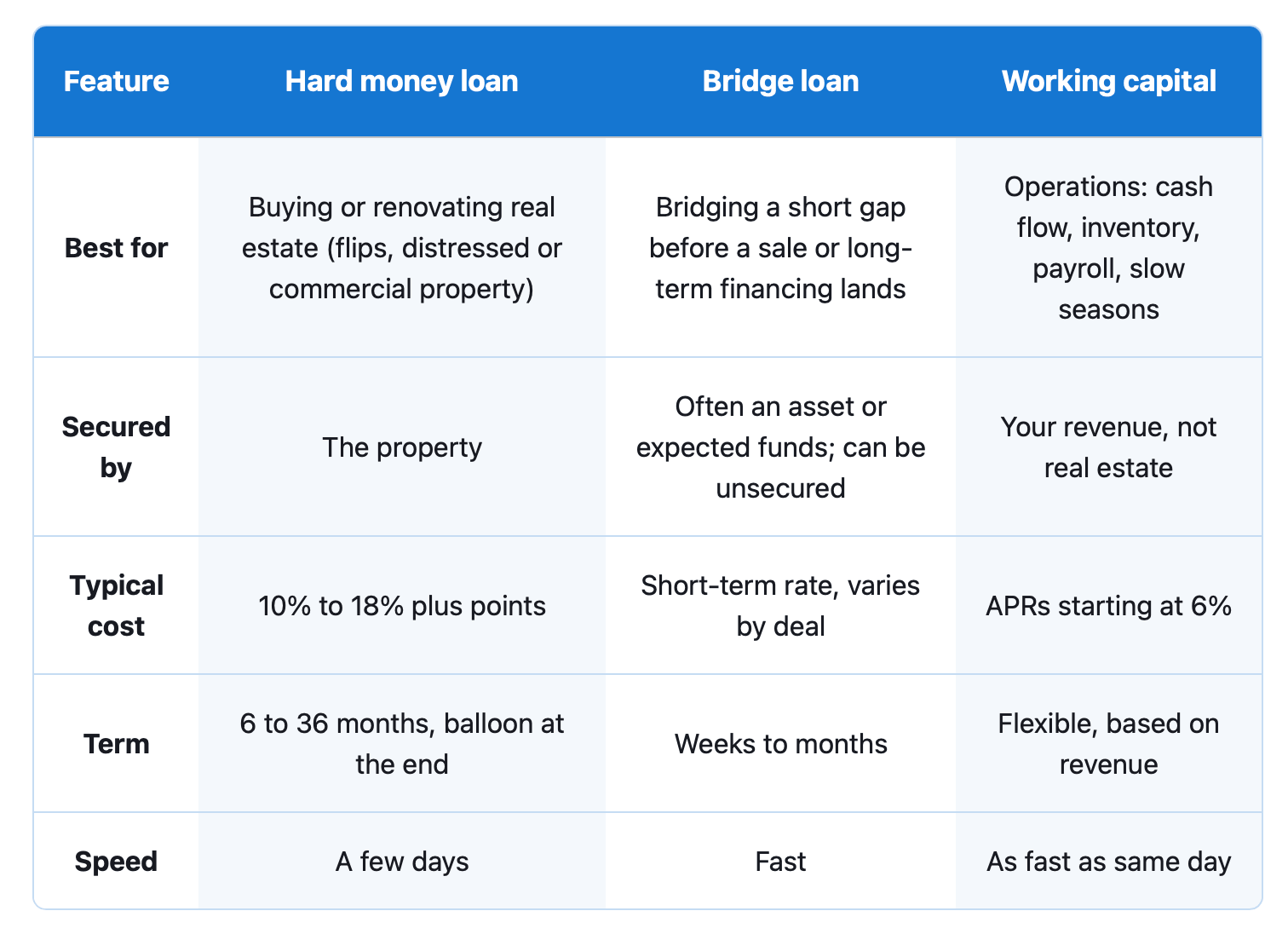
For Clarify Capital, a business financing company, we created a guide to hard money loans for property investors, and refreshed it in 2026 to add a decision matrix comparing hard money with bridge loans and working capital. It opens with a one-sentence verdict and runs about 1,400 words. The guide has 166 referring domains and draws 14 visits a month.
Tips To Learn From This Pillar
- Compare the product with its closest alternatives in one table, row by row on cost, term, speed, and what secures the loan.
- Split the advice into when the product fits and when it’s the wrong call.
- Add a mid-page call to action for readers the product doesn’t suit, like this page’s “Not Buying Property? See What Fits Better.”
Clarify Capital: How To Grow Your Dental Practice
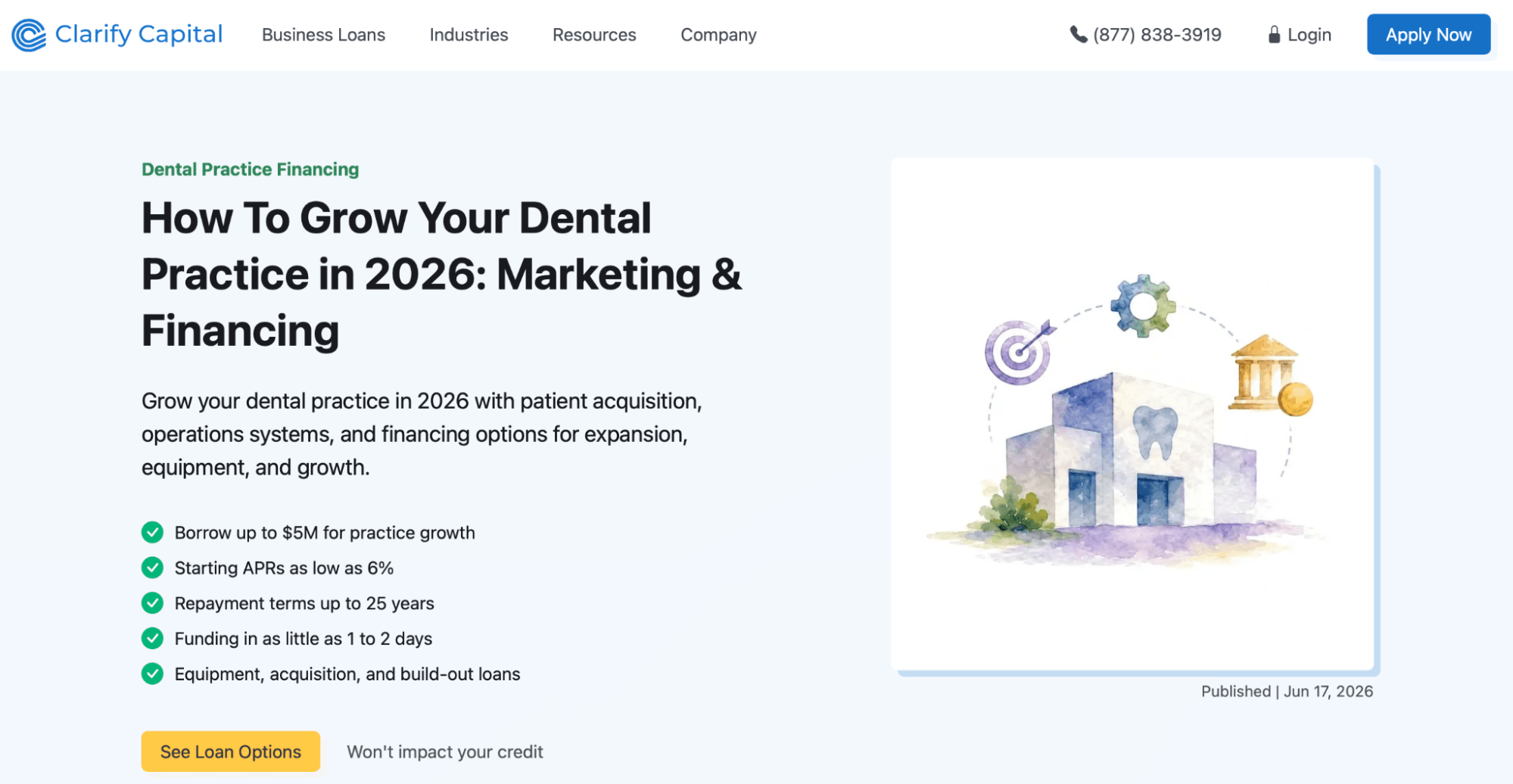
For Clarify Capital, we created a guide for dentists looking to grow a dental practice, and refreshed it in 2026 with new industry growth statistics and patient acquisition cost benchmarks. It opens by challenging the assumption that growing a practice is mainly a marketing problem. The guide has 133 referring domains and draws 18 visits a month.
Tips To Learn From This Pillar
- Answer the cost question in a short box before the first H2.
- Compare financing options in a table right after it, as this guide does with five options.
- Cite outside industry figures, and when you combine them into an estimate of your own, add a footnote that shows how you calculated it.
- Lay out one practice’s expansion loan as a case study with the loan type, rate, term, and what the money paid for.
Clarify Capital: PayPal Working Capital
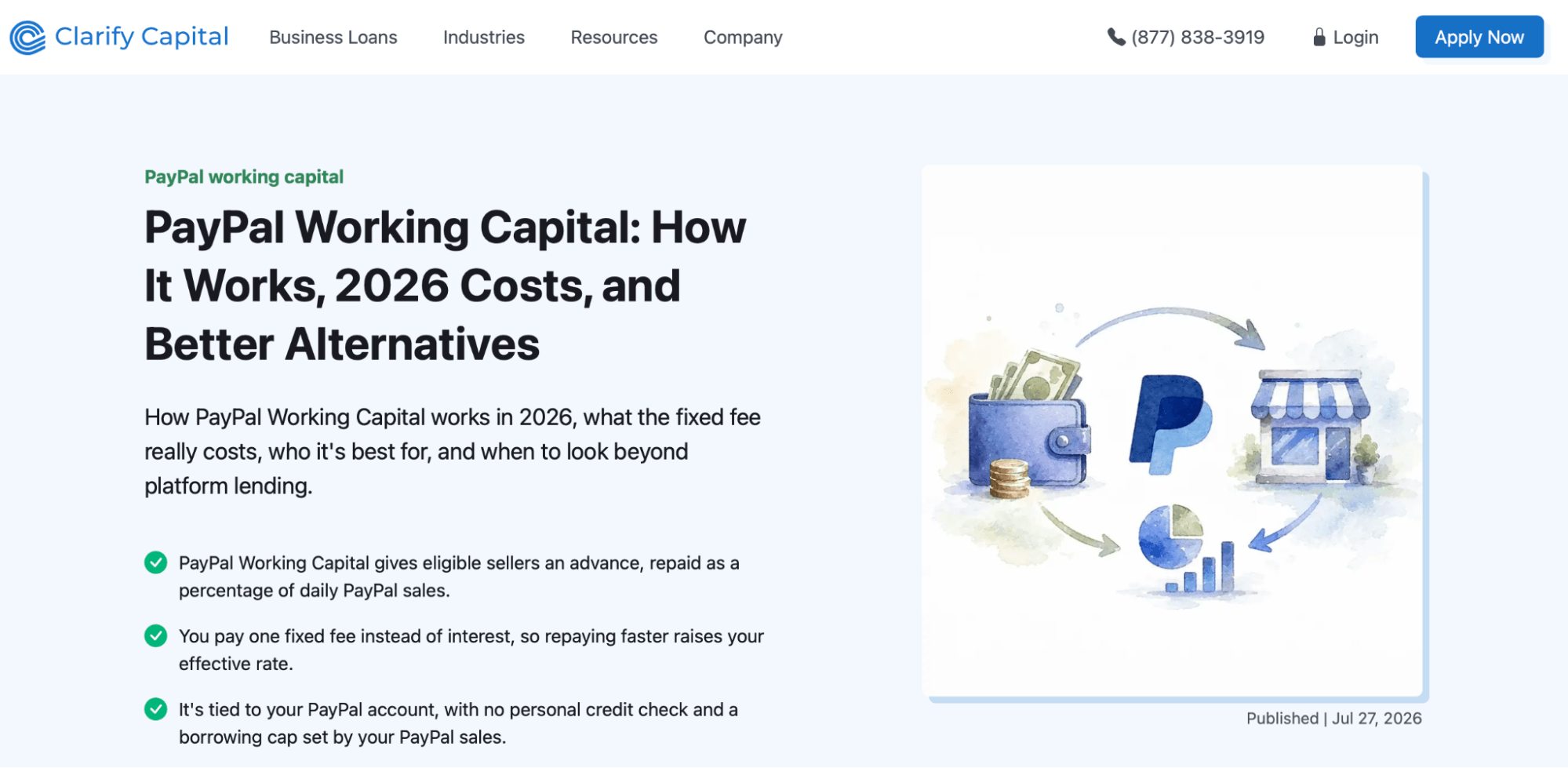
For Clarify Capital, we created a guide for online sellers weighing a PayPal Working Capital offer, and refreshed it in 2026 with current terms, 2026 rates, and a section on who each option suits best. The guide has 128 referring domains and draws 181 visits a month.
Tips To Learn From This Pillar
- Compare the competing offer with yours side by side. A six-row table sets PayPal’s requirements next to Clarify Capital’s.
- Show both application processes in parallel. Matching tables walk through each one step by step.
- Tell readers who each option is for. A “Best for” and “Consider alternatives if” table closes the comparison.
Payless Power: 2026 Electricity Rates by State
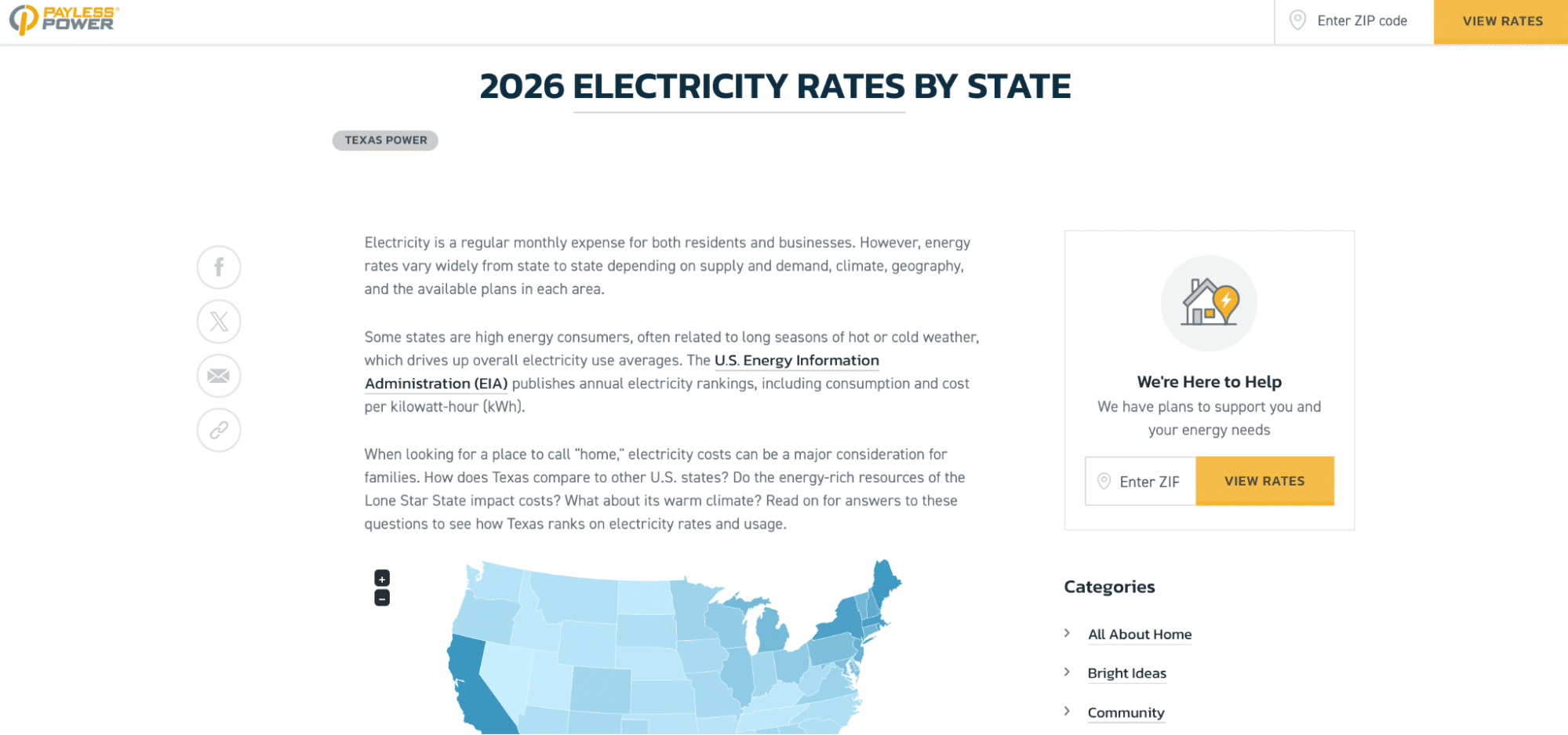
For Payless Power, a Texas prepaid electricity provider, we refreshed a guide to electricity rates by state and added an interactive map of the rates. It compares each state’s July 2026 average rate with July 2025, using U.S. Energy Information Administration data, and ends with how Texas compares. The page has 100 referring domains and draws six visits a month.
Tips To Learn From This Pillar
- Build one table that covers every item, with a column for the year-over-year change.
- Pull the top 10 and the lowest 10 into their own short tables.
- Repeat the table’s data in a clickable map for readers who’d rather look up their own state.
- Tie the national data back to your own market, as the “How Texas Compares” section does.
Pillar Pages That Earned the Most Traffic
These pages answer questions with steady search demand, like how long a power outage usually lasts.
Payless Power: Texas Energy Rates and How To Get the Best Deals
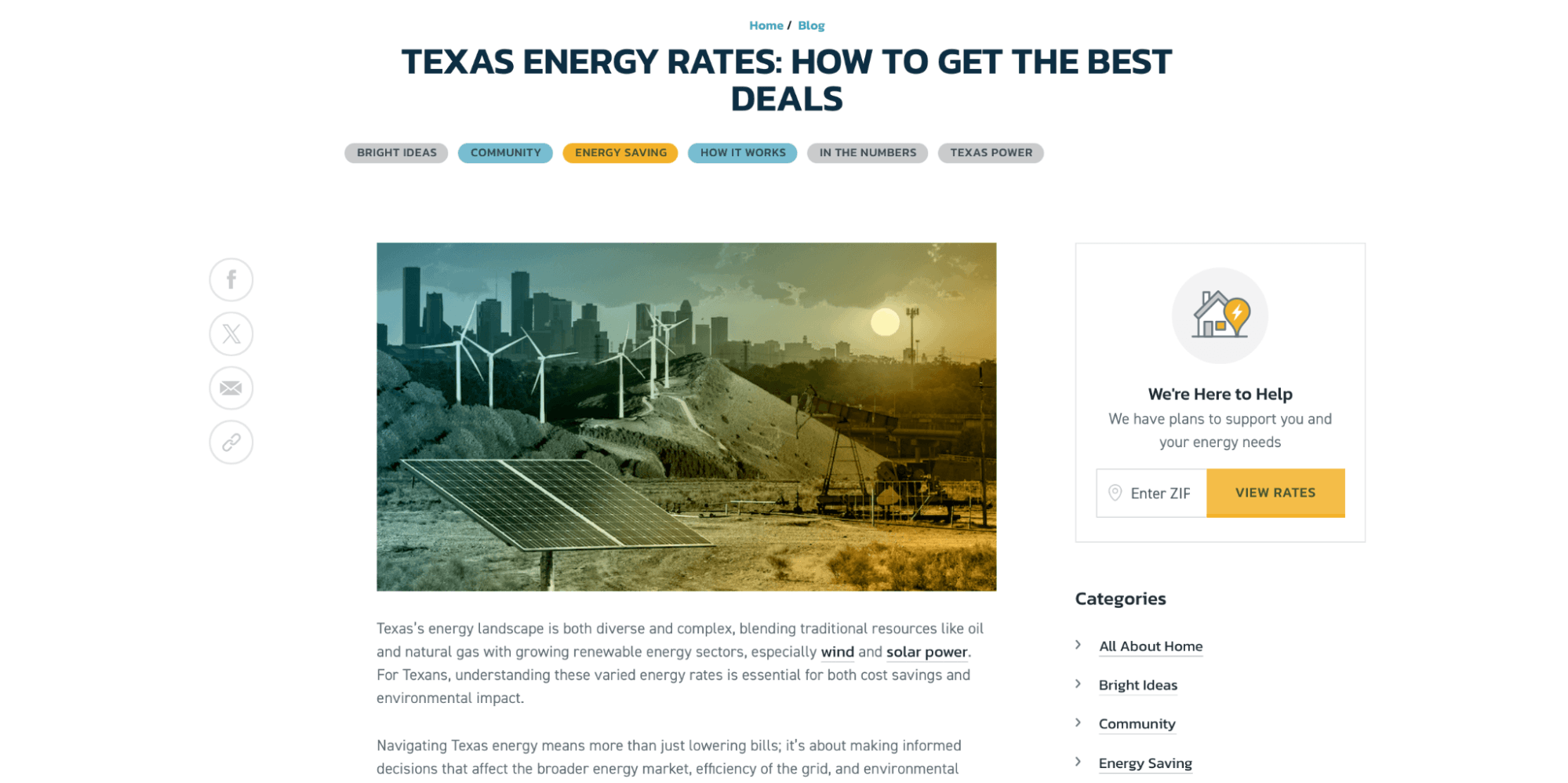
For Payless Power, we created a guide to Texas energy rates for households shopping for a better electricity plan. It walks through how the Texas grid works, the main types of plans, and ways to lower a bill. The guide draws 939 organic visits a month and has no referring domains.
Tips To Learn From This Pillar
- Link out to a narrower article in nearly every section, the way this guide sends readers to about 22 related posts on topics like the Texas grid and surge protection.
- Link each option you list to its own explainer, as this page does for fixed, variable, indexed, and green plans.
Tawkify: Hinge vs. Tinder
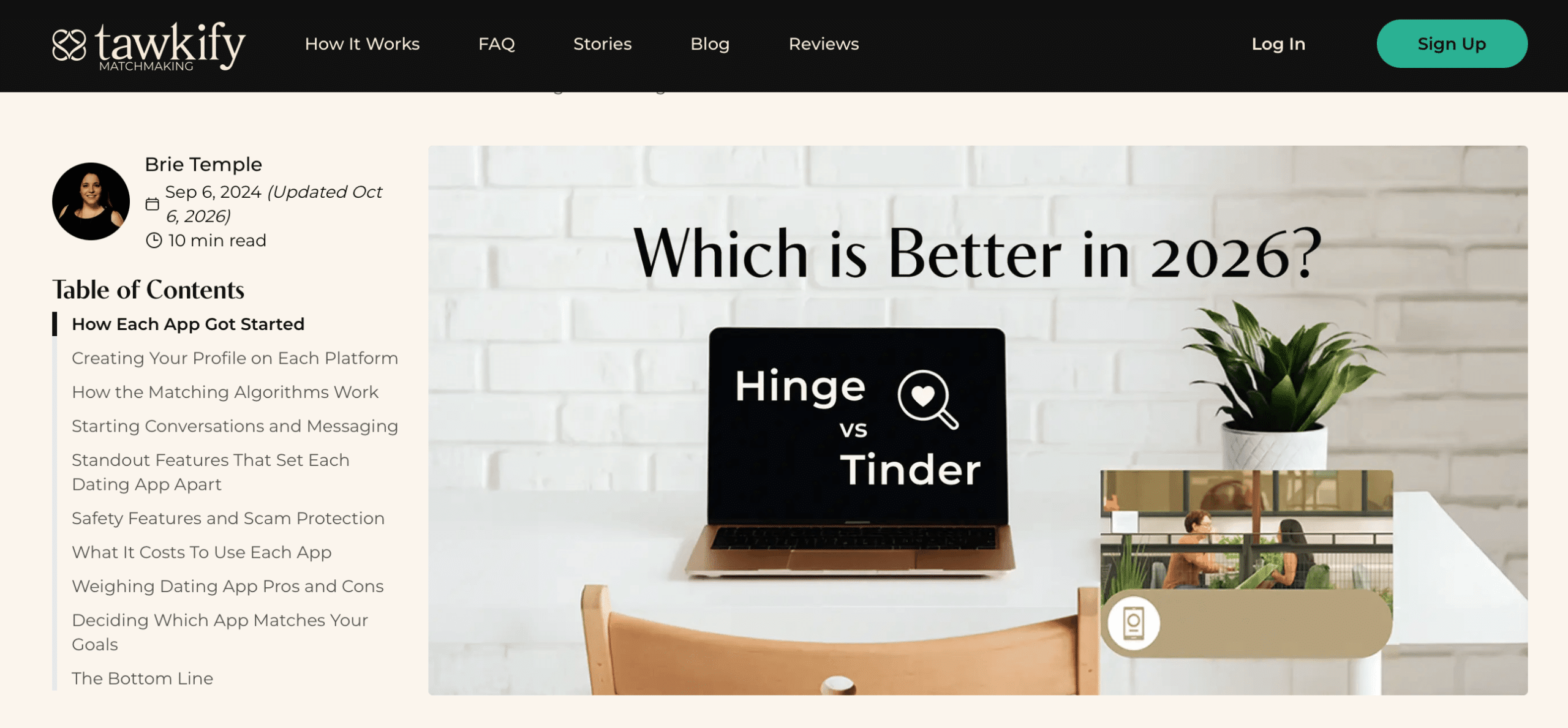
For Tawkify, we refreshed a comparison of Hinge and Tinder for singles choosing between the two apps, adding figures like each app’s user base and gender split. It covers profiles, matching, messaging, safety, and cost. The page draws 924 visits a month and has two referring domains.
Tips To Learn From This Pillar
- Put the comparison table first. An at-a-glance table appears before the table of contents.
- End with a “choose this if” section. Readers leave knowing which app fits what they want.
- Label figures you didn’t collect. Price tiers carry a note that they’re based on third-party reporting.
- Add advice from your own experts. A callout box shares a tip from one of Tawkify’s matchmakers.
Payless Power: How Long Do Power Outages Typically Last?
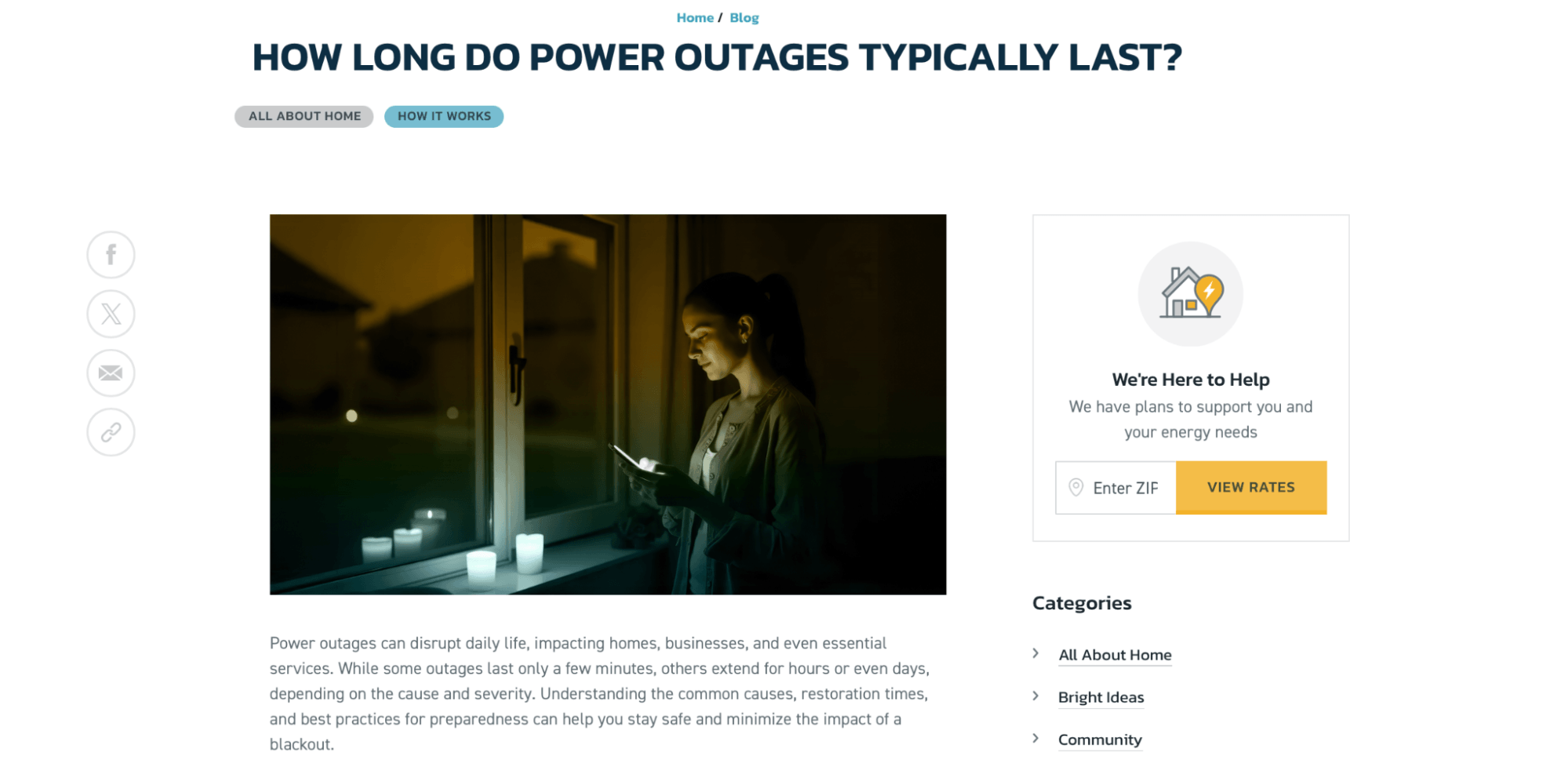
For Payless Power, we created a guide to how long power outages last to fill a gap in the site’s content. Every H2 is a question readers ask, from how long most outages last to how long a fridge keeps food safe. The guide draws 810 visits a month and has one referring domain.
Tips To Learn From This Pillar
- Phrase each H2 as a question and answer it in the section’s first sentence.
- Add a quick-scan table, like this page’s average outage length by cause.
- Give different readers their own advice, as the separate sections for hot and cold climates do.
- Close sections with labeled callouts like “Tip:” and “Fact:”.
Clarify Capital: The World’s Largest Industries
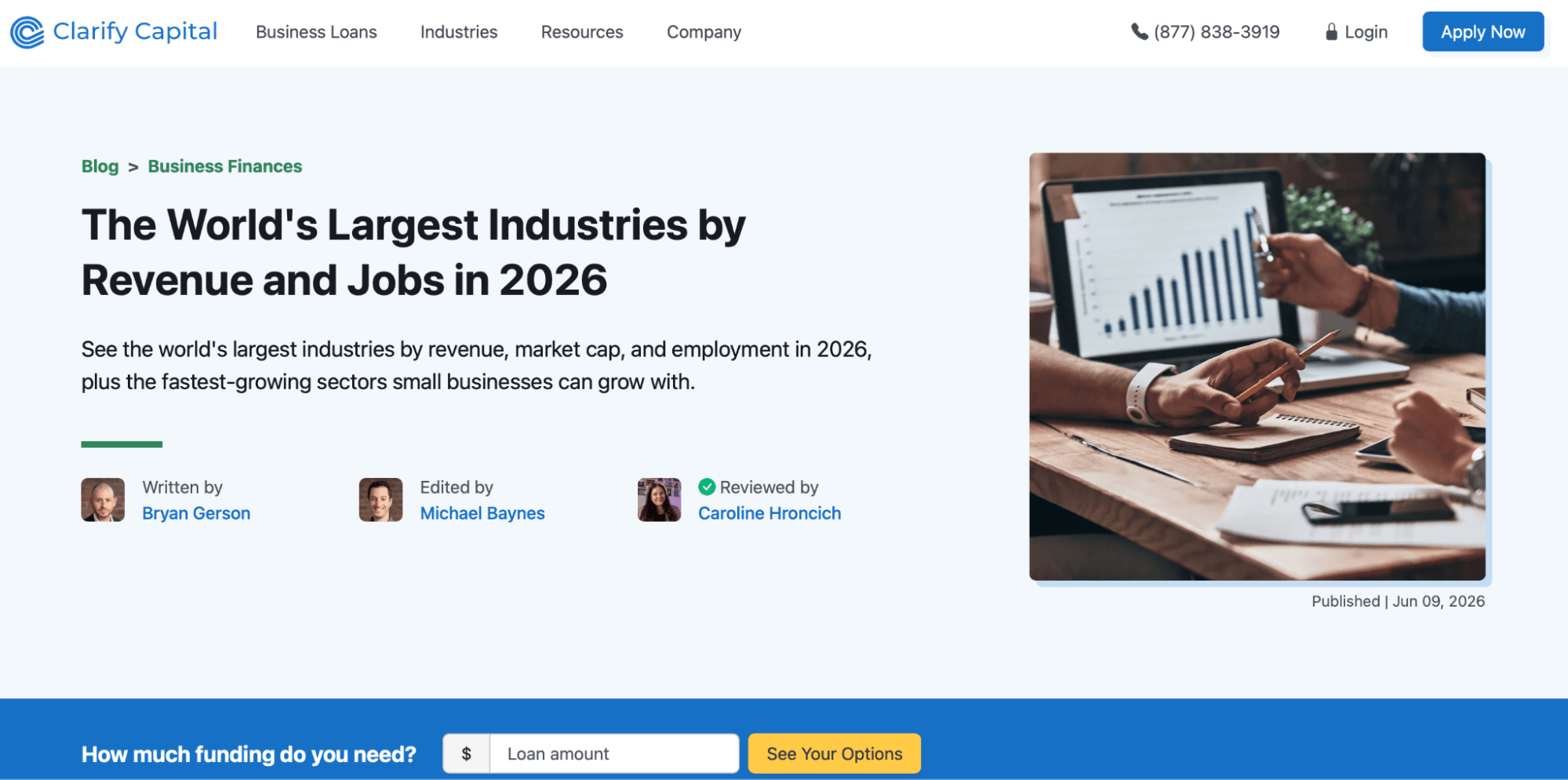
For Clarify Capital, we created a ranking of the world’s largest industries by revenue and jobs, to give business owners current data and forecasts on where the economy is growing. It opens with a fact most readers won’t expect: insurance carriers, real estate, and pension funds are bigger than Big Tech. The page draws 646 visits a month and has six referring domains.
Tips To Learn From This Pillar
- Give each ranking its own branded graphic, with a source line under it.
- Turn the findings into a next step for your reader, like this page’s section on how small businesses can benefit from growing industries.
- Credit the writer, editor, and reviewer at the top of the page.
QS Supplies: Space-Saving Toilet and Sink Combo Units
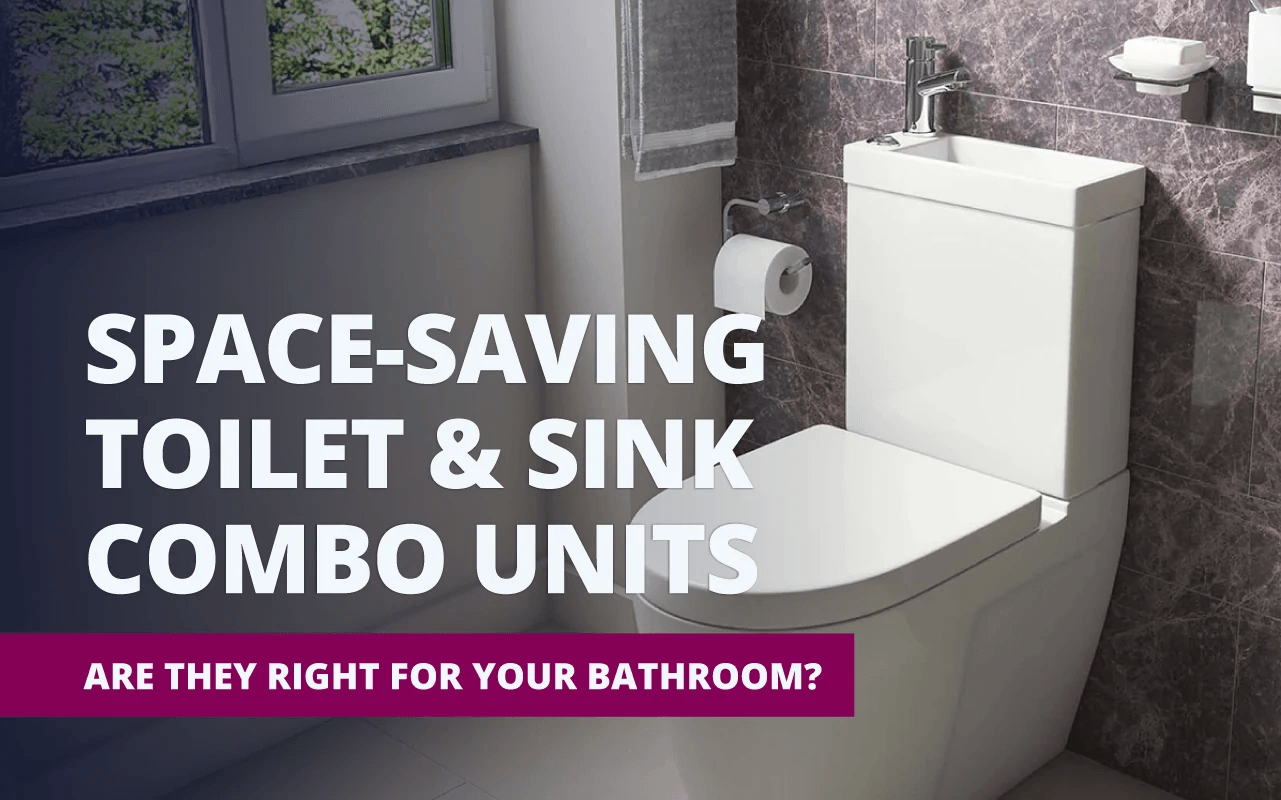
For QS Supplies, a UK bathroom retailer, we created a guide to toilet and sink combo units for homeowners short on bathroom space. It explains how the units work and which UK regulations apply, weighs their advantages against their drawbacks, then walks through installation. The guide draws 631 visits a month and has three referring domains.
Tips To Learn From This Pillar
- List the products you recommend as named links, each with a one-line note on who it suits.
- Number the installation steps.
- Cite official sources for any regulations as external links, as this guide does with UK building regulations.
Utilities Now: No-Credit-Check Electricity

For Utilities Now, we created a guide to no-credit-check electricity for Texans who need power without a credit review. In under 1,000 words, it covers how the plans work, who benefits, the pros and cons, and how to set up service. The page draws 579 visits a month and has no referring domains.
Tips To Learn From This Pillar
- Give each reader group its own section, as this page does for renters.
- Split pros and cons into two separate lists.
- Number the setup steps.
Pillar Pages That Earned Links and Traffic
Four pages in the set rank near the top on both measures, and three of them are Clarify Capital guides to a borrowing decision.
Clarify Capital: Should I Get a Small Business Loan?
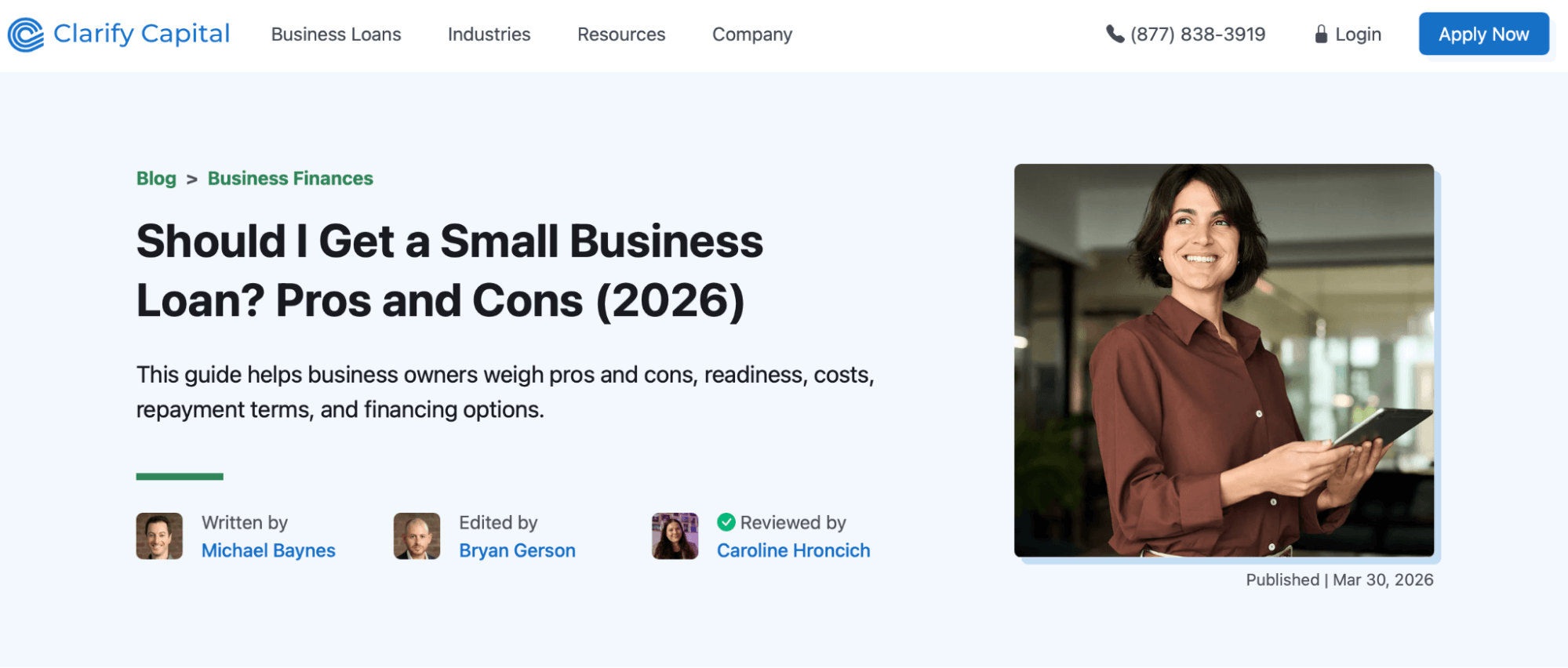
For Clarify Capital, we created a guide to help business owners tell whether they’re ready for a small business loan, and refreshed it in 2026 to add a decision framework by business stage and a comparison of the pros and cons. The guide has 98 referring domains and draws 1,223 visits a month, the most in the set.
Tips To Learn From This Pillar
- Clearly weigh yes against no, or pros versus cons. Two H3s set the signs that a business is likely ready to borrow against the signs it should hold off.
- Add a readiness checklist. Six items let readers check their own situation.
- Compare every option in one table. Five loan types appear side by side on rate, repayment term, loan amount, and best use.
- End with a decision framework. Five steps take you from the question to a choice.
Tawkify: What PDA Means
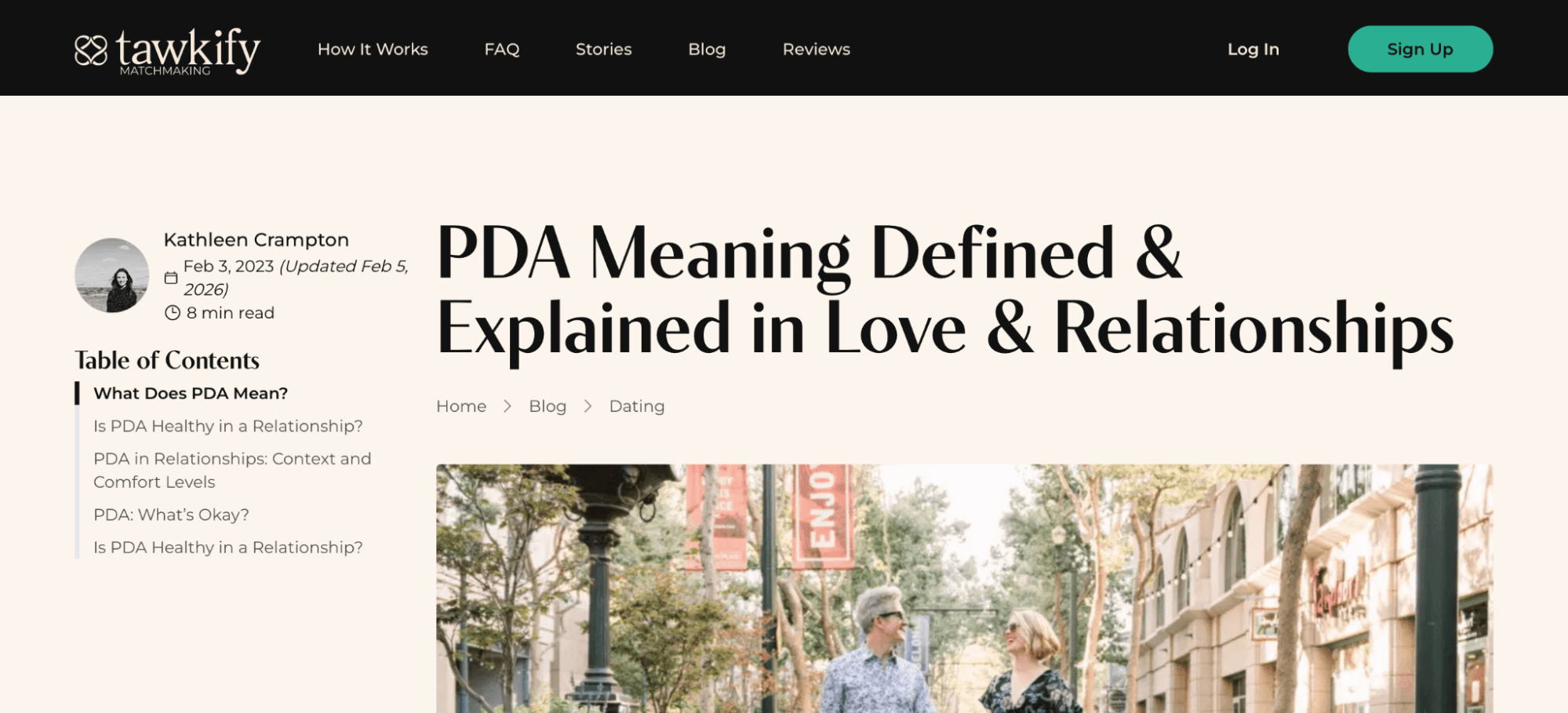
For Tawkify, we refreshed a guide to what PDA means, expanding the definition into a clear, one-sentence answer. It then covers what’s appropriate in different settings, from the workplace to family gatherings to public transit. The page has 40 referring domains and draws 490 visits a month.
Tips To Learn From This Pillar
- Open the definition section with a one-sentence answer.
- Answer a yes-or-no heading (like “Is PDA healthy in a relationship?”) with “Yes” or “No” in the first sentence under it.
- Organize advice by situation.
Clarify Capital: Same-Day Business Loans With No Credit Check

For Clarify Capital, we created a guide to same-day business loans for business owners who need money fast and worry about their credit, and we’ve refreshed it several times since, including adding a comparison of funding products. It opens on the situations that send a business owner looking for funding that day, like payroll due on Friday or a freezer that just failed, then explains that “no credit check” usually means a soft credit pull. The guide has 121 referring domains and draws 418 visits a month.
Tips To Learn From This Pillar
- Make a comparison table your first H2. Clarify Capital compares same-day funding products on time to fund, credit pull, amount, repayment, and best use before it defines anything.
- Add a warning-signs table on a high-stakes topic. Each row in Clarify Capital’s predatory-lender table pairs a red flag with why it matters, which gives publications covering risky lending something specific to link.
- Credit the people behind the page. List the writer, editor, and reviewer with a line on each one’s credentials.
Clarify Capital: No-Doc Business Loans With an EIN Only

For Clarify Capital, we created a guide for business owners hoping to borrow with just an EIN, and refreshed it in 2026 to explain what “no doc” means in practice and to correct common eligibility myths. It answers its core question in the first two sentences: you can’t get a business loan with an EIN alone. The guide has 99 referring domains and draws 321 visits a month.
Tips To Learn From This Pillar
- Answer the core question directly, even when the answer is no. In this case, you can’t actually get a loan with nothing but an EIN.
- Use a worked example, like this page’s $20,000 advance that costs $26,000 to repay at a 1.3 factor rate.
- Place a customer testimonial video partway through the article, if available, to promote engagement and trust.
What Makes a Pillar Page Work
Across the 15, the pages that earned results shared these habits:
| Pick the job before the outline Decide whether the page has to earn links or traffic before you write a heading, since each job calls for different elements on the page. | Put the answer before the explanation Tawkify’s Hinge vs. Tinder comparison puts its at-a-glance table before the table of contents, and Payless Power’s power outage guide answers each question-shaped H2 in its first sentence, so you get what the SERP promised in the first screen. |
| Give publications something to cite Original data, comparison tables, and infographics are also what a digital PR team pitches to journalists, so plan the dataset with that outreach in mind. | Link out to the cluster Link each subtopic to a narrower article on descriptive anchor text. That internal linking strategy makes your site structure clear to readers and search engines and builds topical authority around the pillar. |
| Make long pages easy to scan Clear headings, a sticky table of contents, and FAQ schema (part of basic technical SEO) make for a better user experience on a long page. | Keep it current Review each pillar at least once a year for outdated figures, broken links, and new cluster pages to link. |
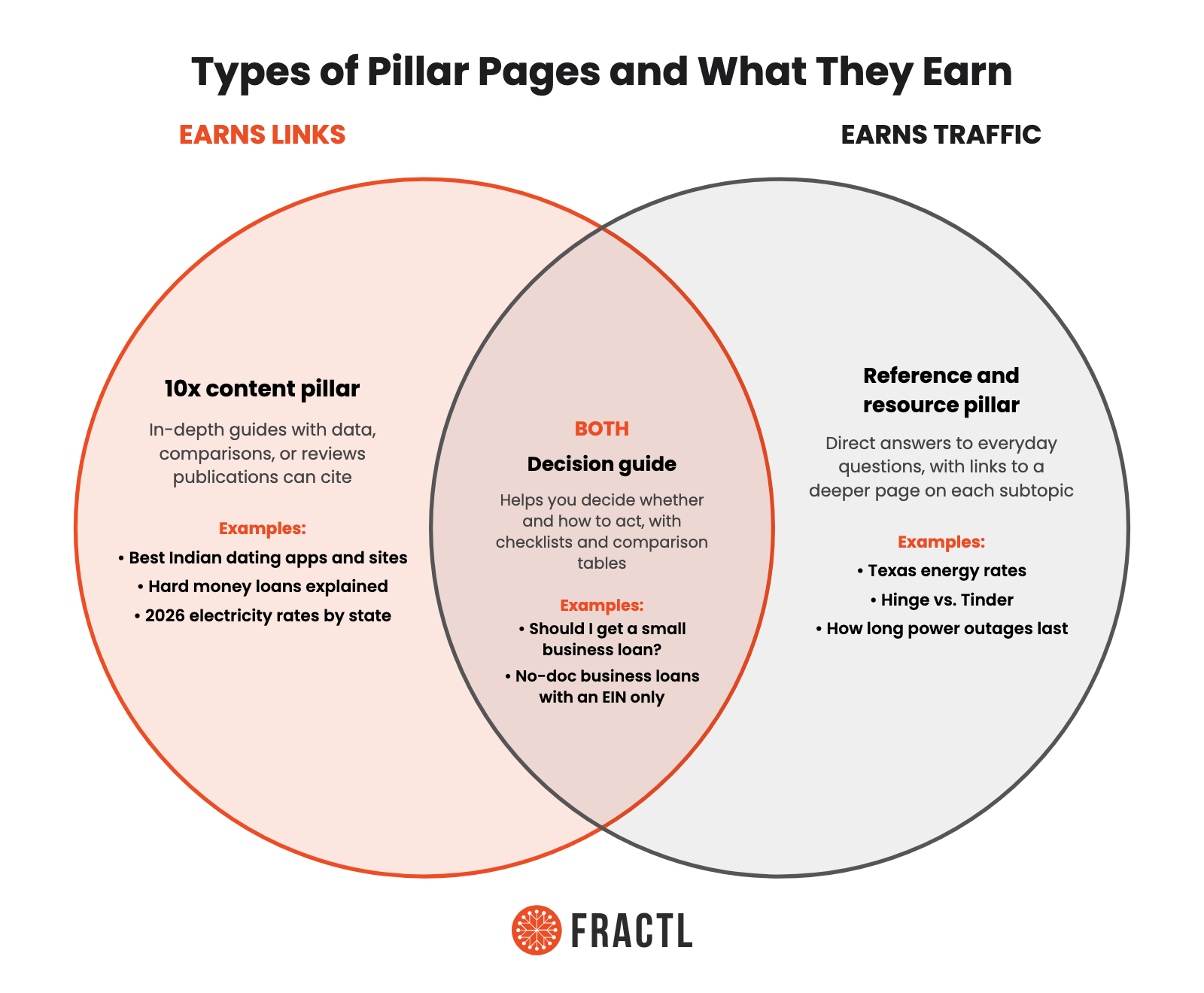
A 10x content pillar page is one long page that covers the whole topic in more depth than anything else ranking for it (content that’s 10 times better than the best existing result). In this set, those pages earned links while the reference and resource pages, which work like a content hub with cluster content behind each section, earned traffic. The pages that earned both are decision guides that help you choose whether and how to act:
An interactive tool can help with either job, the way Payless Power’s rates page repeats its state table in a clickable map.
How To Measure a Pillar Page
Measure each pillar against the job you gave it in your SEO strategy:
 Referring domains For a link pillar, track unique linking sites rather than raw backlinks, since one site can link to a page many times. |  Organic traffic and search ranking For a traffic pillar, track organic sessions in Google Analytics along with rankings for the head term and the long-tail keywords the page covers. |
 Visits to cluster pages A working pillar sends readers on to the narrower articles it links to, so watch how many sessions continue there. |  AI citations Answer engine optimization (AEO) means checking whether AI answers cite or mention the page for its core questions. Brand citations in those answers build entity authority, and Fractl Agents log which pages AI platforms cite for a given query. |
Google Analytics 4 counts a session as a bounce when it isn’t engaged, meaning it lasted 10 seconds or less, triggered no key event, and viewed one page. Someone who checks how long an outage usually lasts and leaves in eight seconds counts as a bounce even though the page did its job, so don’t judge an answer-first pillar by bounce rate.
Decide What Each Pillar Page Should Earn
Before you outline your next pillar, decide whether you want it to earn links, traffic, or both, then check the outline against the pillar page examples here. But remember: a few pages on your website can’t do all the heavy lifting of driving traffic and getting your brand out there.
A pillar page strategy works best as part of a wider organic growth strategy that earns visibility in search, AI answers, and social feeds. Fractl’s content development team plans each page around the job it has to do.
If you want a pillar library built that way, reach out to Fractl.
Methodology
The 15 examples come from clients we have permission to name. On September 30, 2026, we pulled each of those clients’ pages from Ahrefs, matched them to the onsite pages in our client project trackers, and picked the pillars with the most referring domains, the most organic traffic, or strong numbers on both.
Ahrefs traffic figures are estimates, so read them as a comparison between pages rather than exact visit counts.
The traffic, referring domain counts, and page details in this article reflect each page as of September 30, 2026. We update these pages regularly, so the live versions may look different.
FAQ
What is the difference between a landing page and a pillar page?
A landing page is built to get one action, like a sign-up or a purchase, and usually has one call to action and little navigation. A pillar page is built to cover a topic, links out to cluster pages, and puts any CTA after the content.
Are content pillars the same as pillar pages?
No. Content pillars usually mean the few recurring themes a brand posts about as part of its social media content strategy, while a pillar page is a single long page on a website that anchors a topic cluster.
How long should a pillar page be?
Long enough to cover the topic and no longer. Google says it has no preferred word count, and the 15 pages here run from about 1,000 to 2,700 words.
How many cluster pages does a pillar page need?
Enough to give each major subtopic its own article, so every section of the pillar can link to a page that goes deeper.
How often should you update a pillar page?
At least once a year, and sooner when a figure it cites changes.