




Table of Contents
- Newsjacking vs. Reactive PR vs. Trendjacking
- When Newsjacking Works
- How Fast Should Your Brand Respond?
- Five Newsjacking Examples From Fractl's Portfolio
- How To Build Your Newsjacking Process
- How To Measure Newsjacking Results
- When To Bring In Newsjacking Support
- Prepare Your Brand for the Next Relevant Story
- Frequently Asked Questions
Key Takeaways
- Give journalists a reason to cite you. Offer relevant research or expert interpretation that adds to the breaking news story.
- Prepare your response before news breaks. Identify your experts, available data, and approval owner in advance.
- Track response speed separately from coverage timing. Your pitch deadline and a publisher’s publication date measure different things.
- Pass on weak connections. A trending topic alone isn’t a reason for your brand to comment.
- Measure attribution as well as attention. Record brand mentions, brand citations, and relevant coverage alongside backlinks.
Newsjacking means contributing useful expertise or evidence to a developing news story to earn attention for your brand. David Meerman Scott popularized the approach in his 2011 book, explaining how businesses can help reporters interpret breaking events while coverage is still developing.
A story breaks in your industry. You have something to say. But why should a journalist include your brand? Start with the question the headline hasn’t answered. A new policy might need an expert to explain hw it impacts businesses. A debate about artificial intelligence might be missing the experiences of people using it. That’s where you can help: give the writer something useful to add while they’re still developing the story.
Let’s work through how to spot those opportunities, get your team ready to respond, and evaluate the coverage you earn.
Newsjacking vs. Reactive PR vs. Trendjacking
Treat newsjacking as one application of reactive public relations (PR). Reactive PR also includes answering a journalist’s request or responding to a timely industry conversation without a single breaking event. For planning purposes, distinguish the tactics by what starts your response:
| Tactic | Trigger | Your contribution | Example opportunity |
|---|---|---|---|
| Newsjacking | A specific news event or development. | Add evidence or expert interpretation while reporting develops. | Explain the likely operational effects of a newly announced policy. |
| Reactive PR | A timely reporting need. | Respond with a relevant source, quote, or research finding. | Answer a reporter’s request for an industry spokesperson. |
| Trendjacking | A cultural trend or recurring social conversation. | Participate with content that fits your brand and the conversation. | Adapt a popular social format to demonstrate your expertise. |
These are working distinctions, not rigid industry definitions. A campaign can involve more than one tactic. A social media response to a breaking event can be newsjacking, while a post using a popular sound may be trendjacking without contributing to a news story.
So, where should you start? With what you can contribute. If your research answers a reporter’s question, pitch that reporter. If a visual explains your point more clearly, a social post may be the better starting place. Choose the format that helps people understand the story.
When Newsjacking Works
Before you jump on a story, ask yourself: What can we help people understand? You should be able to answer without launching into a description of your product. Name the question, identify the evidence you can offer, and explain why the answer matters to your target audience. If you can’t do that, keep looking.
Use the following checks before you commit research or outreach time:
Use newsjacking when
| Pass on the opportunity when
|
Imagine you sell accounting software, and a tax authority announces a filing change. Your qualified expert could explain which tasks business owners need to review. That’s a useful contribution. A discount on your software is a promotion.
Give the journalist an explanation their readers can use, not a product offer.
Be especially careful when people have been harmed. Can your expert offer qualified information that helps those affected? If the answer is no, sit this one out. Your desire for visibility will be obvious here, and probably not well received.
How Fast Should Your Brand Respond?
For a fast-turn reactive campaign, plan to approve the concept within 24 hours and allow 24 to 48 hours for production. Aim to pitch within 24 to 72 hours of breaking news.
Don’t treat those windows as permission to wait. Ask when the journalist needs your contribution, then work backward from that deadline. Concept approval, research production, and pitching are different stages; allow for each rather than assuming one turnaround estimate covers the entire campaign.
Match your response to the time you actually have. An available expert may be able to answer an immediate question. A survey needs time for sound questions, appropriate respondents, and analysis. Can’t verify the research before the deadline? Offer a narrower expert comment you can support, or pass. Rushed evidence won’t make your pitch more useful.
Coverage Can Take Weeks After You Pitch
Our analysis of 111 newsjacking campaigns measured the interval from pitching to first coverage. The median interval was 15 days. That analysis didn’t measure how long we waited after news broke to send the pitch.
Record your internal milestones separately: when you detected the story, approved the angle, completed the evidence, and sent the first pitch. Then record the date of first coverage.
Use the internal milestones to find delays you can fix. Use the coverage interval to understand publication timing. Neither measure, on its own, establishes that responding faster caused a better result.
Five Newsjacking Examples From Fractl’s Portfolio
Our newsjacking campaigns include responses to specific announcements and research tied to continuing news debates. The distinction helps you decide whether to produce a fast expert reaction or a more developed study. The outcomes are individual campaign results, not forecasts for your brand.
ChatGPT Restrictions and Views From Educators and Students
School restrictions on ChatGPT created questions about cheating, classroom use, and whether bans would help. An education-platform campaign brought educators’ and students’ views into that conversation rather than relying only on commentary about the technology.
The survey of perceptions of ChatGPT in schools examined how the two groups understood and used the tool. It gave reporters evidence about the people affected by the policy debate.

The lesson for your next campaign: look for the people missing from the conversation. Whose experience would help a journalist tell a fuller story? If you can reach that group and explain your research method, you have a starting point for a survey. Keep the findings tied to the people you actually surveyed.
A Follow-Up on ChatGPT in K–12 Classrooms
The next useful question was more specific: how were classroom teachers dealing with the technology as restrictions spread? The K–12 teacher study surveyed 203 teachers and paired their responses with reporting on school restrictions.
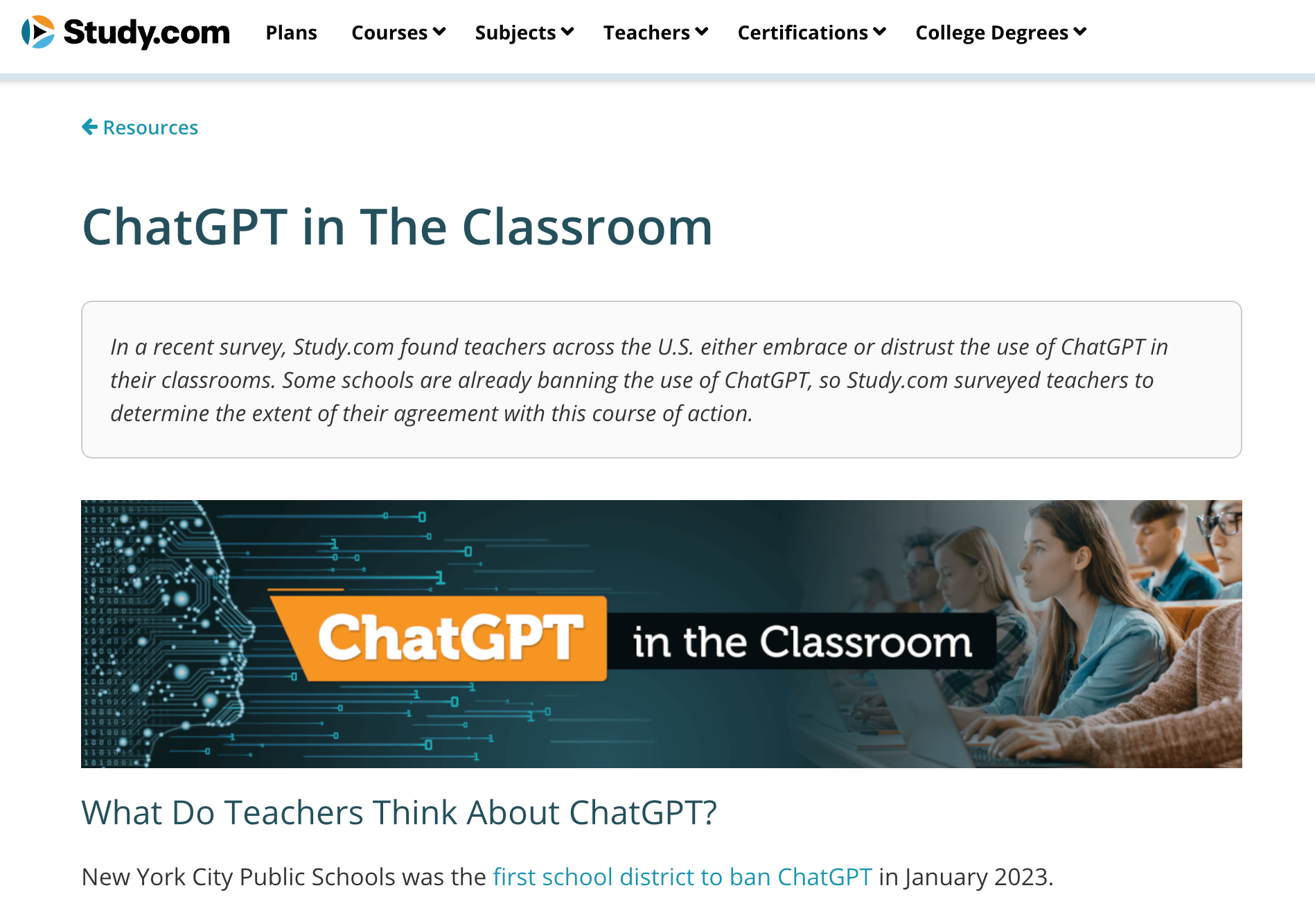
The two education campaigns earned a combined 413 links and brand mentions in our published case study. Coverage across the pair included The Wall Street Journal, Forbes, and CNN.
Once you’ve contributed to a story, ask what readers still need to know. You might focus on a more specific group, examine a new policy, or investigate a different consequence. Give the writer a reason to return to the subject. Sending the same finding again isn’t a follow-up idea.
ZipHealth and the Return-to-Office Debate
For ZipHealth, we connected the return-to-office debate with research about daily habits. The campaign gave a health brand a relevant contribution to a workplace story and earned 586 links and brand mentions.
Your brand doesn’t have to be the obvious spokesperson for the entire story. It does need a credible connection to the part you’re exploring. Here, a health brand could examine habits and well-being without pretending to be an authority on employment law. Look for that connection in your own expertise.
This example responded to a continuing debate rather than a single documented announcement. Treat it as a broader reactive newsjacking campaign when planning your own timing.
ZipHealth and Financial Pressure in Relationships
We also connected recession concerns with research about relationships for ZipHealth. Our published case study recorded 131 links for that campaign. The news connection was the effect of financial pressure on a subject relevant to the brand.
You can use this approach when a broad economic story creates a narrower question your research can address. Keep the finding within that scope: a study about relationships doesn’t establish the direction of the economy or predict a recession.
ZipHealth and AI in Intimate Relationships
ZipHealth’s AI-and-intimacy campaign examined a personal question within the wider conversation about artificial intelligence. The campaign earned 112 links, according to our published case study.
What does a technology story mean for the people using it? That question can lead you beyond another roundup of product features. Find a practical or personal consequence your brand can credibly investigate, then choose a research method that answers it. Adding AI to the headline alone doesn’t give you a new story.
How To Build Your Newsjacking Process
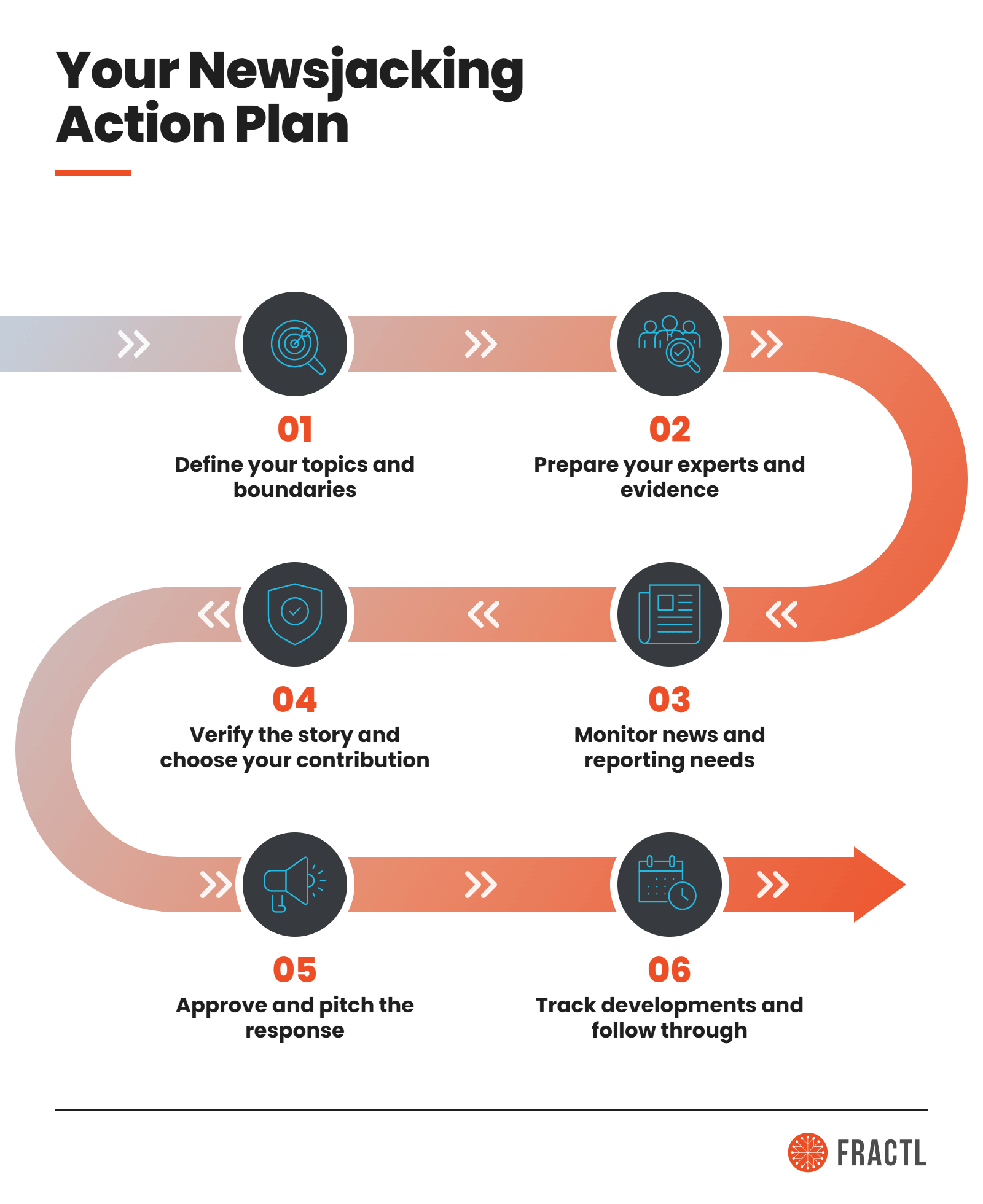
You don’t want to find the right story and then spend the day finding someone to approve your response. Decide who monitors the news, who evaluates the opportunity, and who gives final approval before you need them. Here’s how to put that preparation into practice.
1. Define Your Topics and Boundaries
Choose subjects your business can discuss with evidence. List the questions your experts can answer and the areas that require legal, medical, or other specialist review. Also record topics you won’t use for promotional activity.
Tie those choices to your marketing strategy. If your goal is thought leadership among finance executives, a relevant trade-publication interview may be more useful than a viral consumer post.
2. Prepare Your Experts and Evidence
Build a reference folder with current research, methodology notes, and approved descriptions of your business. Confirm who owns each dataset and whether you have permission to publish it.
Prepare a short biography for each spokesperson and name a backup contact. Your expert should know which subjects they can discuss and how much availability they can offer. Don’t promise an interview before confirming that availability.
Keep a pitch template ready for the basics, but write the actual pitch for the story in front of you. What changed? What can your expert or research explain? Why would this writer’s audience care? Those answers deserve more than a swapped-out headline.
3. Monitor News and Reporting Needs
Use Google Alerts for relevant companies, policy subjects, and industry terms. Check Google Trends for changes in search interest, and follow journalists and thought leaders who cover your topics.
LinkedIn conversations, specialist newsletters, and social media hashtags can help you spot questions worth investigating. Treat posts by influencers as leads to verify, not as confirmation that a claim is true.
Record the original source and time of each potential story. A recycled post about an old announcement shouldn’t start a new campaign by mistake.
4. Verify the Story and Choose Your Contribution
Open the original announcement, study, filing, or other primary source. Check what changed and what remains unknown before deciding what you can add.
Choose a contribution you can substantiate: an expert explanation, a relevant cut of existing data, or new research. For every figure, retain the measured population, collection period, and methodological limits.
If you use artificial intelligence to suggest angles or draft questions, check its output against the evidence. Don’t turn an AI-generated explanation into a quote attributed to your expert without their review and approval.
5. Approve and Pitch the Response
Send your approval owner the proposed angle, supporting evidence, and deadline together. Ask for a decision on the response you’re proposing, rather than opening an unrestricted brainstorming round.
Make the value clear in the opening lines of your pitch: here’s what happened, here’s what we can add, and here’s the evidence or expert you can access. Don’t make the writer work through your company’s history to find the useful part. Keep that background available for when they need it.
Use a press release when you need a formal announcement or supporting record. Don’t make a full release a prerequisite for every expert comment. Adapt your outreach to the reporter’s beat and current coverage.
6. Track Developments and Follow Through
Keep monitoring after you send the pitch. If new information changes your finding, contact the journalists who received it and explain the correction. Update the research page and public posts where appropriate.
Record replies, coverage, and requests for additional evidence. A request you couldn’t answer may identify research worth preparing for the next development.
How To Measure Newsjacking Results
Getting a pitch out quickly is worth tracking, but it’s only the beginning. Did the right publishers use your contribution? Did they credit your brand? Did the coverage bring relevant visitors or inquiries? Your reporting should help you answer those questions, not just celebrate how fast you hit send.
Build your reporting around these measures:
 Response speed Track the interval from identifying the story to sending your first verified pitch, with approval and production milestones recorded separately. |  Relevant media coverage Record the publishers and specialist outlets that covered your contribution, the subject they discussed, and whether they reach your intended market. |
 Brand attribution Distinguish brand mentions, citations of your research, backlinks, and unique referring domains instead of combining them into one link total. |  Business response Look for referral visits, qualified inquiries, branded search activity, and new customers where your measurement setup supports attribution. |
Track social media engagement separately from publisher coverage. A post’s reactions and shares don’t tell you how many journalists used the research. Likewise, changes in search traffic can reflect other marketing campaigns or broader demand.
Connect Coverage With Entity Authority
What do you want people to come to your brand for? That’s the practical question behind entity authority: becoming an identifiable, credible source on a subject.
- Choose newsjacking topics that reflect your expertise, then review whether your coverage reinforces that association.
- Keep your business name, expert credentials, and research attribution consistent across your website and pitches.
- Publish a clear methodology so journalists can distinguish your findings from your interpretation.
- Include generative engine optimization (GEO), or visibility in AI-generated answers, alongside search engine optimization (SEO) in your reporting.
- Monitor whether relevant answers mention your brand or cite your research, rather than assuming that earned coverage guarantees AI visibility.
When To Bring In Newsjacking Support
If your team keeps spotting relevant stories but can’t get a response out in time, identify where the work stalls.
Do you need research support? Someone to coordinate experts? More capacity for outreach?
Look for an agency like Fractl that solves that specific problem rather than simply promising more ideas.
When evaluating newsjacking agencies:
- Ask for documented examples that show the news trigger, the contribution, and the outcome.
- Request a clear explanation of who handles approvals and what happens when a story changes.
- Ask how the agency distinguishes brand mentions from backlinks and how it reports visibility across search and AI platforms.
A case study should make those definitions clear enough for you to evaluate the work without relying on a headline number.
Prepare Your Brand for the Next Relevant Story
Start with one subject your team knows well. If it made headlines tomorrow, who would you call, what evidence would you offer, and who would approve the pitch? Answer those questions now. You’ll be better prepared to help a journalist when the right story arrives.
If you need help turning timely research into a coordinated digital PR program, partner with Fractl.
Frequently Asked Questions
Can B2B brands use newsjacking?
Yes. Focus on developments that affect your buyers’ work, such as industry policy, operating costs, or technology decisions, and contribute qualified analysis.
Can you use existing research for newsjacking?
Yes, if the research addresses the current question and you disclose when and how you collected it. Don’t present an older survey as a new measurement of today’s response.
Can a small team run a newsjacking program?
Yes, but start with a narrow topic and a response format your team can verify and approve. Expand only when you can maintain those standards without disrupting your other work.
Is newsjacking the same as newsgathering?
No. Newsjacking contributes a brand’s expertise or evidence to a news conversation, while newsgathering is the journalistic work of collecting and verifying information for reporting.