




Table of Contents
- Author Bio Examples That Demonstrate Strong E-E-A-T
- How To Write an E-E-A-T-Optimized Author Bio
- Where Author Bios Should Live on Your Website
- The Importance of E-E-A-T in Content
- Building Author Authority Beyond the Bio
- Your Author Bio Is Your E-E-A-T Foundation
- FAQ
Google’s algorithm tends to surface content from people who actually know what they’re talking about. So, how does a search engine figure out whether a writer has real expertise?
One of the most direct signals you can give it is a well-crafted author bio connecting your content to a real person with verifiable credentials, hands-on experience, and a track record in their field. It’s one of the simplest ways to demonstrate E-E-A-T (Experience, Expertise, Authoritativeness, and Trustworthiness) and build search visibility across traditional search and AI platforms.
That’s why our cofounder, Kelsey Libert, recommends that all clients build authoritative author profiles for their subject matter experts to give consumers and search engines clear source transparency.
| How an Author Bio Can Promote E-E-A-T | |
|---|---|
 Experience Specific, real-life details about what you’ve actually done carry weight. Life experience and personal involvement with the topic are things Google’s Search Quality Rater Guidelines look for when evaluating the first “E.” |  Expertise Professional credentials, certifications, degrees, and focused subject matter knowledge tell readers and search engines you have formal qualifications. |
 Authoritativeness Publications, media citations, conference presentations, and industry recognition establish authority beyond your own website. |  Trustworthiness A real name, professional headshot, and links to external profiles make you verifiable. Transparency about who’s behind the content builds trust. |
I spend most of my time at Fractl editing and optimizing on-site content, and I’ve seen how even strong articles severely underperform when there’s no clear signal as to who wrote them or what qualifies that person to do so. Below, I’ll walk through real examples across four verticals and show you what makes a great bio, plus a step-by-step framework for writing a great author bio of your own.
Author Bio Examples That Demonstrate Strong E-E-A-T
The best way to understand what makes a bio effective is to see a few examples. Here are bios from four different verticals, with an E-E-A-T analysis of each.
Finance: Clarify Capital
Clarify Capital cofounders Michael Baynes and Bryan Gerson both have bios that demonstrate strong E-E-A-T in a your-money-your-life (YMYL) vertical where trust and credentials are non-negotiable. We work with Clarify Capital on their content strategy, and their founder bios are a great example of what this looks like when done well.
| Michael Baynes | |
|---|---|
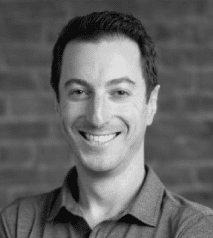 | “Michael spent 15+ years in business financing — not behind a desk, but in the trenches with entrepreneurs. He co-founded Clarify Capital to cut through the noise: fast funding, straight answers, no fine-print surprises. He holds dual degrees in Accounting and Finance from Indiana University’s Kelley School of Business. His wheelhouse includes SBA loans, term loans, lines of credit, and equipment financing (with same-day funding when you need it). The right capital at the right time changes everything. That’s what drives him. Outside of work, he’s traveling with his family and looking for the next adventure.” |
What works here is that Michael leads with quantified experience (over 15 years), then immediately makes it specific (he wasn’t sitting behind a desk; he was working directly with entrepreneurs). His dual degrees from a named institution establish formal expertise, and listing his specific product knowledge tells readers and search engines exactly what subject matter he covers. The personal detail about traveling with his family rounds it out.
| Bryan Gerson | |
|---|---|
 | “Rather than working in finance, Bryan’s true goal was to back the underdog. After graduating from the University of Arizona in 2011, he landed in alternative finance, where he helped small businesses get capital that traditional banks wouldn’t give them. Since cofounding Clarify Capital in 2017, he’s personally overseen over $700 million in funding across trucking, restaurants, retail, construction, and health care (industries where access to capital can make or break a business). The number he’s most proud of, though, is that of the calls from clients sharing wins, like new locations opened, payroll covered during rough months, and opportunities they were able to grab before they disappeared. His approach is to treat every client like family, listen more than you talk, and remember that behind every application is someone betting on themselves. Bad credit, no-doc lending, invoice factoring, working capital — Bryan specializes in finding a path forward when others say no.Outside the office, he’s spending time with his family and staying grounded in what matters most.” |
Bryan’s bio takes a different approach, leading with motivation before credentials. The $700 million figure across five named industries is the kind of quantified, verifiable experience that builds authoritativeness in Google search. His specialties (bad credit, no-doc lending, invoice factoring, and working capital) connect directly to what potential readers are searching for. And the emotional detail about client wins builds trust through transparency about his values.
Both bios show rather than tell, use specific numbers instead of vague claims, and connect personal motivations to professional expertise. In a YMYL financial vertical, that level of detail is super important for E-E-A-T.
Health Care: Dr. Angela Ryan Lee, Healthline
Health care is one of the strictest YMYL topics, where accurate information can directly affect someone’s well-being. Healthline’s medical advisor bio for Dr. Angela Ryan Lee is a model for how to meet that standard:
| Dr. Angela Ryan Lee | |
|---|---|
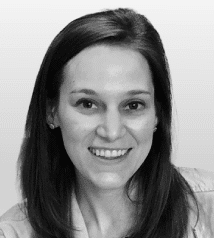 | “Dr. Angela Ryan Lee is an ABMS board-certified internal medicine physician specializing in cardiology. She is a fellow of the American College of Cardiology and a member of the National Lipid Association and the American Society for Echocardiography. She lives in Dallas, Texas, and provides consulting services related to cardiovascular disease and health communication.” |
What makes this bio work is that every claim is independently verifiable, with named institutions and certifying bodies a reader (and Google) can easily look up. For health care content, where misinformation can cause real harm, this level of specificity is the baseline for demonstrating high E-E-A-T.
Digital Marketing: Kelsey Libert, Search Engine Land
In digital marketing, you need to demonstrate that you’ve done the work. Fractl cofounder Kelsey Libert has an author bio on Search Engine Land that’s a strong example of how to signal expertise in a competitive content marketing vertical.
| Kelsey Libert | |
|---|---|
 | “Kelsey Libert is a cofounder of Fractl, a leading growth agency ranked in the top 3 of the “Clutch Leaders Matrix” for Content Marketing out of 26,000 global firms and recognized as BuzzStream’s “Top 5%: Most Effective Accounts” for Digital PR. Kelsey has presented industry research and case studies at MozCon, Pubcon, and international conferences and has earned columns in Harvard Business Review, Inc., and Entrepreneur. Fractl is renowned for content strategies that drive high-authority earned media, qualified organic traffic, and a bottom-line impact for Fortune 500 brands, funded startups, and SMBs.” |
The bio opens with her role as cofounder of Fractl, then immediately layers in third-party validation and builds from there with:
- Organizational credibility. Fractl ranked in the top three of Clutch’s Leaders Matrix for content marketing out of 26,000 global firms, establishing the brand’s authority before her individual credentials appeared.
- Individual authoritativeness. Named conference appearances (MozCon, Pubcon) and publications (Harvard Business Review, Inc., Entrepreneur) show external recognition of her expertise.
- Subject matter focus. Her listed areas of expertise (SEO, GEO, content, AI SEO, link building, and technical optimization) connect directly to the topics she publishes on.
What makes this effective is that it combines organizational credibility with individual authority and a clear subject matter focus. If you land on one of her articles, you can instantly assess whether she’s qualified to cover the topic. That’s what a good author bio should do for search engine optimization and reader trust.
Technology and Media: Nilay Patel, The Verge
Nilay Patel’s bio on The Verge opens with a personal anecdote that immediately sets it apart from a standard credentials list.
| Nilay Patel | |
|---|---|
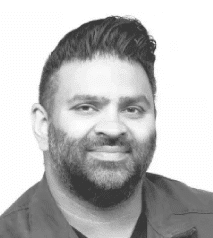 | “When Nilay Patel was four years old, he drove a Chrysler into a small pond because he was trying to learn how the gearshift worked. Years later, he became a technology journalist. He has thus far remained dry. Nilay Patel is cofounder and editor-in-chief of The Verge, the technology and culture brand from Vox Media. In his decade at Vox Media, he’s grown The Verge into one of the largest and most influential tech sites, with a global audience of millions of monthly readers and award-winning journalism with real-world impact. Honored in Adweek’s “Creative 100” in 2021, under Patel’s leadership, The Verge received its first Pulitzer and National Magazine Award nominations. Patel is a go-to expert voice in the tech space, hosting The Verge’s Webby award-winning podcasts, Decoder with Nilay Patel and The Vergecast, and appearing on CNBC as a regular contributor. He received an AB in Political Science from the University of Chicago in 2003 and his J.D. from the University of Wisconsin Law School in 2006.” |
Here’s what makes this work so well:
- Personal opening. The childhood story thematically connects early curiosity about how things work to a career covering technology, making the bio memorable and unmistakably human.
- Role and scale. His title (cofounder and editor-in-chief) paired with the publication’s readership establishes his position and impact.
- Named recognitions. Adweek’s Creative 100, Pulitzer and National Magazine Award nominations, and Webby award-winning podcasts (Decoder and The Vergecast) build authoritativeness through third-party validation.
- Education as a credential. Degrees from the University of Chicago and the University of Wisconsin Law School are relevant to his tech policy coverage.
- Broadcast authority. Regular CNBC appearances extend his credibility beyond the written word.
This example shows how your author bio can pack serious E-E-A-T signals while still having genuine personality.
How To Write an E-E-A-T-Optimized Author Bio
Whether you’re writing for your author page, your company’s “about us” page, or a guest post byline, every strong bio shares similar core elements. Here’s how to make it boost your website’s E-E-A-T:
- Lead with your strongest credential. Whatever makes you most qualified on the topic (a degree, a certification, years in the industry, or a cofounding role), put it first. Don’t bury it under generic filler.
- Quantify your experience. Use specific numbers: years in the field, revenue generated, clients served, projects completed. “Overseen $700 million in funding” is more persuasive than “extensive lending experience.”
- Connect your expertise to reader needs. Explain how your experience benefits the people reading your content. If you specialize in SBA loans or content strategy, say so — that’s what your potential reader is searching for.
- Add one personal detail. A founding story, a passion outside work, or something else that makes you a person, not just a profile. This is what separates a great bio from a LinkedIn headline.
- Include verification paths. Link to social media profiles, published work, or your company page so readers and search engines can corroborate your claims. These links are E-E-A-T signals in themselves.
- Tailor the length to the placement. Two to three sentences for an author box or guest post blurb; a full paragraph or more for a dedicated author page or “about us” section.
- End with a call to action. Link to your company page, a relevant article, or your contact page to give readers a next step and signal to search engines where you fit in the broader content ecosystem.
- Balance professional authority with a personal touch. Don’t write a bio that’s all credentials and no humanity, or all personality and no substance.
Short Bio vs. Long Bio
I’ll help you decide which you need and where:
| Short Author Bio | Long Author Bio |
|---|---|
|
|
Internal Linking
Link from each author’s bio page to the articles they’ve written, and link from the articles back to the author page. This creates a clear relationship that search engines can follow, helping them understand who’s behind the content and whether that person has the authority to cover the topic. A connected internal linking structure is one of the more overlooked aspects of how SEO and content marketing work together to improve search rankings.
First Person vs. Third Person
Most professional author bios are written in third person (“Kelsey Libert is a co-founder of Fractl…”). Third person is the standard for bylines, guest posts, and anywhere a bio appears alongside published content.
First person (“I co-founded Clarify Capital to cut through the noise…”) works on personal “about” pages, founder profiles, and when the goal is building a direct connection with the reader. Both can signal E-E-A-T effectively; the key is matching the voice to the context.
Where Author Bios Should Live on Your Website
Your own bio only works as an E-E-A-T signal if search engines can actually find it. Here’s where to place them for maximum impact on search visibility and user experience:
- Author boxes on blog posts. A short bio with a headshot, name, title, and a two-to-three sentence blurb on every article. This is the minimum. Every piece of content on your site should be tied to a named author.
- Dedicated author pages. A full-length bio page for each content creator, linked from every byline. This is the webpage Google’s quality raters look to when evaluating whether an author has real expertise. Make these pages indexable.
- About us page. Team bios on your company’s about page, especially for smaller businesses where the founder’s credentials are the brand’s credibility.
- Schema markup. Implement Person schema on author pages and Article schema with author attribution on blog posts. This structured data helps search engines connect authors to their content and can support knowledge panel generation.
- Guest post bios. When publishing on external sites, use a consistent bio that links back to your author page on your website. These backlinks reinforce your author entity and create off-site E-E-A-T signals that strengthen your Google ranking over time.
The Importance of E-E-A-T in Content
Google introduced the E-E-A-T acronym (originally E-A-T) in its Search Quality Rater Guidelines and added “Experience” as a factor in December 2022.
These aren’t direct ranking factors like backlinks or page speed; they’re concepts that Google’s quality raters use to evaluate whether search results deliver high-quality content, and Google’s algorithm is engineered to reward pages that align with those standards.
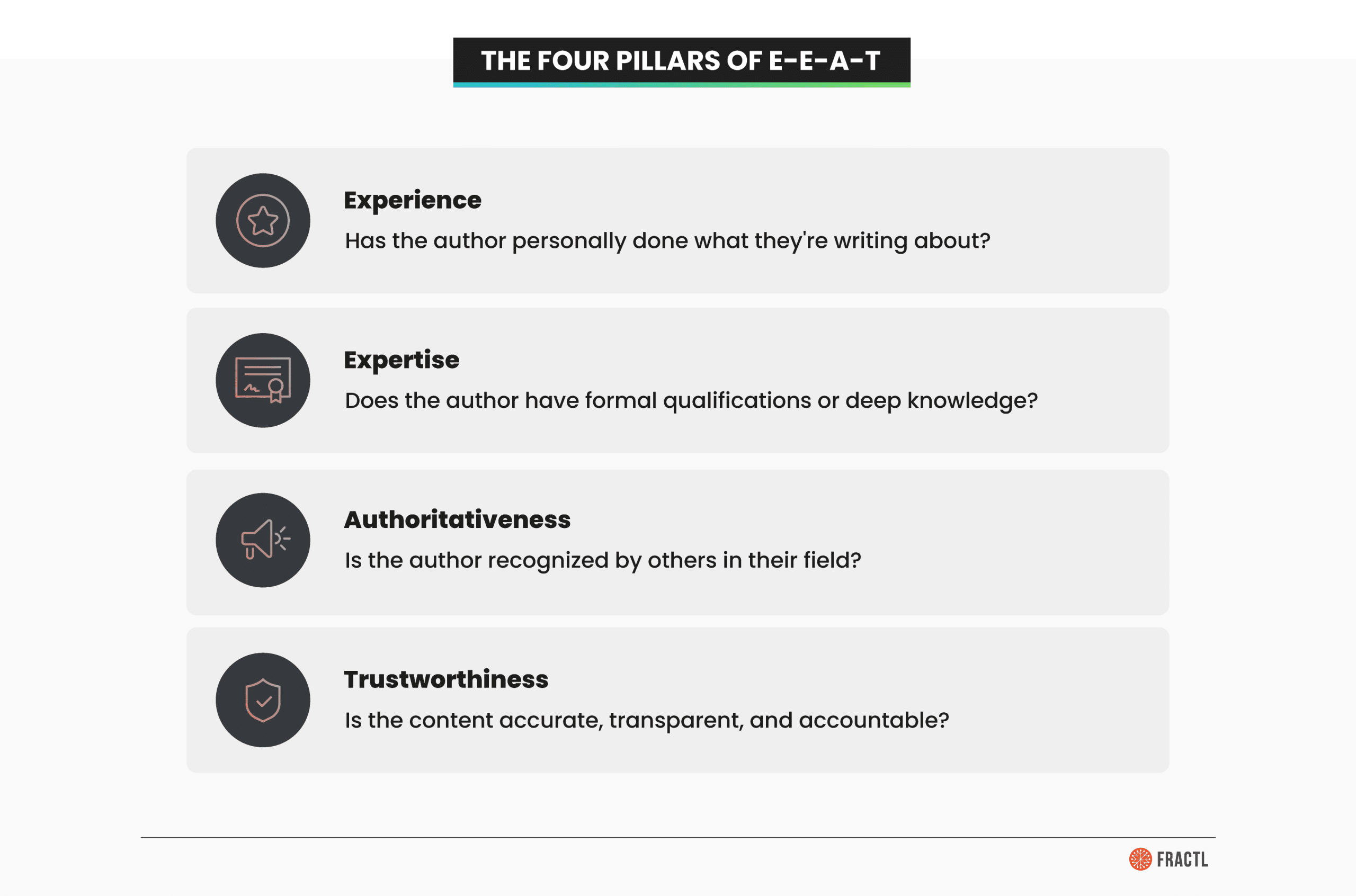
I’ll break down how each element applies to any type of content:
- Experience. Have you personally done what you’re writing about? First-hand experience with the subject matter is what separates a practitioner from someone summarizing information they found elsewhere.
- Expertise. Do you have formal qualifications, training, or deep knowledge? Certifications, degrees, and years of focused work all signal expertise.
- Authoritativeness. Are you recognized by others in your field? Publications, citations, media mentions, and speaking engagements build authoritativeness beyond a single website.
- Trustworthiness. Is the content accurate, transparent, and produced by an accountable source? Trustworthiness is the foundation that ties the other three together.
Google needs ways to verify that the people behind your content are qualified. Under the E-E-A-T guidelines, author bios are one of the clearest on-page signals you can provide.
Topics Where E-E-A-T Is Extra Important
The stakes get higher for content that affects a person’s safety or well-being (aka YMYL):
| Your-Money-Your-Life (YMYL) Topics | ||
|---|---|---|
 Health care |  Finance |  Legal guidance |
Because inaccurate information can cause real harm, content about financial products, medical treatments, or legal advice faces tighter scrutiny.
Why Author Bios Matter Now More Than Ever
Gen AI tools like ChatGPT have made it possible to produce content at scale with minimal human input. As a result, search engines are flooded with low-quality, AI-generated content that lacks expertise and accountability. Most of it reads the same because it’s drawn from the same training data, regurgitating what already exists instead of adding anything new.
Google’s response has been to double down on helpful content and trustworthy sources. Google AI features like AI Overviews pull from authoritative sources because the algorithm needs to distinguish between content written by someone with real knowledge and content generated by a machine trained on the internet.
In this environment, every piece of content without a credible author attached is at a disadvantage.
This is where your author bio becomes a differentiator: When a quality rater (or a reader) lands on a page and sees a bio that says “board-certified cardiologist with peer-reviewed publications” or “cofounded a lending company and oversaw $700 million in funding,” that’s a trust signal AI-generated content can’t replicate. It ties the content to a verifiable human with skin in the game.
Our SVP of Research, Kristin Tynski, demonstrated this problem in a 2019 experiment when she created an entire fake blog with AI-generated posts and an AI-generated author headshot. The fake site was virtually indistinguishable from a real one. It was an early warning about how easily AI could fabricate both content and author identity, and it’s exactly why verifiable, detailed author bios matter so much today.
Author bios are a line of defense against misinformation and a signal that real people with fact-checked expertise stand behind the content.
Building Author Authority Beyond the Bio
Your author bio is the foundation, but strong E-E-A-T comes from a pattern of visible authority across the web. What you write on your own site is a starting point; what happens off-site is what builds real authoritativeness in Google search results and earns the kind of trust that improves your SERP performance over time. Here are several ways authors can strengthen those off-site credibility signals:
- Guest posts and bylined articles. Publishing on reputable sources in your industry creates off-site corroboration of your expertise. Each bylined article with your bio on a high-authority publication is another data point for search engines.
- Podcast appearances and speaking engagements. These generate additional signals that you’re a recognized voice in your field. They also come with bios, backlinks, and mentions that reinforce your author entity.
- Case studies and original research. Producing in-depth, data-backed content positions you as a primary source rather than someone summarizing what others have already said. Authoritative sources are the ones creating the data, not recycling it.
- Product reviews and expert commentary. Getting quoted or cited as a subject matter expert in news articles, industry publications, or product reviews builds authoritativeness through third-party validation.
- Digital PR. Earning coverage from high-authority publications creates backlinks and brand mentions that establish brand authority through link building. At Fractl, we’ve seen how digital PR campaigns that feature client experts in major media outlets strengthen those individuals’ E-E-A-T profiles along with the brand’s overall search visibility.
The common thread: author authority isn’t something you declare in a bio. It’s something you build through a consistent, visible pattern of expertise across content creation, media coverage, and industry engagement. The bio is where you document it. The off-site signals are what make it credible.
Your Author Bio Is Your E-E-A-T Foundation

AI-generated content is everywhere, and Google’s algorithm is increasingly good at identifying real expertise. This makes your author bio a foundational element of any solid SEO strategy. Every piece of content should be tied to a real person with verifiable author credentials and demonstrated experience.
The investment is small (a few well-crafted paragraphs per author), but the payoff can be huge. As you publish more content, earn media coverage, and build off-site signals, your bio becomes an anchor for an expanding web of E-E-A-T signals that benefit your entire site’s search visibility. Measurable metrics like organic traffic, keyword rankings, and domain authority all improve when search engines can confidently connect your content to qualified people.
Start with the bio and build from there. Talk to Fractl about how we can build a content strategy that strengthens your E-E-A-T signals across every channel.
FAQ
What does E-E-A-T stand for?
E-E-A-T stands for Experience, Expertise, Authoritativeness, and Trustworthiness. Google added the second “E” for “Experience” in December 2022 to its Search Quality Rater Guidelines, reflecting the importance of first-hand experience in evaluating content quality.
Are author bios a direct Google ranking factor?
Author bios aren’t a confirmed direct ranking factor. However, Google’s algorithm is designed to surface content that demonstrates E-E-A-T, and author bios are one of the most visible on-page signals of expertise and trustworthiness. They help quality raters and users evaluate content credibility, which ultimately influences how pages perform in search.
How long should an author bio be?
It depends on the placement. A short bio (two to three sentences) works for author boxes and guest post bylines. A long bio (one to several paragraphs) belongs on dedicated author pages where you can include the full range of credentials, experience, and personal details that demonstrate E-E-A-T.
Should I write my author bio in the first or third person?
Third person is the standard for professional author boxes, bylines, and most on-site bio placements. First-person works well on personal “about” pages and when you want to build a more direct connection with the reader. Both can demonstrate E-E-A-T effectively.
How often should I update my author bio?
Review your bio at least twice a year, or whenever you gain a significant new credential, publication, or accomplishment. An outdated bio with stale information can undermine trustworthiness, and keeping it current ensures it reflects your strongest, most recent E-E-A-T signals.