



Table of Contents
- What Digital PR Is and Why It Matters More Than Traditional Link Building
- Comparing Traditional Link Building to Digital PR
- Key SEO Benefits of Digital PR
- How To Build an Effective Digital PR Strategy
- Overcoming Common Concerns About Digital PR
- How Digital PR Aligns With Fractl’s Multi‑Tactic Organic Growth Approach
- FAQ
When your brand needs to stand out in a crowded digital space, integrating digital PR into your SEO and content marketing mix can boost backlinks, search engine rankings, and organic traffic — while also elevating brand awareness through high‑quality media coverage. Below, we outline how a strong digital PR strategy can transform your link-building efforts and deliver long‑term value through media placements and quality links.
What Digital PR Is and Why It Matters More Than Traditional Link Building
Digital PR blends content creation, outreach, and public relations tactics to support SEO goals. Rather than relying on guest posting or manual link exchanges, you produce data-driven, newsworthy content, such as original research, expert commentary, or trend-based analysis, that resonates with journalists, bloggers, and influencers at media outlets.
A robust digital PR strategy goes beyond simply securing links (which is what traditional link building focuses on). It emphasizes building relationships with writers and editors, pitching content to target audiences, and earning media mentions or placements that often result in multiple high-authority backlinks. Over time, this strengthens your backlink profile and enhances your site’s domain authority and site authority.
An example is the 16-month engagement we at Fractl had with Payless Power. We created data-driven content tailored to energy consumers, including a piece highlighting average electric bills by state, which tapped into highly searched, evergreen topics.
The campaign earned placements across high-authority publishers like Yahoo!, MSN, MarketWatch, and EcoWatch — coverage that’s nearly impossible to secure without compelling original research and digital PR professionals who know how to build strong relationships with media contacts.
Over the course of the campaign, we increased the client’s organic traffic value by more than $974,000, which is a testament to the long-term impact of strategic content and media outreach.
Comparing Traditional Link Building to Digital PR
While both traditional link building and digital PR aim to improve search engine rankings, the methods and the long-term results are fundamentally different. Understanding the distinctions between the two can help marketers choose a more sustainable, brand-building approach to SEO.
Below is a comparison that highlights how digital PR link building stacks up against traditional tactics in terms of quality, risk, and long-term brand value.
| Traditional Link Building vs. Digital PR | ||
|---|---|---|
| Characteristic | Traditional link building | Digital PR link building |
| Link source | Often low‑ to mid-tier blogs or manual placements | High-authority media sites, trusted publications, and niche outlets |
| Risk of devaluation or penalties | High (link farms, paid links, etc.) | Low — editorial links are earned organically |
| Brand visibility and awareness | Limited | Includes brand mentions, exposure to new audiences, and improved reputation |
| Long-term value | Often short-lived if outreach stops | Long-term: Media coverage persists, links remain, and reputation grows |
Key SEO Benefits of Digital PR
Integrating digital PR into your broader organic growth program can yield multiple SEO and brand benefits:
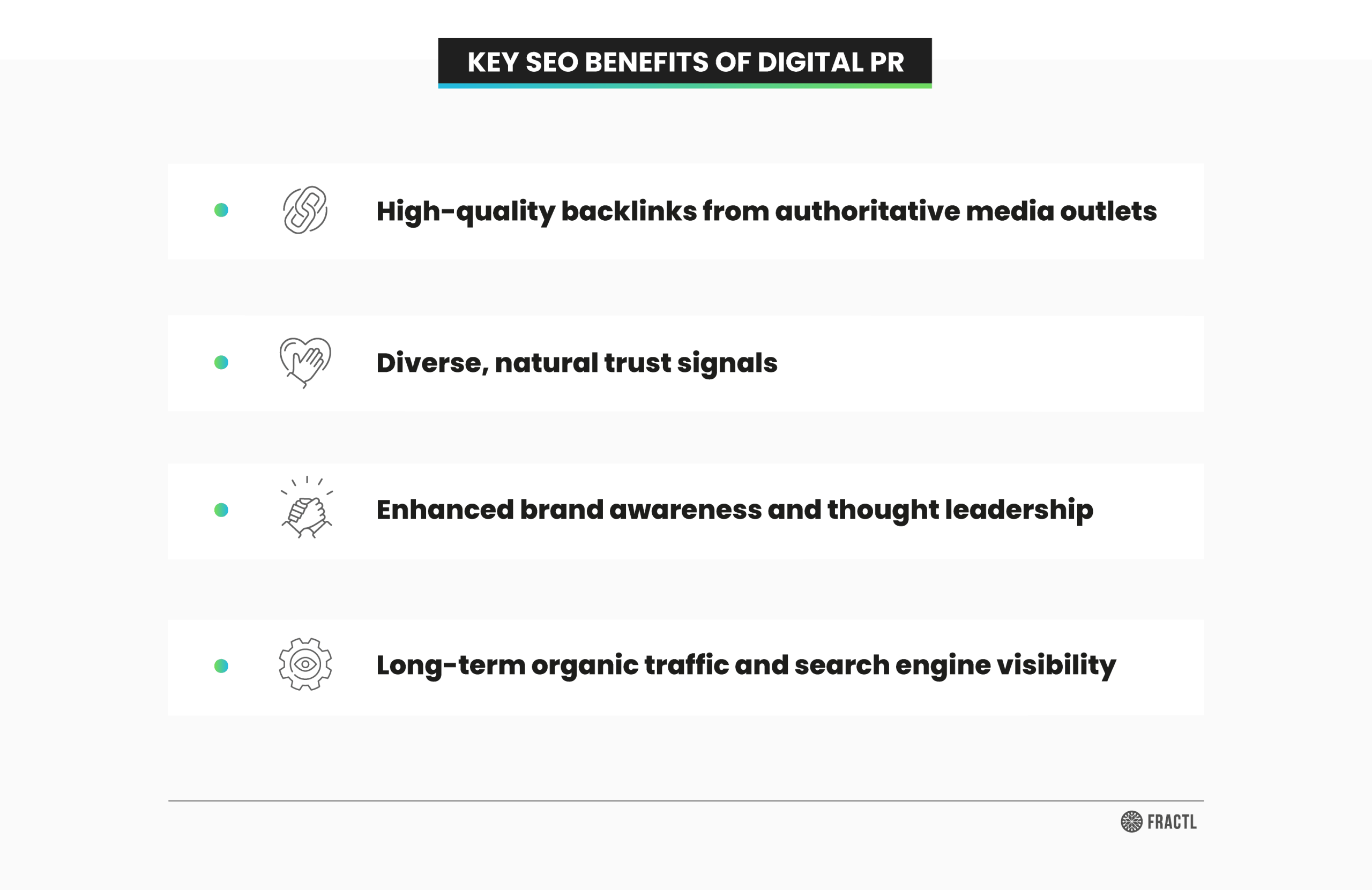
High-Quality Backlinks From Authoritative Media Outlets
Digital PR campaigns frequently earn links from high-authority sites, which boost SEO rankings more than dozens of low-value links. These high-quality backlinks improve your backlink profile and contribute to a better domain rating over time.
Diverse, Natural Trust Signals
Media coverage often yields a mix of dofollow, nofollow, and syndicated links, plus unlinked brand mentions. This variety creates a more authentic and varied backlink profile, which search algorithms tend to favor.
That natural diversity supports SEO while also signaling credibility and authority to both users and search engines. As a result, it can increase brand trust while protecting your site from algorithmic penalties that sometimes affect traditional link-building tactics.
Enhanced Brand Awareness and Thought Leadership
When your brand name appears in respected publications through media coverage or expert commentary, it builds thought leadership and credibility. This kind of exposure, across social media, news outlets, and industry blogs, drives referral traffic and raises your brand’s reputation.
Long-Term Organic Traffic and Search Engine Visibility
With ongoing digital PR efforts, your site gains cumulative SEO benefits, including improved search engine rankings, growing organic traffic, and a stronger presence for branded and nonbranded queries. Over time, these compounding effects contribute significantly to your content marketing ROI.
How To Build an Effective Digital PR Strategy
To maximize the impact of digital PR, treat it as a core element of your marketing, not an afterthought. A successful campaign involves disciplined outreach, quality content creation, media relations, and strategic timing.
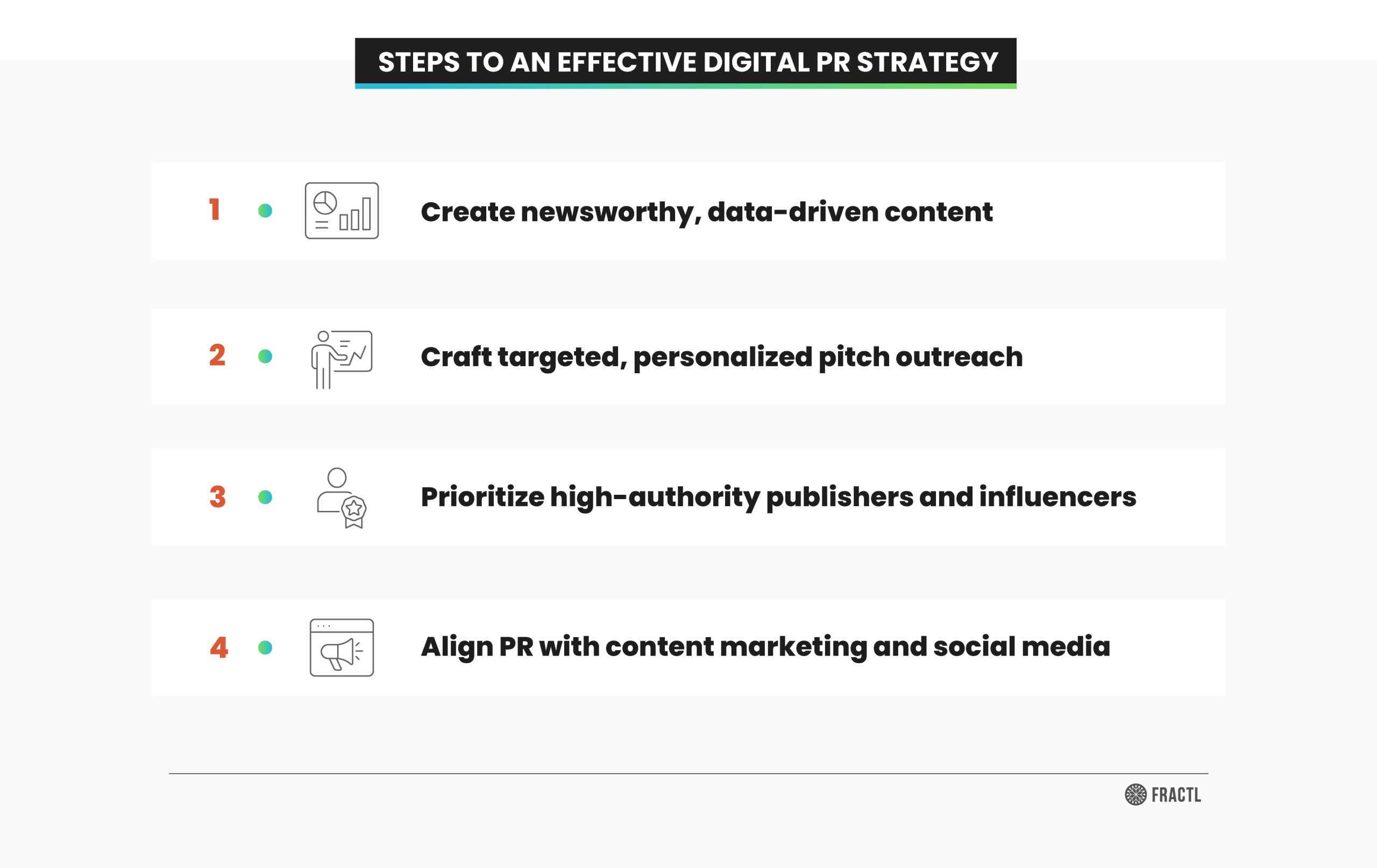
Produce Newsworthy, Data-Driven Content That Attracts Media Attention
Examples of effective content for digital PR include:
- Original research or industry benchmarks that offer fresh insights.
- Data-driven studies or surveys that supply credible metrics for journalists and bloggers.
- Trend-based content or timely press releases tied to real-time events or topics, possibly leveraging tools like Google Trends.
- Infographics or visual assets that simplify complex data, making it easy for media outlets to republish and cite.
Craft Targeted, Personalized Pitch Outreach to Media Outlets
Instead of mass outreach or generic guest posting, tailor each pitch to the writer’s beat or recent coverage. Highlight why your content matters to their audience and offer exclusive angles or access when appropriate. Personalized outreach improves pickup rates and leads to higher-quality media placements.
Consider connecting with journalists via platforms like LinkedIn before pitching — engaging with their content and understanding their interests can improve your outreach success.
Focus on High-Authority Publishers and Influencers
Prioritize outreach to respected news outlets, trade publications, and industry influencers with strong domain authority. Coverage from these sources often leads to syndication, social sharing, and referral traffic — driving both brand awareness and SEO benefits.
Combine Digital PR With Complementary Strategies
Digital PR is most effective when it complements other marketing tactics. Align PR campaigns with broader content marketing plans, social media pushes, and thought leadership efforts. This cross-channel approach fosters brand growth across organic search, social media, and referral channels.
Overcoming Common Concerns About Digital PR
Some marketers hesitate to allocate resources to digital PR because they view it as unpredictable or resource-intensive. While results may take time, the long-term benefits typically outweigh the costs. Below are common objections and how digital PR addresses them:
- Digital PR takes too long to show results. High-authority placements tend to yield evergreen value. Once a story is live, especially with backlinks, it can drive referral traffic and improve SEO for years to come.
- A single campaign may not deliver enough value. Media mentions often lead to syndication, social shares, and secondary links, which extend the impact and boost your return on investment.
- It’s all about backlinks and not worth it if links aren’t dofollow. By focusing on brand mentions, expert insight, and overall content value, not just link types, you build trust, reduce risk of algorithmic penalties, and support long-term growth.
How Digital PR Aligns With Fractl’s Multi‑Tactic Organic Growth Approach
At Fractl, we offer link-building services that go beyond traditional guest posting or boilerplate content. Our digital PR agency services combine data-driven research, creative content creation, and strategic outreach to deliver high-quality backlinks, media mentions, and referral traffic.
With digital PR as a central component of your strategy, you build a healthy backlink profile rooted in quality, brand authority, and media credibility, not just volume. That makes your SEO gains more sustainable and helps maintain strong search engine visibility over time.
When you’re ready to amplify your brand through strategic digital PR and high-quality link-building campaigns, get in touch.
FAQ
Have questions about how digital PR supports link building and SEO performance? Below are answers to some of the most common questions marketers ask.
What is the typical timeframe to see SEO gains from digital PR?
Results vary by campaign, but many brands begin seeing an improvement in domain rating, referral traffic, or search engine rankings within three to six months after a major placement.
How many backlinks should a digital PR campaign aim to earn?
Quality matters more than quantity. Aim for a few high-authority placements that deliver powerful backlinks, rather than chasing dozens of low-value links through traditional link‐building tactics.
What kinds of content perform best for digital PR?
Original research, data-driven studies, expert commentary, infographics, and newsworthy, trend-based content typically perform best, especially when they align with current events or industry trends.
Can unlinked brand mentions still benefit SEO?
Yes. Brand mentions, even without a link, help build authority, support your brand’s reputation, and signal relevance to journalists, influencers, and search algorithms alike.
How should digital PR fit into a broader organic growth strategy?
Digital PR works best as part of a holistic strategy that includes content marketing, social media amplification, thought leadership, and SEO optimization, which ultimately creates cross-channel visibility and long-term organic growth.