




Table of Contents
- Yes, We’re Calling It GEO — and the Industry Agrees
- SEO Isn’t Dead — It’s Bigger Than Ever
- Brand Mentions Matter More Than Backlinks in AI Search
- Digital PR Is More Valuable Than Ever in the AI Era
- AI Search Has Crossed the Chasm Into the Early Majority
- Google’s Ad-Cluttered SERPs Are Accelerating the Shift to AI Search
- How Smaller Brands Can Build Visibility Across Channels
- The Metrics That Matter for AI-Era Brand Visibility
- How Fractl Agents Streamline AI-Era Brand Intelligence
- How AI Tools Have Transformed Fractl’s Internal Workflows
The rules of search visibility are being rewritten — and the brands that understand generative engine optimization now will define the next era of digital marketing. With AI Overviews appearing on a rapidly growing share of queries and LLM-powered search tools reaching the early majority of consumers, the question is no longer whether to optimize for AI search. It’s how.
In this conversation, Fractl Co-Founder Kelsey Libert breaks down what our research across 8,090 keywords, 25 verticals, and 22,410 leading domains reveals about the signals that drive brand visibility in LLMs and AI Overviews, and what digital PR professionals and SEO practitioners should do about it.
Originally presented on the BuzzStream Podcast.
Hear the full conversation on the BuzzStream Podcast, including extended discussion on AI tools reshaping content creation and outreach workflows.
Key Takeaways
- Search is a function, not a platform. Artificial intelligence represents a new channel for brand discovery — not an SEO extinction event. People aren’t abandoning search engines; they’re diversifying how they find information.
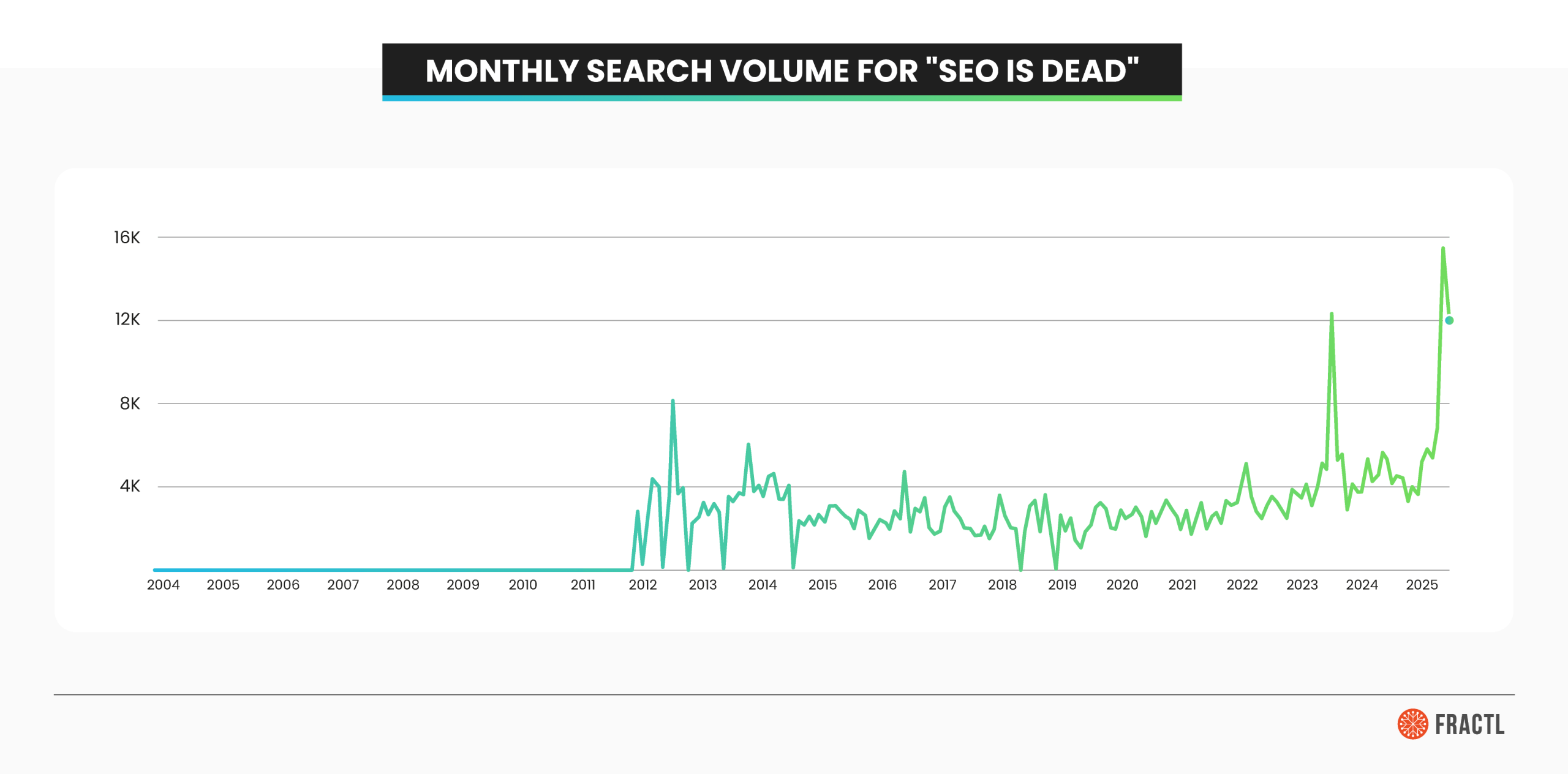
- “SEO is dead” is recycled clickbait. The phrase first trended in 2012 when “SEO” had 7 million monthly searches. Today it drives 22 million. The discipline is growing, not dying.
- Brand mentions now outweigh backlinks for AI visibility. Ahrefs’ study of 75,000 brands found web mentions correlate with AI Overview visibility at 0.664 — three times stronger than backlinks at 0.218.
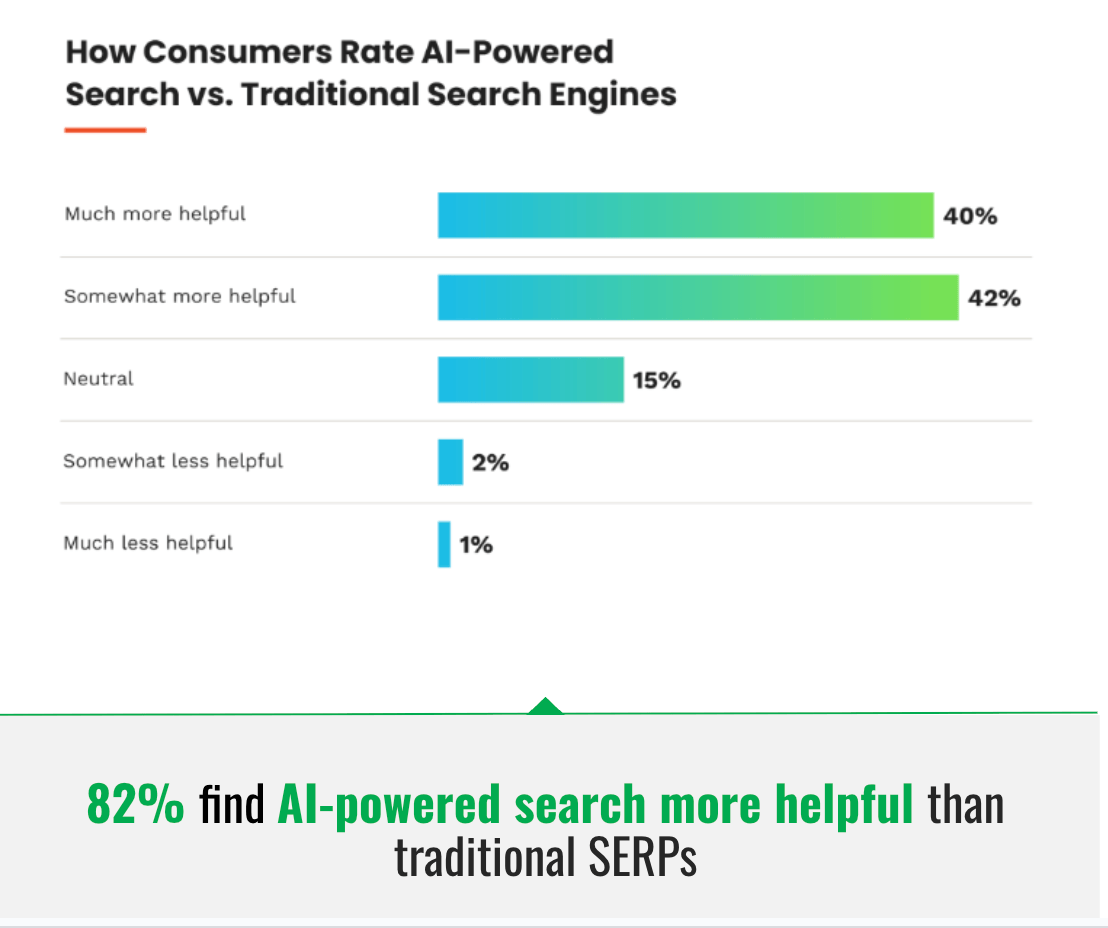
- Consumers are ready — even if marketers aren’t. Sixty-four percent of consumers feel positive about AI, 74% feel confident using AI tools, and 82% find AI-powered search more helpful than traditional SERPs.
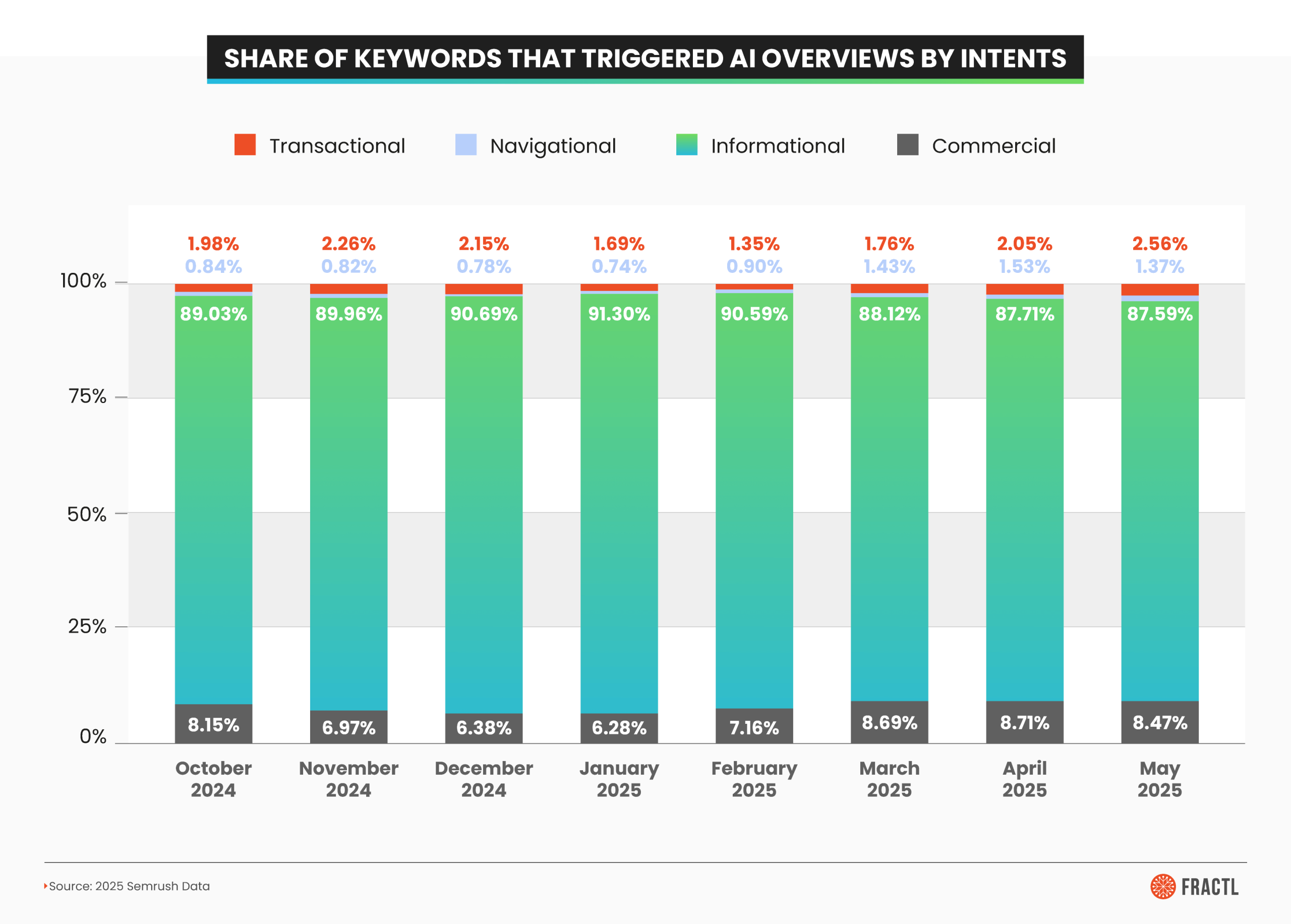
- AI Overviews still skew heavily informational. Semrush data shows 87.5% of AI Overview triggers are informational queries, with commercial and transactional combined under 11%.
- Digital PR is the GEO engine. Authoritative brand mentions on high-DA publishers are the strongest signal for visibility in both large language models and AI Overviews — making earned media coverage more valuable than ever.
- AI tools should reward your team, not replace them. The real competitive advantage comes from reinvesting efficiency gains into higher pay, four-day workweeks, and strategic upskilling — not headcount cuts.
Yes, We’re Calling It GEO — and the Industry Agrees
In January 2025, “generative engine optimization” generated fewer than 5,000 monthly searches. By June, that number surged to 74,000 — a nearly 1,400% increase in six months. In the same timeframe, search engines returned 1.5 million results for the term, with 2.3 million all-time.
That trajectory tells us something important: The SEO industry has not only accepted this shift, but it’s also racing to define it. A new name is warranted because AI-native platforms don’t rank content the way Google does; they synthesize it. Your brand visibility in LLMs comes down to how clearly you signal “entity expertise” through the depth of your topic coverage, the breadth of your brand mentions, and the resulting perceived authority that earns contextual trust.
This is a fundamentally different optimization challenge. Traditional SEO focused on algorithms and ranking signals. GEO strategy demands a holistic approach to how your brand is represented across the datasets and data sources that large language models ingest, learn from, and reference in real-time outputs.
SEO Isn’t Dead — It’s Bigger Than Ever
Here’s a point that should end the “SEO is dead” debate for good: The phrase first appeared in Google Trends in 2012, around the same time “SEO” search interest plateaued at 7 million monthly searches. In May 2025, SEO drove 22 million monthly searches. That’s a 214% increase over a period when the industry was supposedly dying.
“Search is a function, not a platform, and AI represents a new channel — not an SEO extinction event.“
— Kelsey Libert, Co-Founder, Fractl
The underlying behavior — people asking questions and seeking trusted answers — is timeless. Whether it’s typed into Google, voiced to a smart assistant, or prompted in ChatGPT, it’s still search. The platforms may shift, but the function endures.
When Fractl Agents, Search Engine Land, and MFour surveyed 2,000 consumers, 77% said they used traditional Google, and 49% had used an AI tool like ChatGPT that same week. People aren’t abandoning search; they’re diversifying how they gather information, and each platform has different use cases. The smart move for PR professionals and digital marketers isn’t to pick a side. It’s to evaluate where your target audience resides online and produce data-driven content that drives brand authority across every channel.
Brand Mentions Matter More Than Backlinks in AI Search
If you’ve spent years building backlinks as your primary SEO strategy, the generative AI era demands a recalibration. Authoritative brand mentions are now a core brand visibility signal in generative AI, and the data proves it.
Louise Linehan at Ahrefs conducted a landmark study of 75,000 brands that quantified AI Overview brand visibility factors. The findings reshape how we think about digital PR and media monitoring:
- Brand web mentions show the strongest correlation (0.664). This is by far the most influential factor in AI Overview brand visibility.
- Web mentions correlate three times more strongly than backlinks. Mentions registered 0.664 versus just 0.218 for backlinks.
- Top-mentioned brands earn up to 10× more AI Overview citations. The compounding effect of brand mentions creates a widening gap between visible and invisible brands.
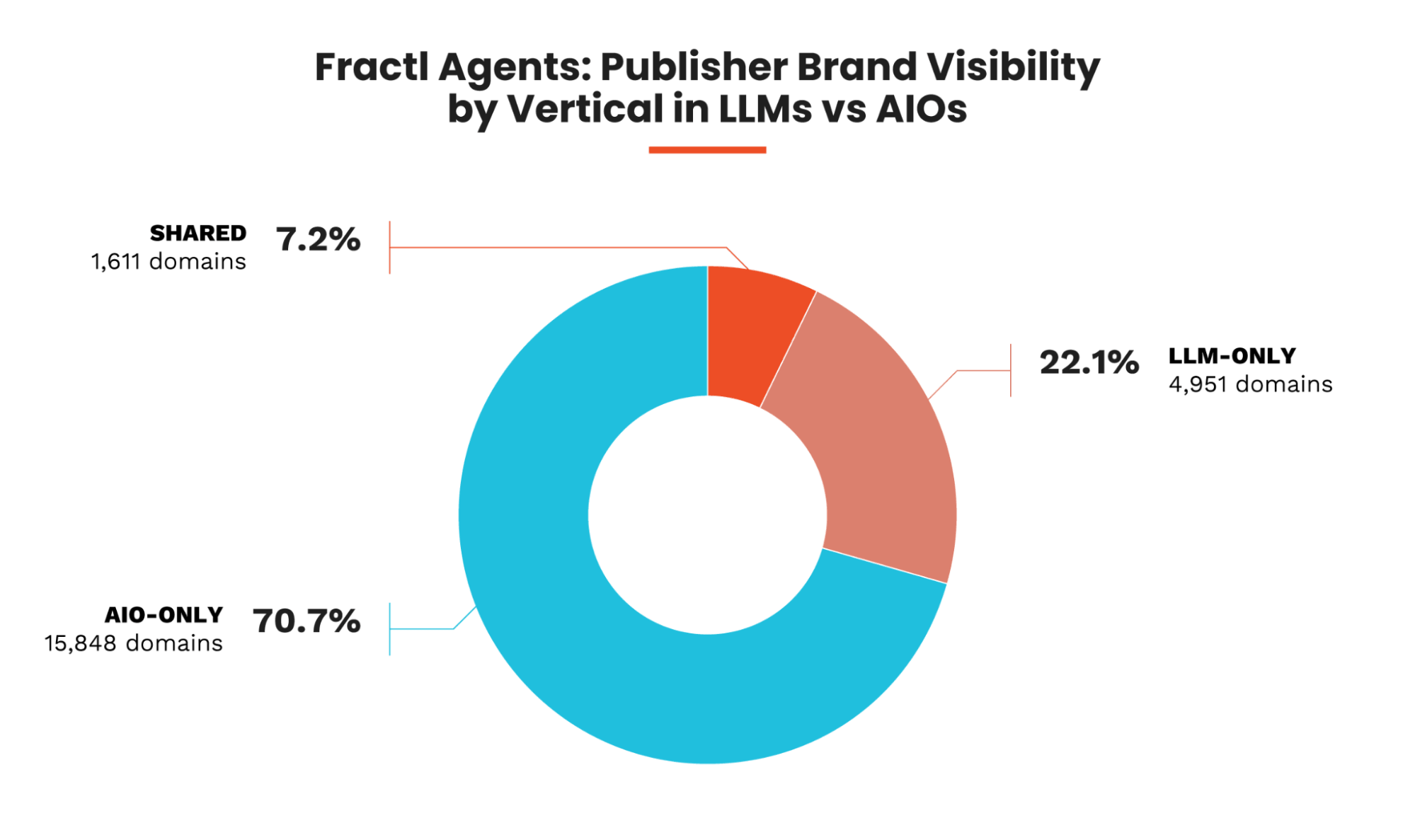
Beyond brand mentions, our research reveals how specific publisher placements, topic relevance and depth, and structured data all factor into brand visibility across AI models. Fractl queried 8,090 keywords across LLMs and AI Overviews for 25 verticals, revealing 22,410 leading domains. Our data analysis uncovered five key patterns:
- Authority drives trust. LLMs favor sites with strong editorial oversight and rankings. Publishers like NPR and The New York Times trigger repeated crawls that embed their phrasing into patterns these AI models internalize.
- Vertical specialists enable depth. Niche authorities like Edmunds or Investopedia produce large volumes of richly structured, up-to-date content in narrowly focused topics, so the model “learns” to associate each vertical with its go-to experts.
- Structured formats boost learnability. Clearly segmented, educational how-tos and listicles are easy for AI systems to parse and synthesize. Think Investopedia definitions or Healthline’s step-by-step guides.
- Brand repetition reinforces relevance. Content from major publishers gets syndicated or referenced by others, multiplying their textual footprint in training datasets and data sources.
- U.S. commercial bias limits perspective. Heavy use of U.S. English outlets like CNN or MarketWatch means under-reliance on non-U.S. voices — a gap that represents opportunity for international brands.
Digital PR Is More Valuable Than Ever in the AI Era
Fractl has been executing digital PR for 13 years, and the strategy hasn’t just survived the advent of AI — it’s been supercharged by it. Our #1 ranking on Clutch out of 30,000+ firms and our 2025 performance metrics back that up.
Here’s where the numbers stand as of mid-2025:
- Average placement DA has climbed from 74 to 78. Between 2021 and July 2025, average placement domain authority has steadily increased, reflecting our focus on high-quality, high-authority media coverage.
- 555 placements in 2025 and counting. We’ve already surpassed 2022 and 2024 totals and are on track to exceed our 2021 (702) and 2023 (823) benchmarks.
- Placement rate of 7.87%. That’s nearly double the industry average from a decade ago, despite significant market saturation.
- 530+ placements on mid-to-top-tier publishers. Of those, 456 exceeded DA 60 and 421 surpassed DA 70 — including outlets like TODAY, CNBC, CNET, VICE, and The Globe and Mail.
“AI has transformed how we scale what works. We’ve automated pitch list generation, subject line testing, and real-time newsjacking ideation — freeing up more time for relationship building and strategic workflows that AI can’t replicate.“
— Kelsey Libert, Co-Founder, Fractl
A significant driver of our recent success stems from our 2021 agency reorganization and early adoption of AI. Kristin Tynski, one of Fractl’s co-founders, had early access to ChatGPT before its public launch and recognized its potential for automating routine tasks and streamlining content creation workflows. She and her brother, Dan Tynski, built proprietary AI agents, and the broader team began experimenting with custom GPTs to optimize everything from outreach to data analysis.
The result: better outcomes with a leaner team — one that’s the highest-paid in our company’s history and operates on a four-day workweek because their innovation and results earned it.
AI Search Has Crossed the Chasm Into the Early Majority
If you’re still debating whether AI-driven search matters, you’ve missed the inflection point. According to Everett Rogers’ diffusion of innovations model, AI search tools have moved squarely into the early majority phase — past the chasm that separates niche enthusiasts from mainstream adoption.
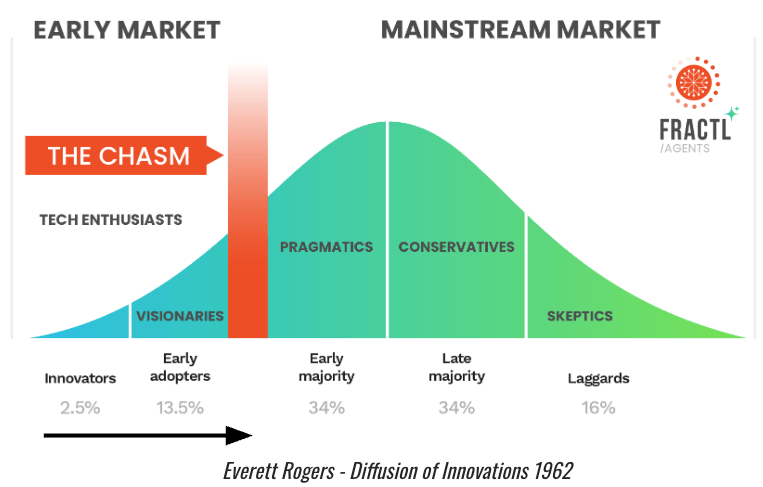
Our survey data paints a clear picture of consumer sentiment: 64% of consumers feel positive about artificial intelligence, and 74% feel confident using this emerging technology. That’s not hype — it’s a tectonic shift. Meanwhile, 66% believe AI search will replace Google, though only 38% are using AI tools as their primary search method today.
“Early adoption will be demographic-driven, but mass adoption is inevitable.“
— Kelsey Libert, Co-Founder, Fractl
Within our industry, tech professionals are likely to replace the vast majority of their searches with ChatGPT-style tools in the next 12–24 months. But it’s not one-size-fits-all. According to exclusive Semrush data from May 2025, AI Overviews still favor informational searches at 87.5%, while commercial and transactional queries combined account for less than 11%. For now, AI Overviews function as general knowledge engines, not shopping carts — a distinction that should shape your GEO strategy and content creation priorities.
Google’s Ad-Cluttered SERPs Are Accelerating the Shift to AI Search
Fractl’s research found that ads are the single most frustrating feature of Google’s search experience, with 66.35% of consumers citing ad clutter as a top pain point. Inaccurate or misleading AI-generated summaries came in second at 44.65%, followed by irrelevant results (38.78%) and privacy and data tracking concerns (35.95%).
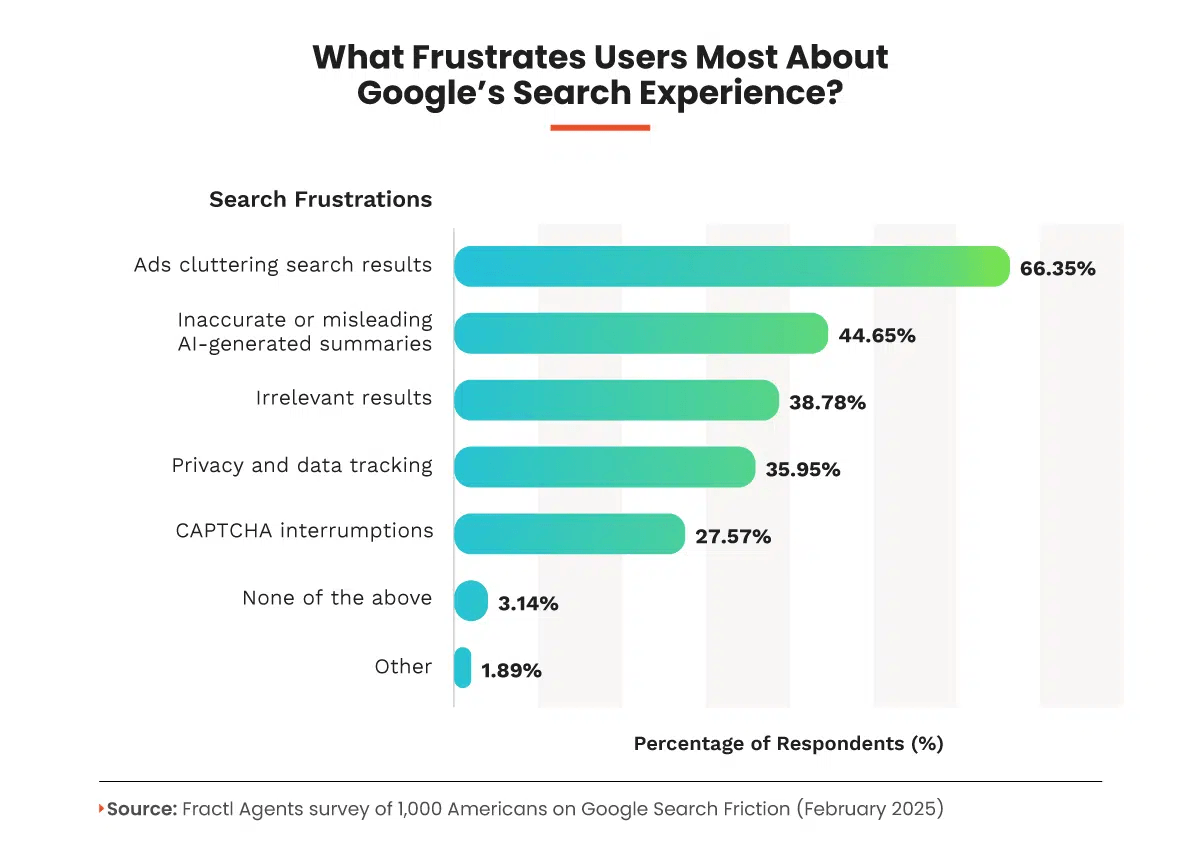
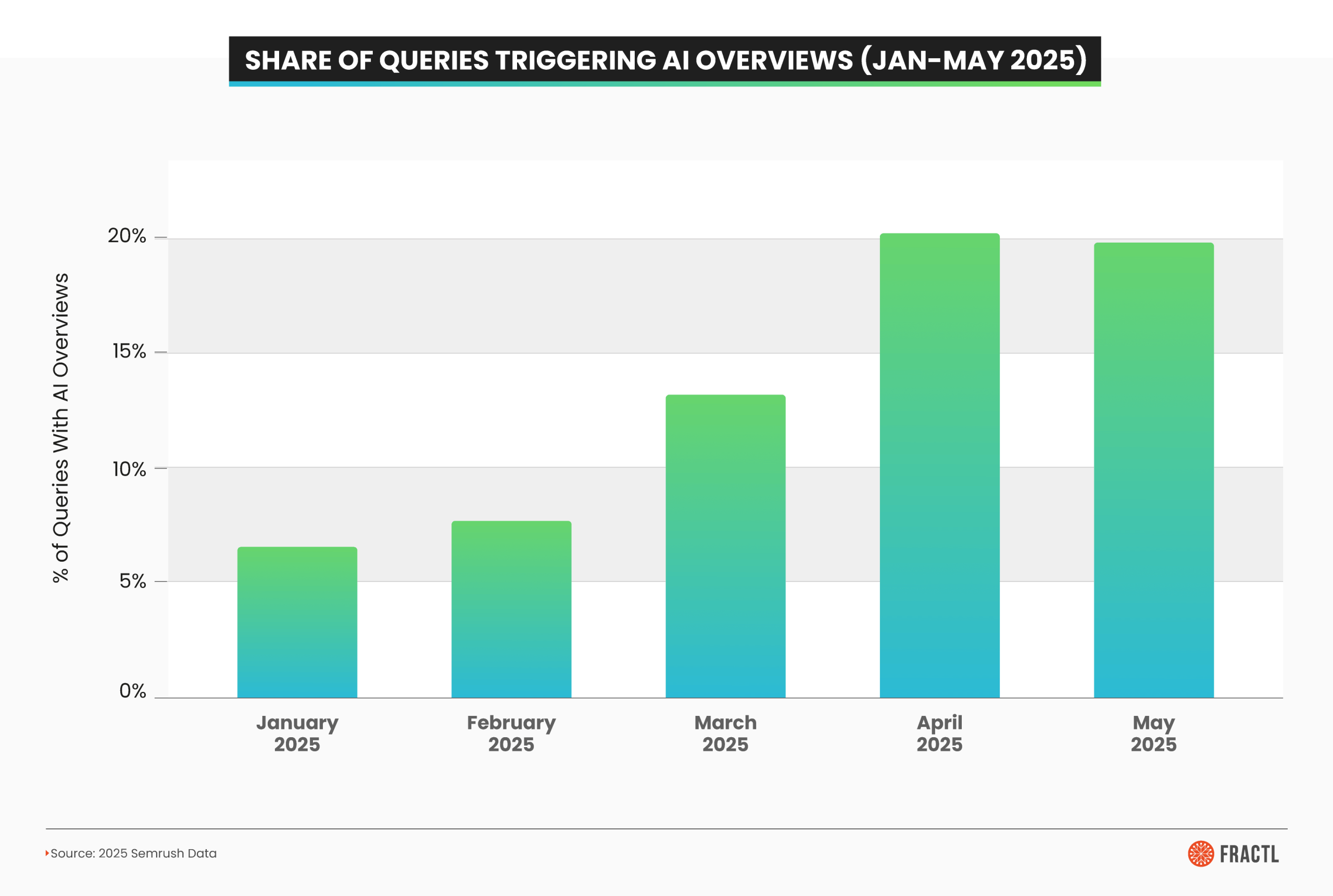
The consumer signal is unmistakable: People want helpful, ad-light results. If Google ignores that demand, it opens a lane for AI-native search competitors to gain traction. And based on the metrics, that lane is already widening — the share of queries triggering AI Overviews roughly quadrupled between January and May 2025.
Unfortunately, Google appears to be doubling down on ad space rather than simplifying the SERP. The predictable result: 82% of consumers now believe AI-powered search is more helpful than traditional SERPs, which will continue to drive rapid adoption of LLMs as a preferred search tool. For brands, this reinforces why investing in media monitoring and earned media visibility across AI platforms isn’t optional — it’s becoming the primary battleground for brand reputation and discovery.
How Smaller Brands Can Build Visibility Across Channels
You don’t need a Fortune 500 budget to leverage AI-era visibility. The path forward starts with a single, high-authority campaign. One piece of proprietary research or expert insight that earns coverage across numerous publishers is worth its weight in gold. That’s your awareness spark — and from there, the strategy is to syndicate and amplify.
A practical roadmap for smaller brands and PR teams:
- Lead with original research. Data-driven content creation — surveys, industry benchmarks, proprietary datasets — gives journalists a reason to cover you and gives LLMs a reason to cite you.
- Syndicate across channels. Repurpose your best campaigns across niche and influential publishers, social media platforms, LinkedIn, email campaigns, and podcast appearances. Every touchpoint multiplies your brand’s textual footprint in AI training data.
- Use newsjacking for quick wins. If you don’t have wins yet, insert your brand into trending conversations with an expert quote or internal data that helps support the story journalists are eager to expand on. This is a high-impact, low-cost outreach initiative.
- Think beyond press releases. Traditional press releases still have their place, but the real value comes from earned media on high-DA publications that AI algorithms crawl and reference. Focus your PR strategy and communication strategies on placements that build entity authority, not just awareness.
The Metrics That Matter for AI-Era Brand Visibility
Understanding your brand’s footprint now means looking beyond traditional search rankings to the large language models your customers increasingly trust. Legacy SEO metrics still matter, but they’re no longer the whole picture. Here’s how to benchmark your presence with the right decision-making data:
- Audit brand mentions across the web and in LLMs. Note which publishers surface most for your key queries. This is your baseline for measuring the effectiveness of future PR campaigns and outreach initiatives.
- Track your brand’s presence in LLM training data. Monitor how often — and in what contexts — your brand appears in the datasets that power AI models. Frequency and context both matter for sentiment analysis and brand reputation management.
- Run an entity-authority analysis. Pinpoint content gaps by determining whether key topics in your vertical are owned by you or your competitor. For example, is “sustainable packaging” associated with your brand or someone else’s?
- Identify the content formats LLMs favor in your vertical. Do AI models lean on your research statistics, quote your experts, or default to quick listicles from niche blogs? Understanding the outputs LLMs prefer helps you optimize your content creation accordingly.
- Map publisher dominance in LLM coverage. Identify where you’re underrepresented so you can shape future campaign topics and digital PR targets. This visualization of your competitive landscape should drive every content and outreach decision.
How Fractl Agents Streamline AI-Era Brand Intelligence
Tracking brand visibility across LLMs manually is impractical at scale. That’s exactly where Fractl Agents come in. Think of it like SEO strategy and analytics on steroids, built for the AI era. These AI-powered, agentic workflows automate the most critical functions of generative engine optimization measurement:
LLM Brand Visibility Agent
Custom agentic workflows query every major LLM on your brand keywords, product names, and industry questions, then log how your brand is represented across large language models in comparison to your competitors. It’s always-on media monitoring for the AI ecosystem.
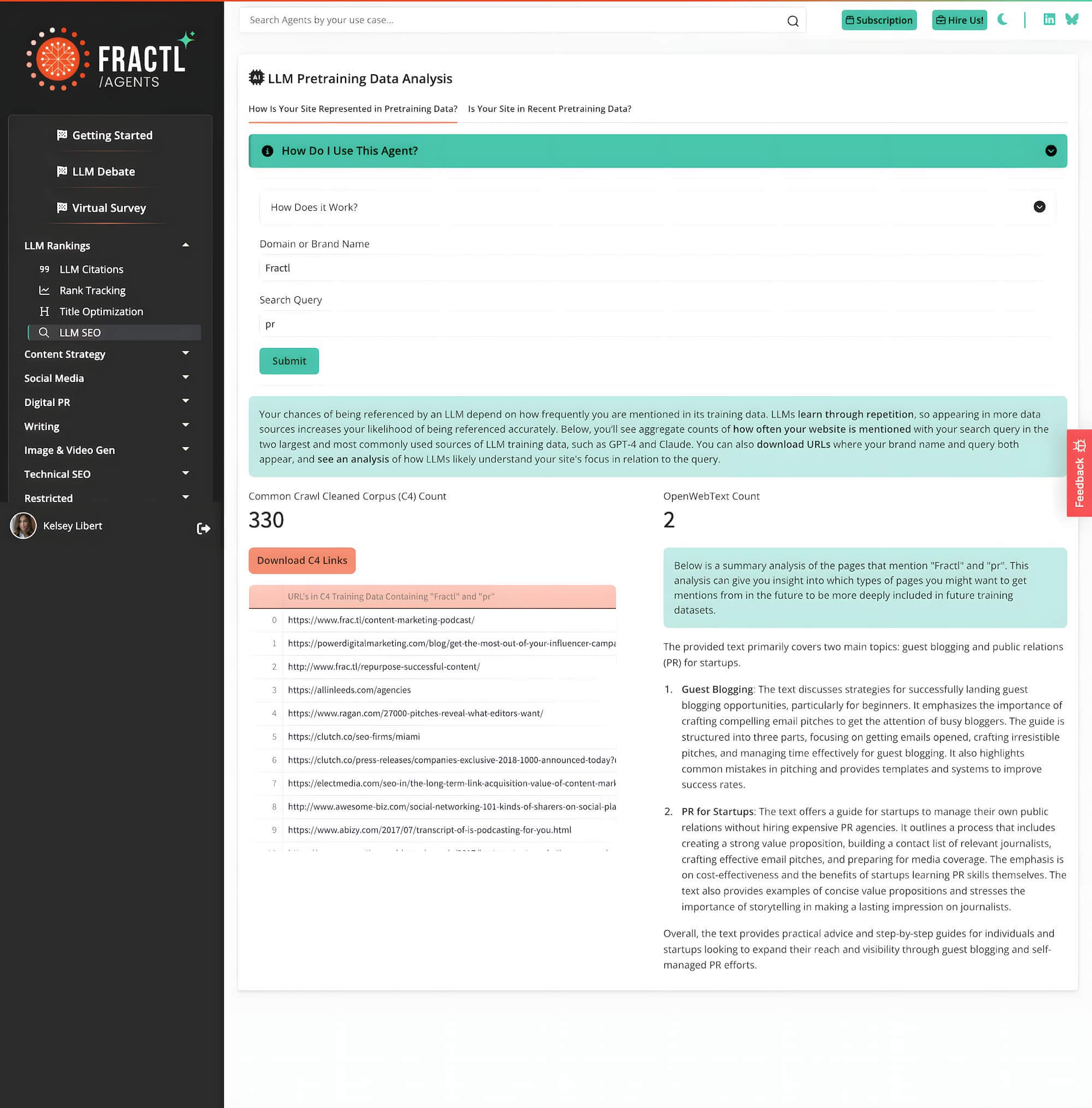
LLM Citations Agent
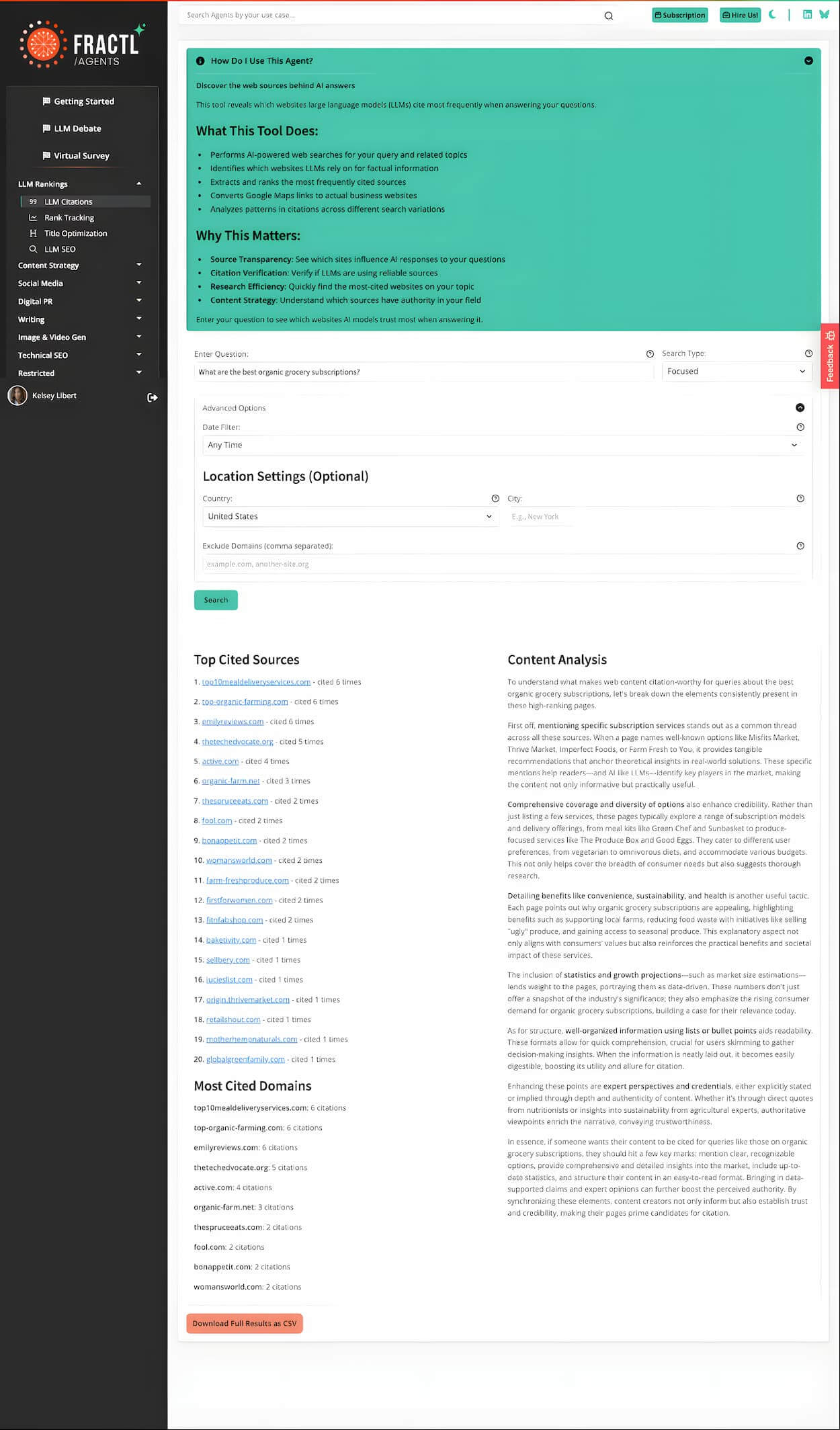
This tool uncovers which publishers and specific pages LLMs rely on for any query, empowering you to reverse-engineer AI trust signals and sharpen your content and outreach strategy. Think of it as a real-time window into which data sources AI models trust most in your vertical.
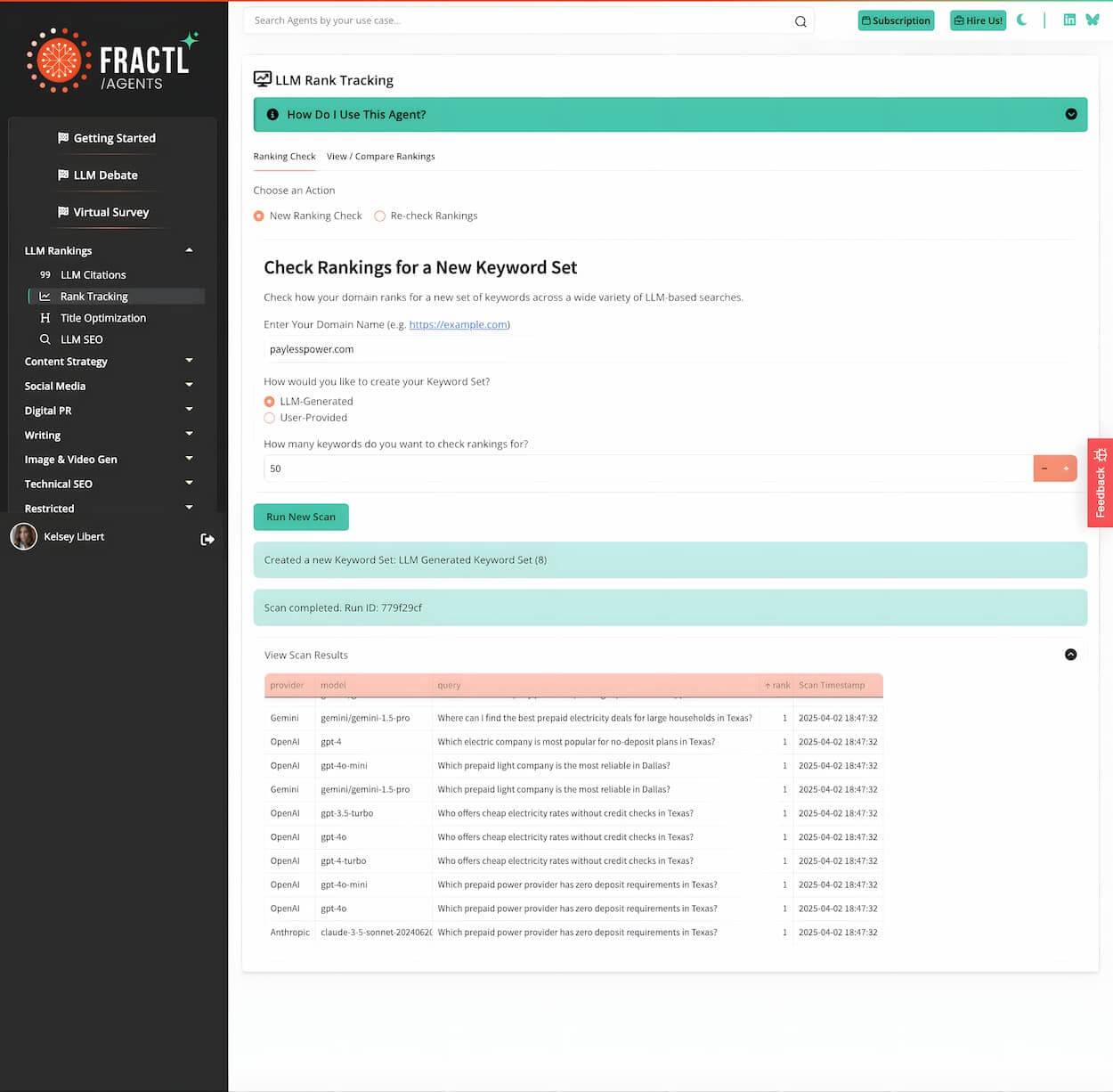
LLM Rank Tracking Agent
The AI Search Visibility Agent continuously tracks your brand’s keyword rankings across major LLMs, surfaces shifts over time, and delivers competitive insights so you can keep your content discoverable in AI-driven search.
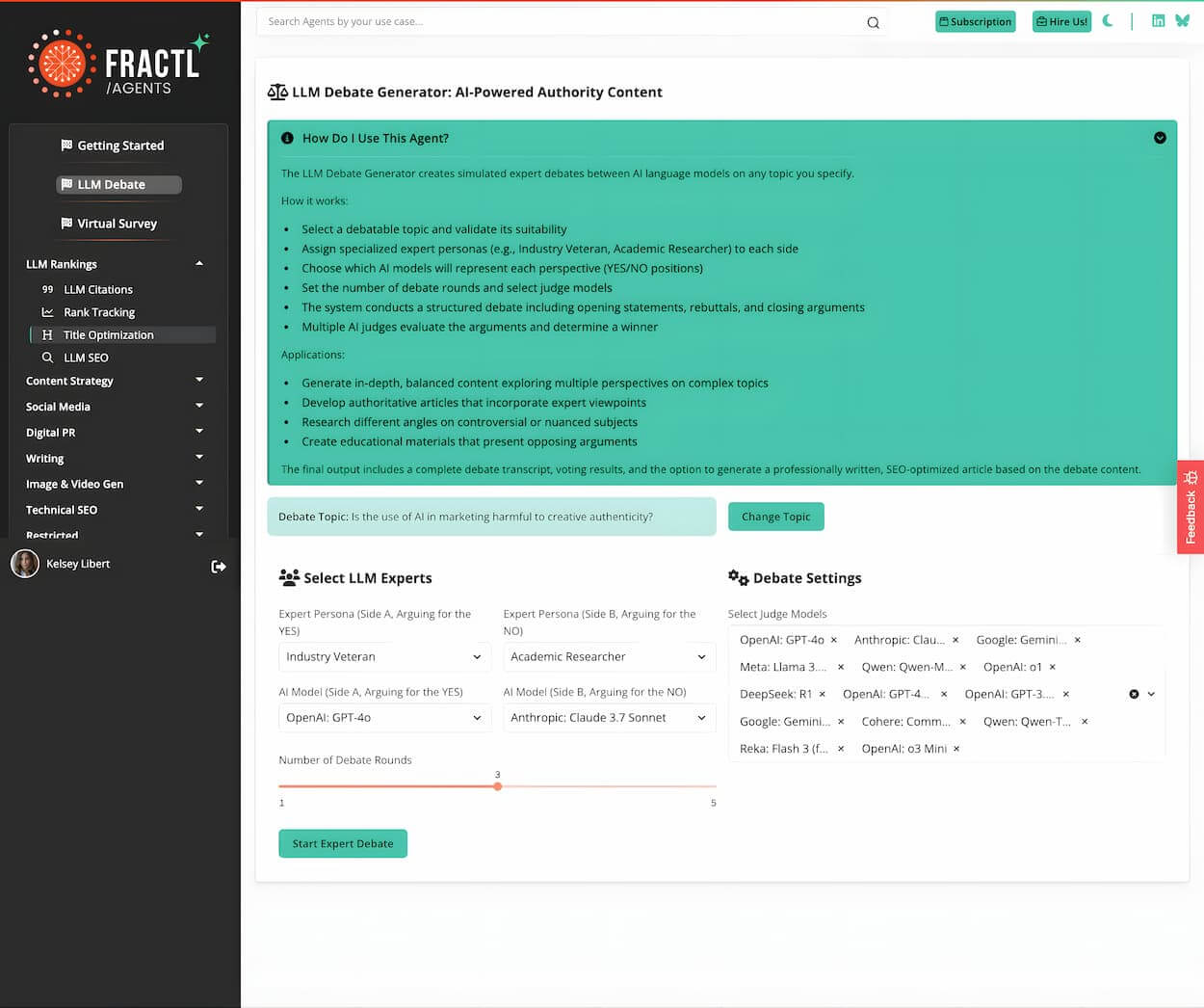
LLM Debate Agent
The AI Debate Engine orchestrates structured LLM “debates” among expert personas to produce in-depth, E-E-A-T-aligned articles that fuel your content strategy and dominate high-intent SERPs. It’s a use case that shows how AI-generated content, when guided by human expertise, can be both high-quality and strategically valuable.
How AI Tools Have Transformed Fractl’s Internal Workflows
Over the past four years, we’ve used AI to scale every proven workflow at Fractl. The key insight isn’t that AI replaces human expertise; it’s that automation and AI-powered tools free up your best people to focus on the strategic, creative work that actually moves the needle. Here are three examples:
Campaign Ideation Agent
While we still gather to discuss our best ideas, it all starts with our Ideation Agent. Give it a topic — say, “remote work trends” — and in under 30 seconds, it produces half a dozen data-driven hooks, visual ideas, and attention-grabbing headlines based on our proprietary research into what makes content newsworthy. It’s not replacing creative brainstorming; it’s giving the team a running start for every content creation session.
E-E-A-T Agent
We’ve built an enterprise-grade SEO strategist that simulates a senior consultant’s SERP analysis and E-E-A-T evaluation. It parses keywords or competitor URLs to dissect search intent, content formats, schema usage, technical and UX best practices, link-building profiles, and freshness signals — then delivers prioritized, data-driven recommendations to outpace competing pages.
Pitch Strategy Agent
A digital PR strategist that ingests your study or campaign data to automatically identify and rank the top 10 newsworthy statistics, craft and prioritize 10 high-impact subject lines, generate a structured initial pitch and follow-up email with fresh insights, and curate a targeted list of 10 media outlets with DA and rationale. It’s designed to optimize every element for maximum journalist engagement, streamlining the most time-intensive part of any PR strategy.
“We have over 100 Fractl Agents and custom GPTs that have transformed our workflow and enabled us to exceed our agency KPIs with our largest client roster and smallest team ever.“
— Kelsey Libert, Co-Founder, Fractl
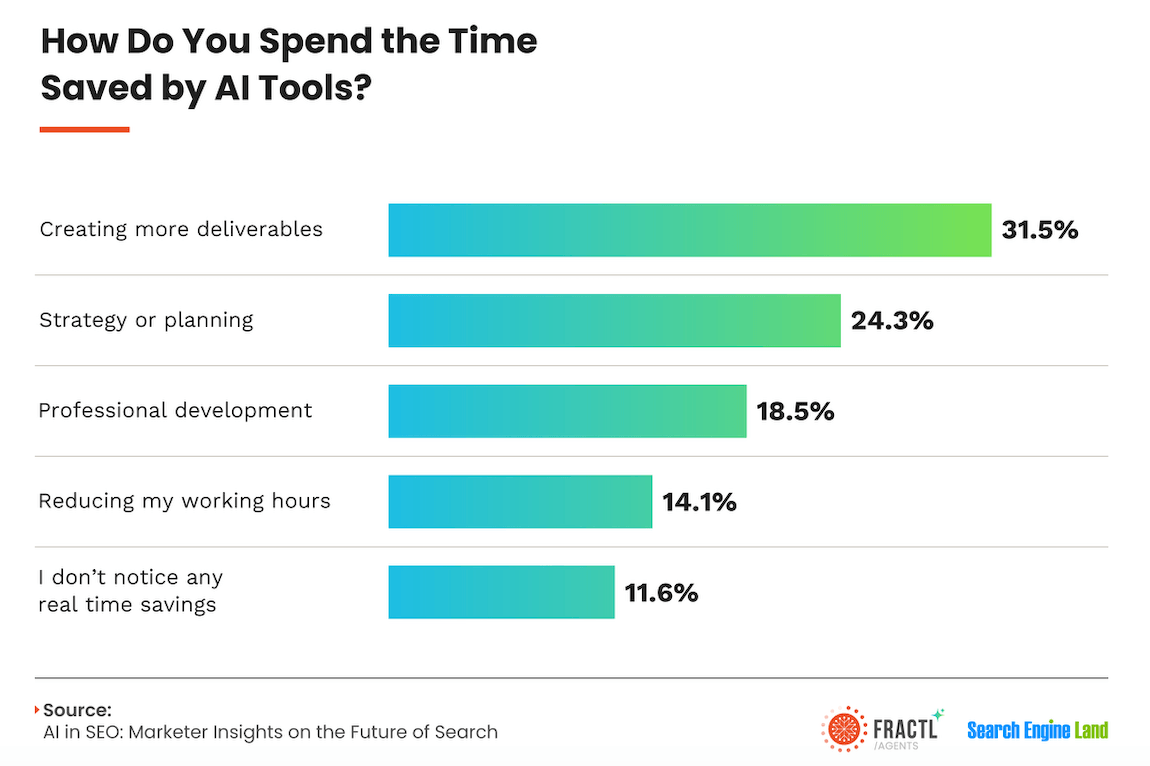
The critical takeaway here isn’t just about using AI — it’s about what you do with the time it saves. Our approach: Reward your team for their innovation and productivity gains by increasing pay and offering four-day workweeks, instead of risking burnout by chasing endless efficiency. Build guidelines for how saved time should be spent — more strategy, more upskilling, or actual time off. That’s how you build a sustainable, high-performing team for the AI era.