



Table of Contents
- Case Study: How a Barbie PSA Exposed "Impossible Ideals"
- Case Study: Faces of Meth — Visualizing the Cost of Addiction
- The Science of Viral Emotions: What Makes People Share Content
- Why Production Value and Format Matter More Than Ever
- Viral Link Building in a World of Pitch Overload
- Proving ROI on Viral Content
- Handling Emotional Topics Responsibly
- A Playbook That Still Works
- FAQ
Watch the full talk: Anatomy of a Viral Hit by Kelsey Libert at MozCon
Editors receive hundreds of pitches a day, and most content never gets noticed, much less shared. I originally presented this talk at MozCon to break down something I’d been studying obsessively: what actually makes viral content work, and how do you repeat it?
When content goes viral, it’s rarely an accident. The case studies and research I’ll walk through here show a repeatable playbook for creating content that earns massive links, media coverage, and measurable ROI. The platforms have changed since this presentation (TikTok and Reels instead of BuzzFeed and Facebook), but the emotional science behind virality hasn’t. Amusement, surprise, and emotional contrast still drive the sharing behavior that makes content go viral. If you want to create viral content that compounds into real digital marketing results, use this as your table of contents for the full playbook.
Case Study: How a Barbie PSA Exposed “Impossible Ideals”
I opened my MozCon talk with a provocative piece of history. In the 1960s, Mattel released Slumber Party Barbie. She came with a tiny scale permanently set to 110 pounds and a booklet called “How To Lose Weight.” The advice inside? “Don’t eat.”
Decades later, we partnered with Rehabs.com to build a campaign around the dangers of eating disorders and the unrealistic body ideals that Barbie symbolizes. The core messaging was direct: your ideals are literally impossible. We created data visualizations showing that a real-life Barbie would be physically deformed, forced to walk on all fours, and unable to lift her own head. The infographics made the abstract concrete, and the emotional reaction was immediate.
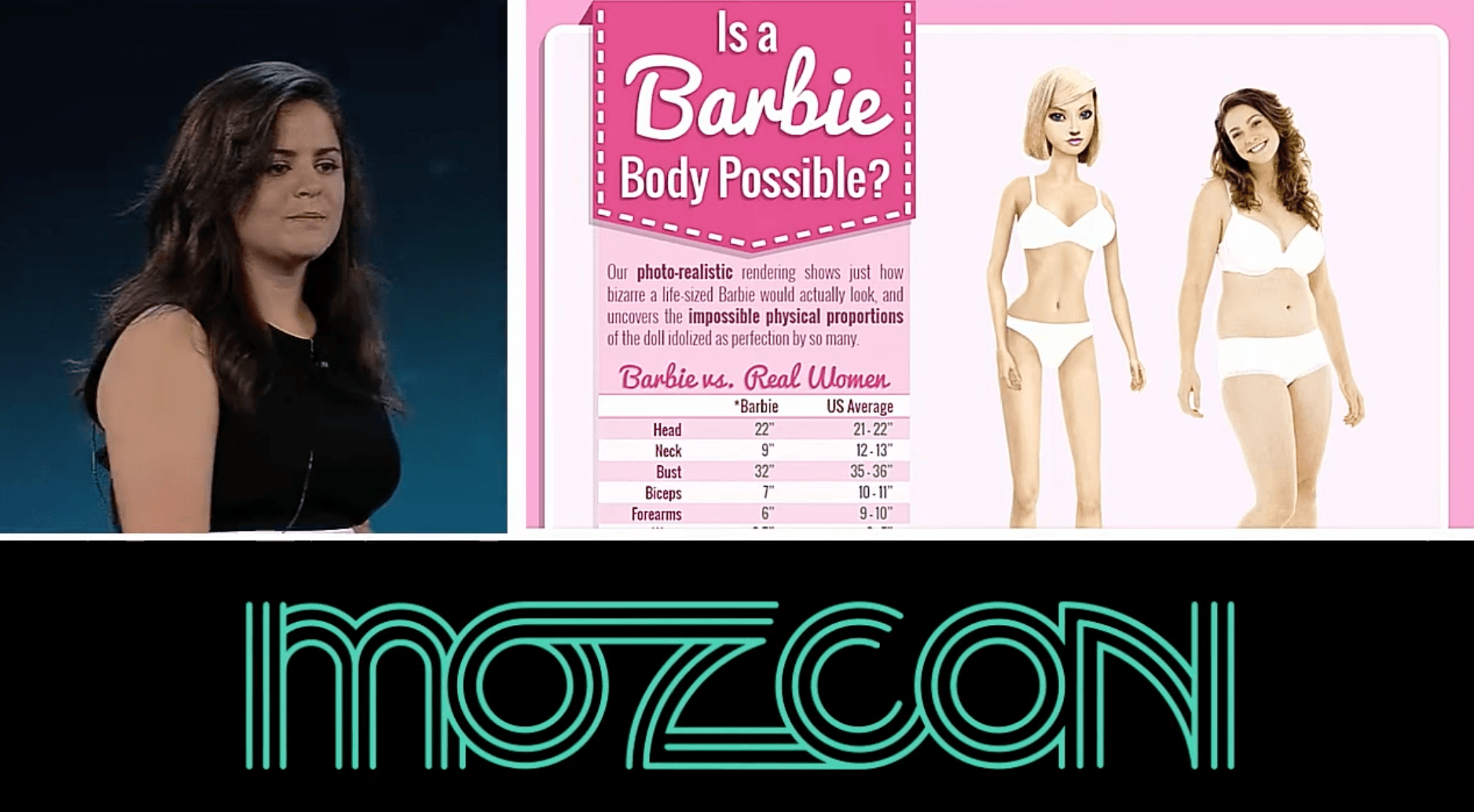
By tapping into widespread anxiety and frustration about body image, the piece of content struck a deep emotional chord. It was relatable at a scale that crossed demographics: parents, educators, health professionals, and young women all found it shareable because it validated something they already felt but couldn’t articulate with data.
The results confirmed the approach:
A total of 273 publishers wrote about the campaign and linked back to our client, many of them high-quality, authoritative outlets that are normally extremely difficult to place.
We didn’t beg for coverage. The content earned it because the message was strong enough to spread on its own. This was one of our earliest examples of viral content driving brand awareness and SEO value simultaneously.
Case Study: Faces of Meth — Visualizing the Cost of Addiction
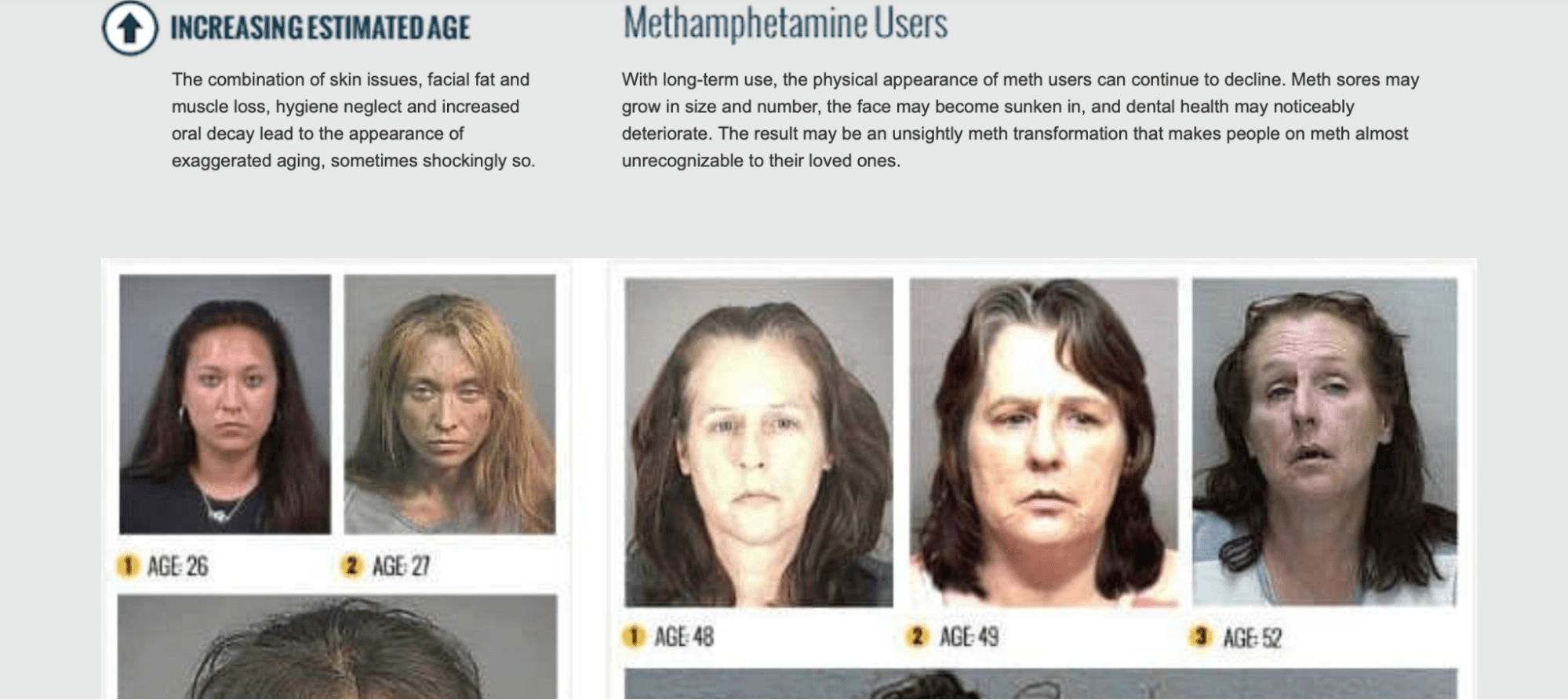
Before the Barbie campaign, we launched what became one of our highest-performing viral marketing campaigns ever. Working with Rehabs.com again, we assembled a highly visual timeline of real people’s mugshots showing the physical deterioration caused by methamphetamine addiction.
The “Faces of Meth” piece combined raw emotional impact with a format that was instantly understandable. You didn’t need to read a single word to grasp the message. The before-and-after progression told the story visually, and that visual clarity is what made it spread across social media and social networks at a pace we hadn’t seen before.
The numbers from this viral piece were staggering:
- Close to 4 million views on the campaign landing page
- Over 300,000 Facebook likes
- A segment on Inside Edition
- Three UN-endorsed celebrity tweets from influencers who amplified it to millions
- Approximately 1,200 unique linking domains
Most of those links came from natural syndication. Large publishers covered the story because their audiences demanded it, and that coverage triggered secondary sharing across smaller outlets, blogs, and social media platforms. One viral video segment on television generated another wave of links and traffic. The campaign demonstrated something I’ve believed throughout my career: emotionally charged visual storytelling is the most powerful type of content for link acquisition at scale.
The Science of Viral Emotions: What Makes People Share Content
So, why do certain campaigns explode while others with similar production value get ignored? The answer is in the emotions.
Google’s Engagement Project: Three Concepts That Drive Sharing
Google’s Engagement Project explored how brands can connect with consumers more deeply in what they called the “participation age.” Their findings boil down to three concepts that every content strategy should account for:
- The fascinating familiar. Take everyday products or ideas and show them in a new, surprising context. The “Will It Blend?” series turned a household blender into a viral sensation by blending gadgets. The ordinary becomes fascinating when you reframe it. This is why memes work: they take trending cultural references and remix them into something unexpected.
- Synaptic play. When people connect unrelated ideas, their brains literally light up. The web is built for this kind of mashup (think user-generated content remixes, unexpected juxtapositions, crossover references). Content that triggers this creative connection becomes inherently shareable.
- The energy exchange. We don’t just share content. We share emotional experiences. Humans are wired from infancy to mirror emotional cues, which is why content that evokes a clear, strong emotional response spreads faster than content that’s merely informative. The algorithms on every social media platform reward this engagement.
Fractl’s Emotion Research: The Three Feelings That Go Viral
We layered our own research on top of Google’s framework. We analyzed the top 25 images of all time on Reddit’s /r/pics subreddit (often considered a “viral kingmaker”), coding each for 30 different emotions and measuring intensity levels. The findings gave us a formula I’ve used in every marketing campaign since.
Three patterns showed what wins:
 High emotionality The most viral images had the highest emotionality scores, meaning they evoked multiple strong emotions simultaneously, not just one. A single feeling isn’t enough. You need emotional layers. |  Amusement, interest, and surprise These three emotions appeared again and again in the top-performing content. If your piece of content doesn’t trigger at least one of them, it’s unlikely to break through. |  Contrasting emotions Pairing hope with despair, happiness with sadness, or joy with anxiety creates emotional tension that people feel compelled to resolve by sharing. This contrast is what made the Barbie and Faces of Meth campaigns so powerful. |
A follow-up study with new images and new participants replicated these results, confirming that these aren’t flukes. I published the full research in Harvard Business Review, and a deeper analysis of emotional combinations and virality followed a few years later.
The core finding holds: if you want to optimize for virality, design for emotional complexity, not simplicity.
We’ve written extensively about why emotional combinations make content go viral and how to apply this research to real campaigns.
Why Production Value and Format Matter More Than Ever
Emotion alone isn’t enough. The internet is so saturated with content, you just can’t post another static infographic or standard blog post and expect it to break through — especially if you’re recycling insights that have already been covered.
To create viral content that actually competes in today’s environment, brands need to raise the bar on execution:
- Pair fresh research with strong creative. Original data gives you something genuinely new to say. High-quality design and production give people a reason to stop scrolling. One without the other rarely works.
- Publish in multiple formats. Combine infographics with video explainers, rich landing pages, and interactive elements. A single campaign can produce assets for your blog, TikTok, Reels, email, and social media marketing channels simultaneously. The more formats you create, the more surfaces your content can spread across.
- Experiment with interactivity. Tutorials, calculators, data visualizations that respond to user input, and immersive experiences all increase dwell time and sharing. Static content competes with everything. Interactive content competes with almost nothing in most categories.
The format innovation I pushed for in my MozCon talk has only become more critical. Short-form viral videos on TikTok and Reels now drive a massive share of content discovery. Hashtags and trending sounds create built-in distribution. But the principle is the same: the type of content you produce needs to match the production expectations of the platforms where your target audience lives.
Viral Link Building in a World of Pitch Overload
Traditional outreach has only gotten harder since I gave this talk. Individual editors at major outlets routinely receive 100+ pitches per day. Sites like Mashable were seeing around 1,000 pitches daily even back then. In that environment, a clever subject line and a polite ask aren’t enough.
Viral content offers a completely different model for SEO and link building.
Instead of begging for coverage, you create something so compelling that publishers seek it out.
You give editors a ready-made story their audiences will love, complete with data, visuals, and an emotional hook. The content does the selling. I’ve covered the full mechanics of this approach in my research on what makes content go viral.
One critical insight from our campaigns:
Target sites with highly engaged audiences, even if their links are no-follow.
When BuzzFeed covered our Faces of Meth campaign, their links were no-follow for staff and contributor content. But that single placement triggered a cascade: other publishers saw the BuzzFeed coverage, wrote their own stories, and linked directly to the client. The campaign earned approximately 1,200 unique linking domains, most of them from secondary syndication driven by audience reach, not a single “perfect” followed link.
For small business owners and teams with limited outreach capacity, this is especially relevant. A single viral piece can generate more high-quality backlinks and conversions than months of manual outreach. The investment goes into the content creation itself, and the distribution happens organically.
Proving ROI on Viral Content
Clients and leadership teams need numbers. “It went viral” isn’t a business case. So I built a framework for calculating the actual return on viral content, and I walked through it at MozCon using the Faces of Meth campaign as the example.
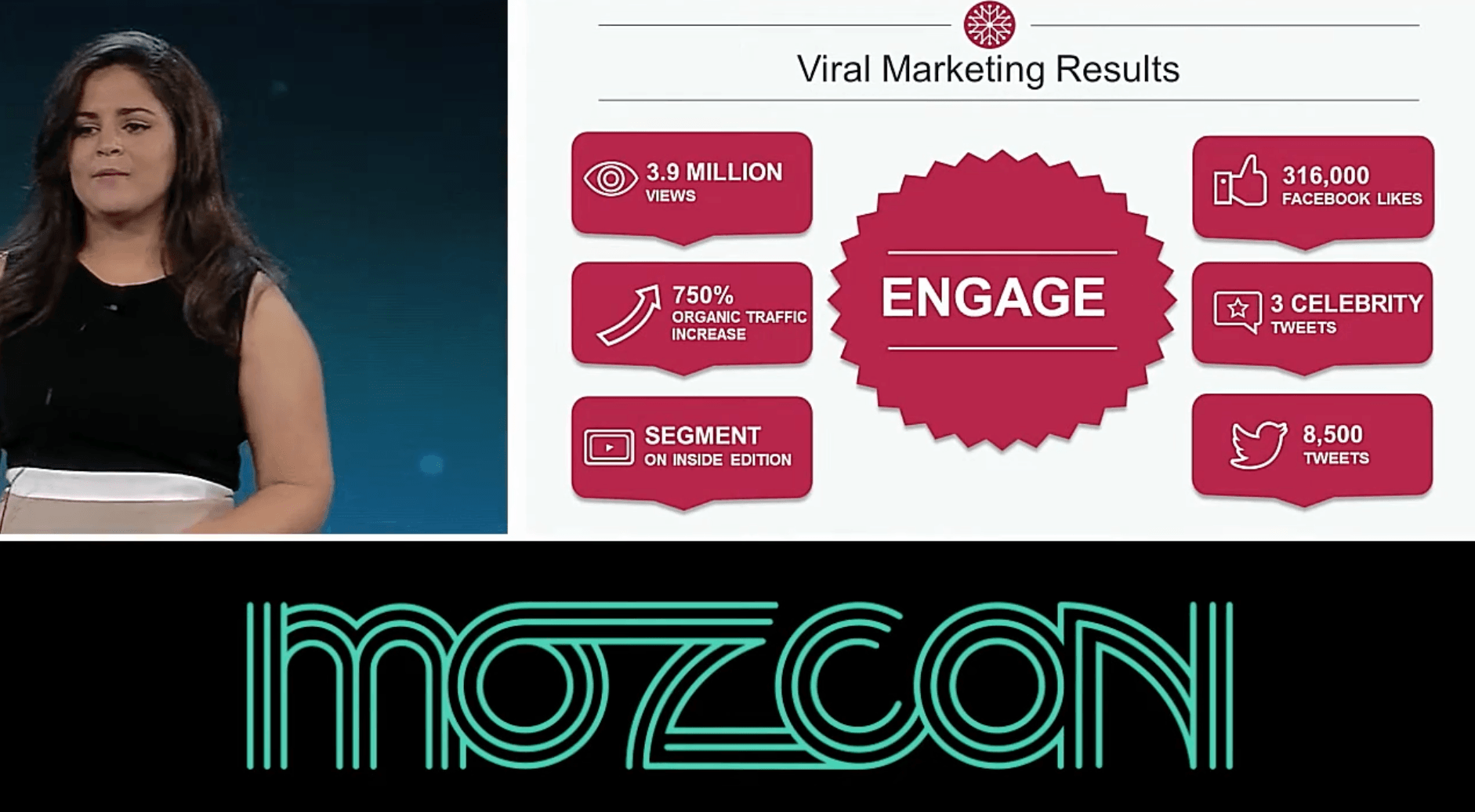
Using conservative per-link valuations, here’s what the metrics looked like:
- Link value alone: $400,000+ on conservative estimates, closer to $900,000 using higher-end valuations.
- Celebrity tweets: Roughly $30,000 in estimated media value from three UN-endorsed amplifications.
- Inside Edition TV segment: An estimated $160,000 in media value from a single broadcast feature.
- Campaign cost: Under $35,000 total production and promotion spend.
- Total ROI: 1,500 – 3,000% return depending on the valuation model.
The traffic pattern was equally telling: The Faces of Meth launch produced an initial surge, the Barbie campaign caused a second major spike, and long-tail traffic continued afterward as the campaigns kept earning organic links and social shares over time. This is how well-built viral marketing campaigns compound.
Handling Emotional Topics Responsibly
During the Q&A at MozCon, two practical concerns came up that I think are worth addressing directly:
Does creating viral content require massive budgets?
No. You don’t need six-figure production budgets. But you do need to invest in original research and a fresh angle, even for everyday content marketing. The core rule: don’t regurgitate what’s already been said. If your content doesn’t offer a genuinely new perspective backed by data, it won’t earn the coverage or the links. Budget matters less than the quality of the idea and the originality of the research behind it.
What about backlash from sensitive topics?
With themes like body image and drug addiction, there’s always risk. You’ll encounter trolls and critics. But if the overall messaging is clearly positive and cause-driven (fighting eating disorders, warning about addiction), audiences overwhelmingly perceive the brand positively. I’ve seen this play out across dozens of campaigns. The key is grounding bold emotions in empathy, responsibility, and a clear social good. We also pre-select clients who are comfortable with emotionally charged content and actively manage comments and conversations when campaigns launch.
Bold emotions can be brand-building when they come from a genuine place. The target audience can tell the difference between a brand that cares about an issue and one that’s exploiting it for clicks. Authenticity in your messaging is the difference between relatable content and a backlash.
A Playbook That Still Works

I presented these case studies at MozCon over a decade ago, but the underlying principles haven’t changed. The social media platforms are different. The formats have evolved (short-form viral videos, interactive tools, AI-powered content creation). But amusement, interest, surprise, and emotional contrast still drive the sharing behavior that makes content go viral.
Building campaigns that earn real results is what we do every day at Fractl. The brands we work with that invest in original research, bold creative, and genuine emotional resonance always outperform those chasing trending topics without substance. Every marketing strategy eventually comes back to this: create something worth talking about, and people will talk about it.
FAQ
What makes content go viral?
Viral content consistently evokes strong emotions, particularly amusement, interest, and surprise. Combining contrasting emotions (hope and despair, joy and sadness) deepens emotional impact and increases the likelihood of sharing. High production value, a fresh perspective backed by original data, and relatable subject matter all increase the chances that audiences share content across social networks.
Can small businesses create viral content?
Yes. You don’t need a massive budget, but you do need original research or a genuinely fresh angle. Small business teams can create shareable content by identifying real emotional triggers their target audience cares about and investing in quality execution over volume. A single well-crafted campaign can generate more links and visibility than months of routine content creation.
How do you measure the ROI of a viral campaign?
Track link value (using per-link valuations), media placements and their estimated value, social amplification from influencers and organic shares, branded search volume increases, and referral traffic. Conservative per-link metrics alone can demonstrate 1,000%+ returns on campaigns that earn hundreds or thousands of links. The key is building a measurement framework before launch so you can quantify results for stakeholders.