




Table of Contents
- Key Takeaways
- The Rise of Generative Engine Optimization
- SEO Isn't Dead; It's Just Evolving
- Search Is a Function, Not a Platform
- Brand Mentions Matter More Than Backlinks in AI Search
- What LLMs Actually Favor: Five Factors Driving AI Brand Visibility
- Digital PR in the AI Era: What Fractl's 2025 Performance Metrics Reveal
- AI Search Adoption: Where Consumers Stand Today
- Google's Ad Problem Is AI Search's Biggest Opportunity
- How Smaller Brands Can Build Awareness Across Channels
- The Metrics That Matter for AI-Era Brand Visibility
- Fractl Agents: AI-Powered Tools for LLM Brand Visibility
- How AI Has Transformed Agency Workflows at Fractl
Generative engine optimization isn’t a buzzword anymore — it’s a seismic shift in how brands earn visibility. In January 2025, fewer than 5,000 people searched for “generative engine optimization” each month. By June, that number had exploded to 74,000. The search engine landscape is transforming in real time, and the brands that understand how AI-powered search works will be the ones that thrive.
But here’s the part most doomsday headlines leave out: SEO isn’t dead. Search is a function, not a platform, and the core skills that drive traditional SEO — original research, authoritative brand mentions, and deep subject matter expertise — are the same signals that fuel brand visibility in large language models and AI Overviews.
Originally featured on the BuzzStream Podcast.
How to Survive and Thrive in Digital PR during GEO ft. Kelsey Libert
Key Takeaways
- GEO is surging. Search interest in “generative engine optimization” grew nearly 1,400% in six months — from fewer than 5,000 monthly searches to 74,000 — signaling that AI-driven search strategies are no longer optional.
- SEO isn’t dead; it’s evolving. “SEO is dead” has been a recurring headline since 2012, yet “SEO” now drives 22 million monthly searches. The core principles of search engine optimization — high-quality content, authority, and expertise — still reign.
- Brand mentions outweigh backlinks for AI visibility. Ahrefs research on 75,000 brands found that web mentions correlate 3X more strongly (0.664) with AI Overview visibility than backlinks (0.218). Digital PR has never mattered more.
- Consumers are diversifying, not abandoning, search. While 77% still use Google search, 49% also use ChatGPT or similar AI tools weekly. Search is a function, not a platform — and AI is a new channel, not an extinction event.
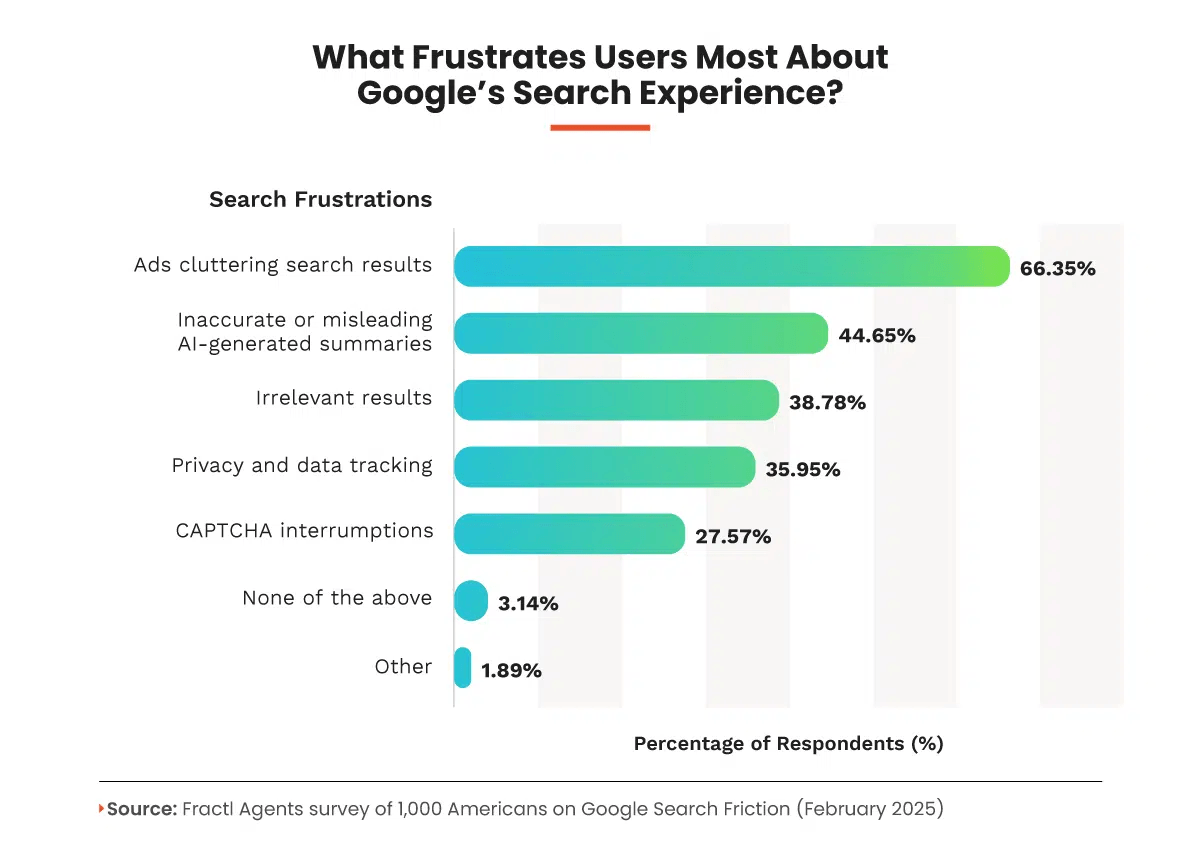
- 82% of consumers find AI-powered search more helpful than traditional SERPs. With ads being the No. 1 frustration on Google (cited by 66% of users), AI-native search tools have a clear lane to gain mainstream adoption.
- Track your brand’s LLM footprint now. Benchmarking how — and where — large language models reference your brand is essential for adapting your content strategy and digital marketing approach to the AI era.
- AI amplifies proven workflows; it doesn’t replace strategy. Fractl uses 100+ AI-powered agents to automate pitch lists, subject line testing, and content ideation — freeing teams for relationship building and the high-level work AI can’t replicate.
The Rise of Generative Engine Optimization
The term “generative engine optimization” (GEO) barely registered in search trends at the start of 2025. Fewer than 5,000 people searched for it each month. By June, monthly search volume had climbed to 74,000 — a nearly 1,400% increase in six months — and Google returned 1.5 million results for the term in the SERPs (2.3 million all time).
It’s a testament to how rapidly the search engine optimization industry can rally around a new concept. But this isn’t just a rebrand of old tactics. GEO deserves its own terminology because AI-native platforms like ChatGPT, Perplexity, and Google’s Gemini-powered AI Overviews don’t rank content the way traditional search engines do — they synthesize it.
In AI-powered search, brand visibility comes down to how clearly you signal entity expertise. That means depth of topic coverage, breadth of brand mentions across the web, and the resulting perceived authority that earns contextual trust from the algorithms that power large language models.
SEO Isn’t Dead; It’s Just Evolving
If you’ve been in digital marketing for more than a few years, you’ve heard this tired refrain before. The phrase “SEO is dead” first appeared in Google Trends around 2012 — right around the time search interest in “SEO” plateaued at about 7 million monthly searches. The doomsayers have been recycling that clickbait ever since.
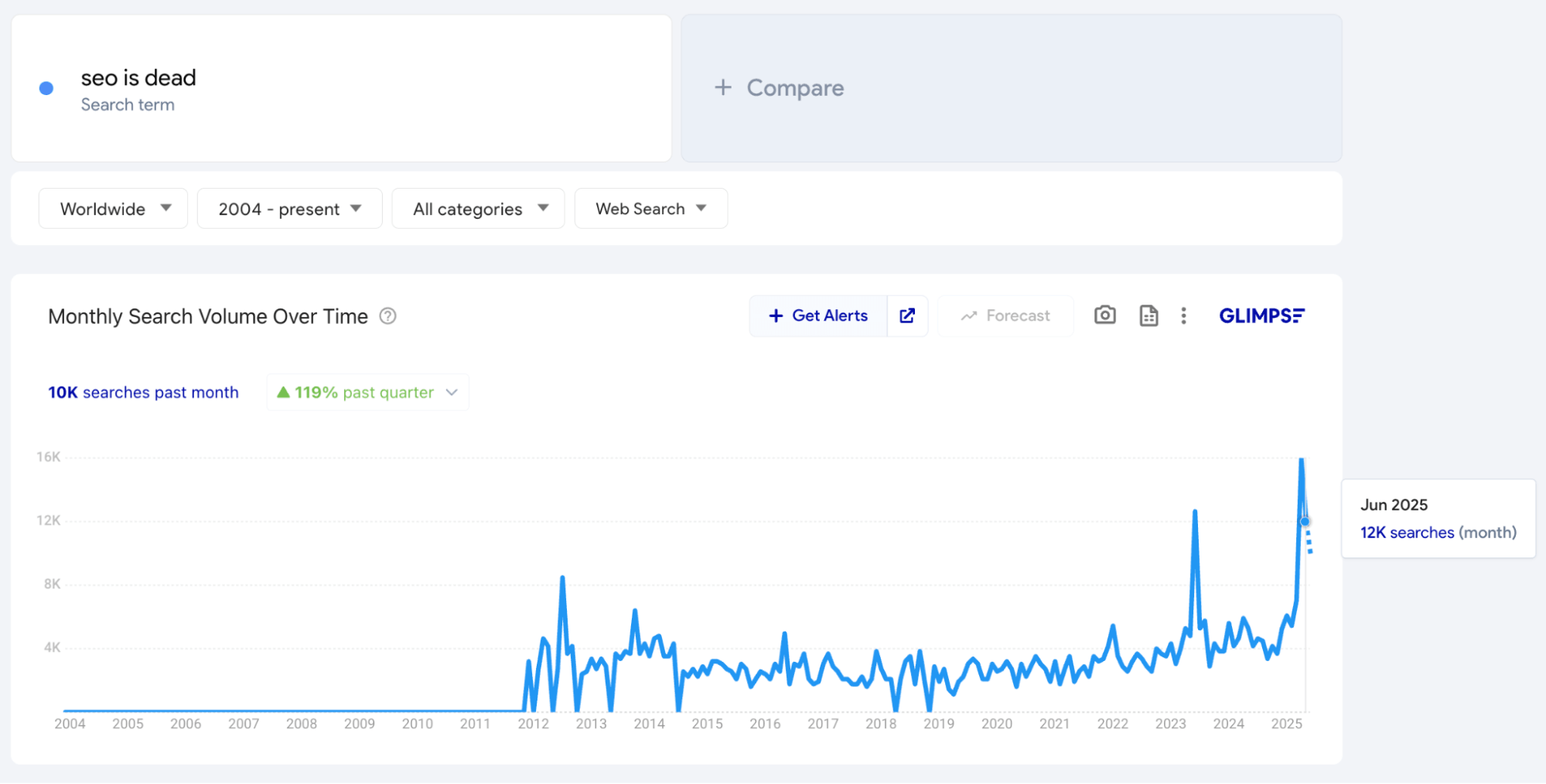
But the data tells a different story: As of May 2025, the term “SEO” drives 22 million monthly searches — more than triple where it stood when the first obituaries were being written. That doesn’t show a dying industry, but rather one that has continuously adapted to new search trends, algorithm updates, and platform shifts.
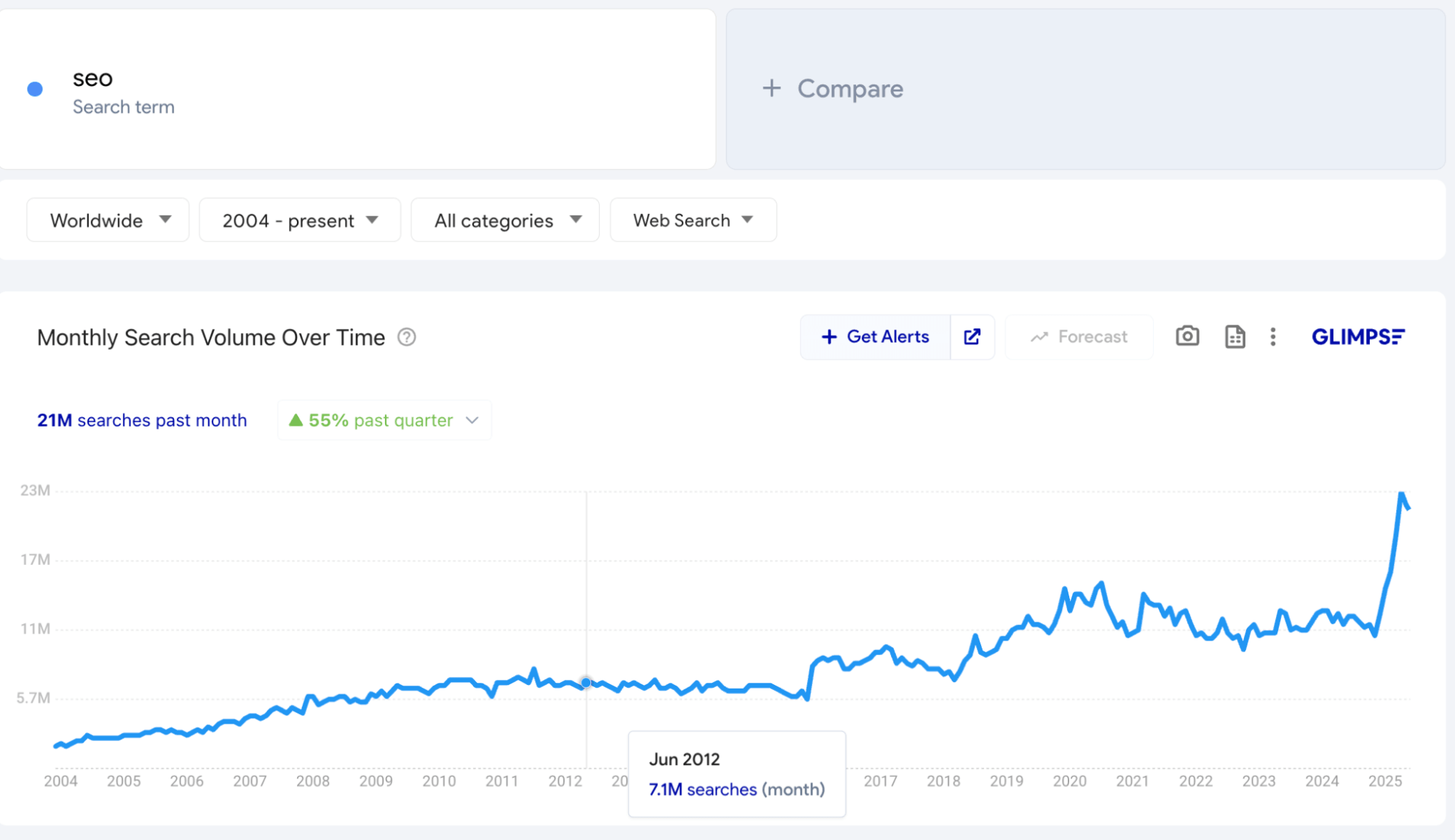
“That doesn’t show a dying industry, but rather one that has continuously adapted to new search trends, algorithm updates, and platform shifts.”
The truth is, brand visibility in AI Overviews and LLMs is driven by the same value system the best SEO strategies have always prioritized:
| 📚 Unique educational content | 🏆 Authoritative brand mentions | 🧠 Deep subject matter expertise |
As long as digital marketers remain focused on driving those signals, traditional SEO skills will continue to translate directly into AI search visibility.
The question isn’t whether search engine optimization matters — it’s whether your SEO practices are evolving fast enough to account for new channels like AI-generated summaries, LLM-powered search queries, and generative AI responses.
Search Is a Function, Not a Platform
This distinction matters more than ever. The underlying behavior of searching (people asking questions and seeking trusted answers) is timeless. Whether someone types a query into Google search, voices it to Siri, or prompts it in ChatGPT, it’s still a search.
“The underlying behavior of searching (people asking questions and seeking trusted answers) is timeless.”
The data backs this up. When Fractl Agents, Search Engine Land, and MFour surveyed 2,000 consumers, 77% said they still use traditional Google. But 48% had also used a tool like ChatGPT that same week. People aren’t abandoning search; they’re diversifying how they gather information, and each platform serves different use cases.
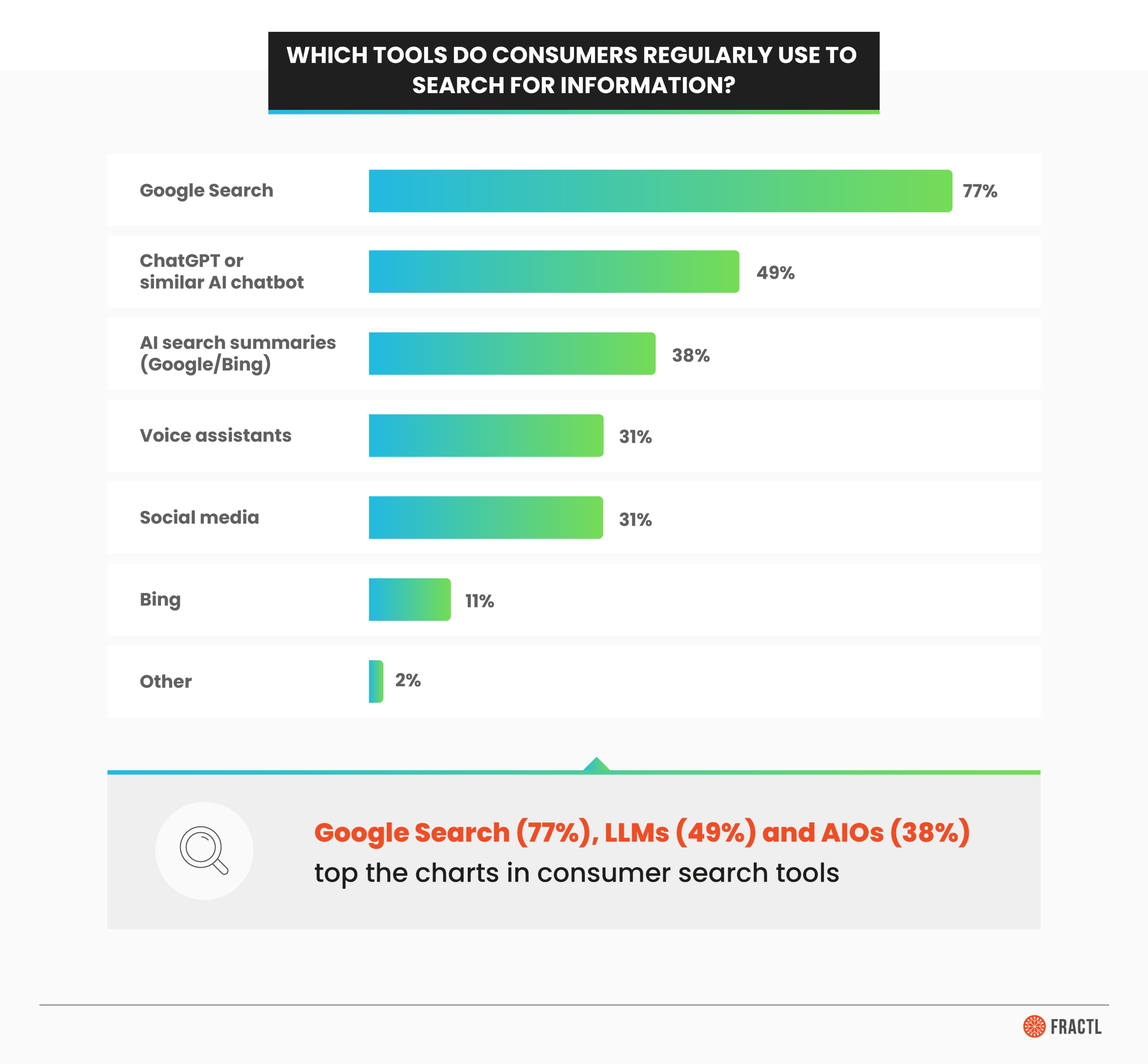
Instead of framing this as ChatGPT versus Google, the smarter approach is to evaluate where your target market spends time online and then produce content that drives brand authority across all of those channels. Do that well, and you’ll build the signals that help your brand surface on every platform that matters, from search engine results pages to AI-powered answers.
Brand Mentions Matter More Than Backlinks in AI Search
For years, backlinks have been the gold standard of off-page SEO. They still matter for traditional search rankings, but in the world of generative AI, brand mentions carry significantly more weight.
Louise Linehan at Ahrefs conducted a landmark study of approximately 75,000 brands that quantified the factors driving AI Overview brand visibility. The findings represent a major shift in how digital marketers should think about optimization:
- Brand web mentions. These showed the strongest correlation (0.664) with AI Overview brand visibility — making them the single most important factor.
- Mentions vs. backlinks. Web mentions (0.664) correlate roughly three times more strongly than backlinks (0.218) with AI visibility.
- The compounding effect. Brands earning the most web mentions earn up to 10X more mentions in AI Overviews, suggesting that digital PR momentum compounds over time.
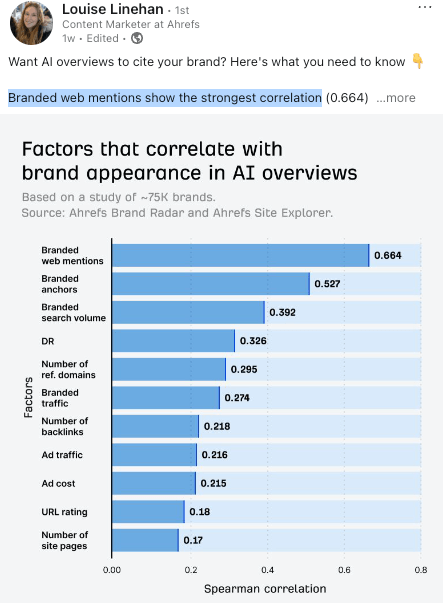
The takeaway is clear: in generative AI, it’s less about the little blue link and more about the breadth of your brand’s coverage on authoritative mainstream publishers and niche-relevant sites. Earning mentions on high-quality outlets through data-driven content marketing and digital PR is the single most impactful thing a brand can do to improve its AI search visibility.
What LLMs Actually Favor: Five Factors Driving AI Brand Visibility
To understand what drives visibility in AI-powered search, we queried 8,090 keywords across LLMs and AI Overviews for 25 verticals, revealing 22,410 leading domains. The patterns we uncovered offer a data-driven blueprint for optimizing content for large language models:
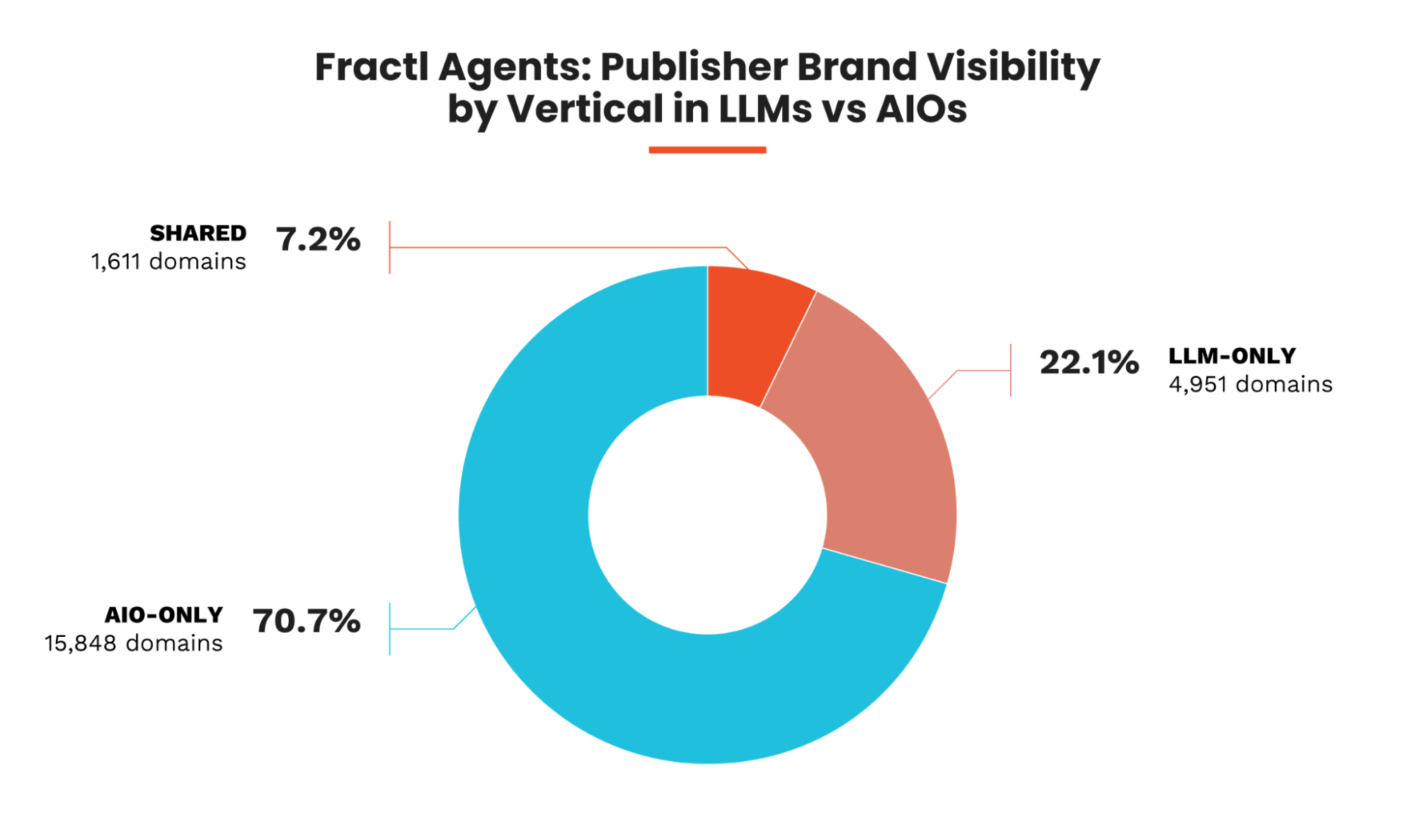
- Authority drives trust. LLMs favor sites with strong editorial oversight and high search rankings (think NPR, The New York Times, and similar outlets). These sites get crawled repeatedly, and their phrasing gets embedded into the unigrams and bigrams that models internalize.
- Vertical specialists enable depth. Niche authorities like Edmunds (automotive) or Investopedia (finance) produce large volumes of richly structured, up-to-date content in focused topics. LLMs “learn” to associate each vertical with its go-to expert sources.
- Structured formats boost learnability. Clearly segmented, educational how-to guides and listicles — like Investopedia definitions or Healthline’s step-by-step guides — are the easiest content structures for models to parse and reproduce. This means your headings, content structure, and on-page organization directly affect how LLMs use your content.
- Brand repetition reinforces relevance. Content from major publishers gets syndicated and referenced by others, multiplying its textual footprint in LLM training data. Every piece of earned coverage is another repetition that reinforces your brand’s relevance in the model’s machine learning systems.
- U.S. commercial bias limits perspective. Heavy reliance on U.S. English outlets like CNN or MarketWatch means that current LLMs underrepresent non-U.S. voices — a content gap that global brands should pay close attention to.
Beyond these factors, specific publisher mentions, topic relevance and depth, and structured data (including metadata and schema markup) all play a role in determining which brands surface in generative AI responses.
Digital PR in the AI Era: What Fractl’s 2025 Performance Metrics Reveal
If brand mentions are the currency of AI visibility, then digital PR is the engine that earns them. We’ve been executing digital PR campaigns for 13 years, and our 2025 metrics demonstrate that a data-driven approach to earned media is more effective than ever — even as the landscape shifts.
Here’s where things stood as of mid-2025:
- Average placement DA up to 78. Average placement Domain Authority has steadily climbed from 74 in 2021 to 78 as of July 2025, reflecting a consistent focus on earning coverage on high-authority outlets.
- 555 placements and counting. We’ve already surpassed 2022 and 2024 totals, and we’re on track to exceed 2021 (702) and 2023 (823). Of those 555 placements, 530+ landed on mid-to-top-tier publishers (DA > 40), with 456 exceeding DA 60 and 421 surpassing DA 70.
- 7.87% placement rate. That’s nearly double the industry average from a decade ago, achieved despite increasing market saturation and competition for journalist attention.
A significant part of this success stems from our 2021 agency reorganization and early adoption of AI tools. Kristin Tynski, one of Fractl’s co-founders, had early access to ChatGPT before its public launch and recognized its potential immediately. She and her brother, Dan Tynski, began building proprietary agents, and the broader team started experimenting with custom GPTs to automate and streamline repeatable workflows.
We’re achieving better outcomes with a leaner team — one that’s paid the most in our history and operates on a four-day workweek because their innovation and results earned it.
While research-informed content strategy remains at the core of our process, AI has transformed how we scale what works. We’ve used AI to automate pitch list generation, subject line testing, and real-time newsjacking ideation — freeing up more time for relationship building, strategic thinking, and the human-driven workflows that artificial intelligence can’t replicate.
Our campaigns continue to earn coverage across a wide spectrum of outlets — from niche verticals like Parents.com, CNET, and VICE to mainstream powerhouses like TODAY, CNBC, and The Globe and Mail.
AI Search Adoption: Where Consumers Stand Today
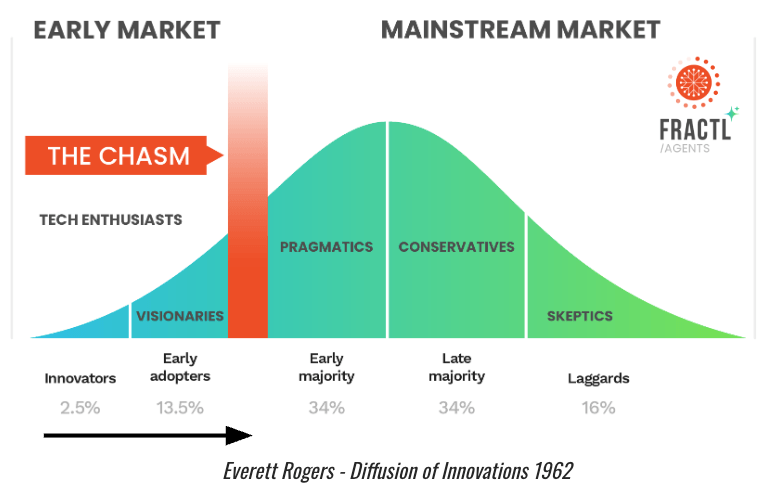
If you’re still debating whether AI search is worth your attention, the consumer data should settle it. We’re no longer in the early-adopter phase — we’re solidly in the Early Majority, which means your audience is actively experimenting with, adopting, and expecting AI-first answers.
Our survey data paints a nuanced picture of consumer sentiment and behavior around AI-powered search:
- 64% of consumers feel positive about AI. That’s not hype — it’s a tectonic shift in consumer sentiment, and it directly affects how people interact with search tools and evaluate the information they receive.
- 74% feel confident using AI tools. This goes beyond curiosity — consumers are increasingly comfortable making AI a regular part of their information-gathering workflow.
- 66% believe AI will replace traditional search within five years. That expectation is shaping how consumers approach search today, even if full replacement hasn’t happened yet.
- But only 38% use AI as their primary search method today. The gap between belief and behavior represents a window of opportunity for brands that start building AI search visibility now, before mass adoption fully arrives.
Early adoption will be demographic-driven, but mass adoption is inevitable. In the tech and digital marketing space specifically, professionals will likely replace the vast majority of their search queries with ChatGPT-style tools within the next 12–24 months.
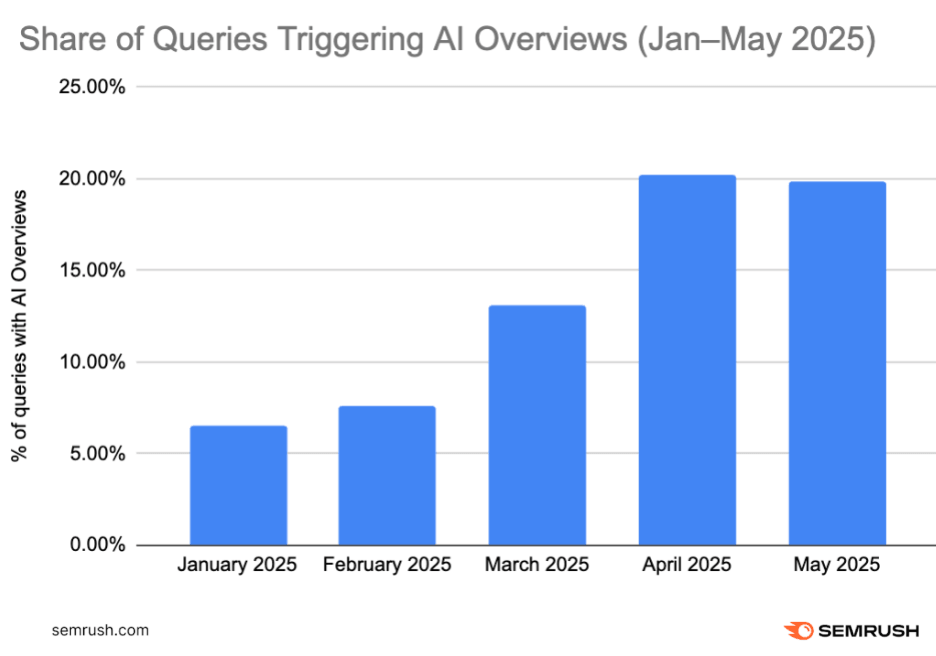
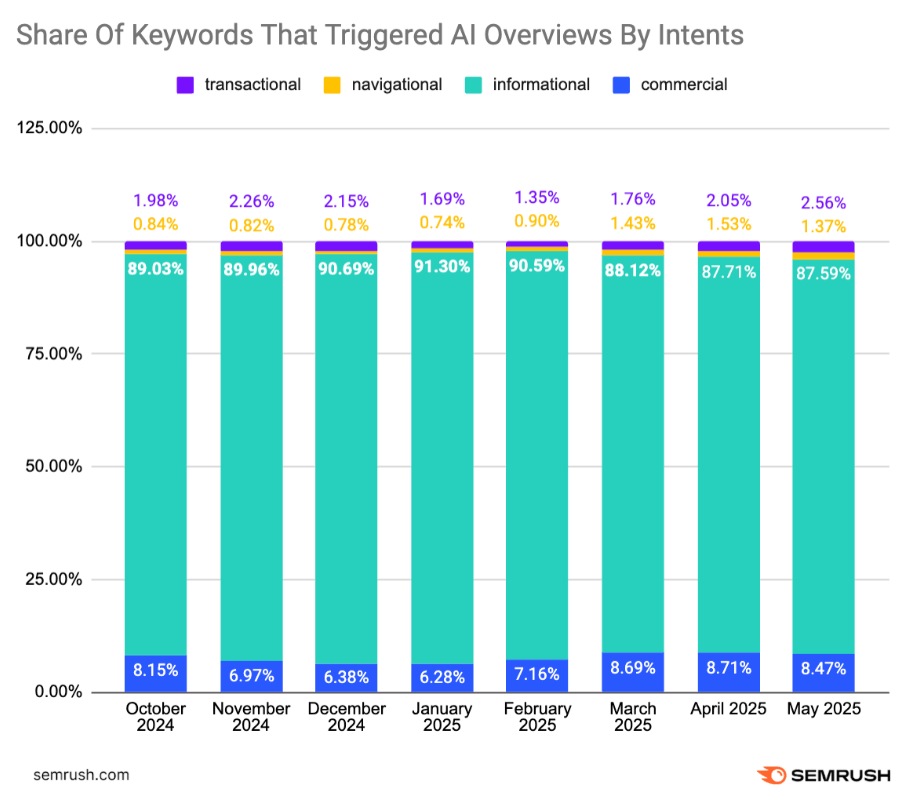
That said, it’s not a one-size-fits-all shift. According to exclusive Semrush data from May 2025, AI Overviews still heavily favor informational search queries (87.5%), while commercial and transactional queries combined account for less than 11%. In other words, AI Overviews are still functioning as general knowledge engines — not shopping carts — and that distinction should inform your content optimization priorities.
Google’s Ad Problem Is AI Search‘s Biggest Opportunity
Our research surfaced a finding that should concern Google and excite every AI search competitor: ads are the single most frustrating feature of the traditional search experience.
When we surveyed consumers about what frustrates them most about Google’s search experience, ads cluttering search results topped the list at 66.35%. Inaccurate or misleading AI-generated summaries came in second (44.65%), followed by irrelevant results (38.78%), privacy and data tracking concerns (35.95%), and CAPTCHA interruptions (27.57%).
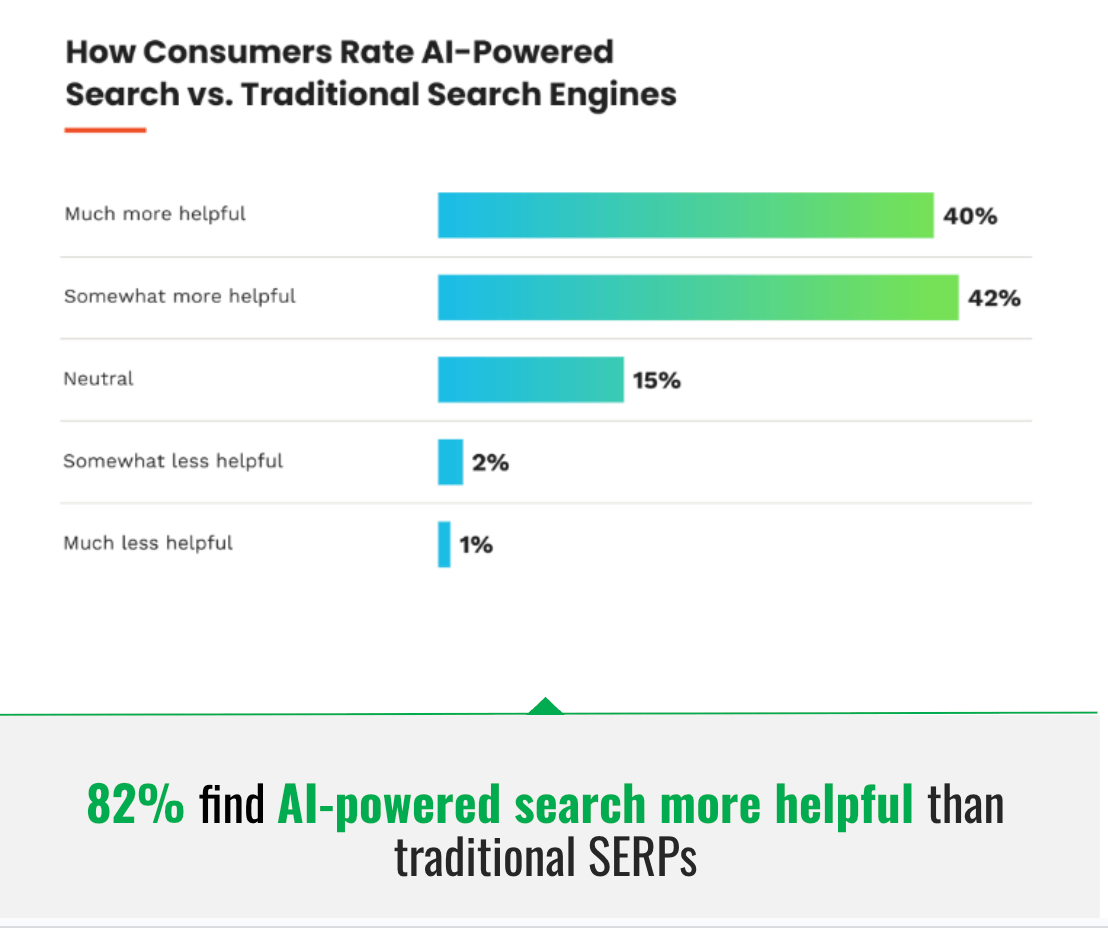
We also found that 82% of consumers believe AI-powered search is more helpful than traditional SERPs. That’s a mandate for change.
The consumer signal is clear: people want helpful, ad-light results. If Google continues to double down on expanding its ad space, it opens a significant lane for AI-native search competitors to gain traction — and the user experience data suggests that’s exactly what’s happening.
This dynamic will continue to drive rapid adoption of LLMs as a preferred search tool, which means brands that invest in AI search visibility now will be well-positioned as consumer behavior continues to shift.
“82% of consumers believe AI-powered search is more helpful than traditional SERPs. That’s a mandate for change.”
How Smaller Brands Can Build Awareness Across Channels
You don’t need a Fortune 500 budget to build meaningful brand visibility in the AI era. The key is starting with one high-authority campaign and maximizing its impact across every channel available.
Begin with a single piece of proprietary research or expert insight that earns coverage across numerous publishers. One well-executed, data-driven campaign that lands on authoritative outlets is worth more than a dozen thin content pieces that go nowhere. That initial coverage becomes your awareness spark.
From there, repurpose everything to amplify your reach. Syndicate your findings across niche and influential publishers, social platforms, and email campaigns. Each touchpoint reinforces your brand’s presence in the broader content ecosystem — and by extension, in LLM training data and AI search results.
“One well-executed, data-driven campaign that lands on authoritative outlets is worth more than a dozen thin content pieces that go nowhere.”
If you don’t have campaign wins yet, use newsjacking as a content creation on-ramp. Insert your brand into trending conversations by offering an expert quote or sharing internal data that supports the story journalists are already eager to expand on. It’s one of the fastest ways to earn brand mentions on high-authority sites, which fuels both your traditional search rankings and your AI-powered visibility.
The Metrics That Matter for AI-Era Brand Visibility
Understanding your brand’s digital footprint in 2025 and beyond means looking far beyond traditional search rankings. You need to know how your brand shows up in the large language models your customers increasingly trust for answers.
Here’s a practical framework for benchmarking your brand’s AI search presence:
- Audit brand mentions across the web and in LLMs. Note which publishers surface most for your key search queries and how often your brand appears in AI-generated responses. This data analysis forms the baseline for everything that follows.
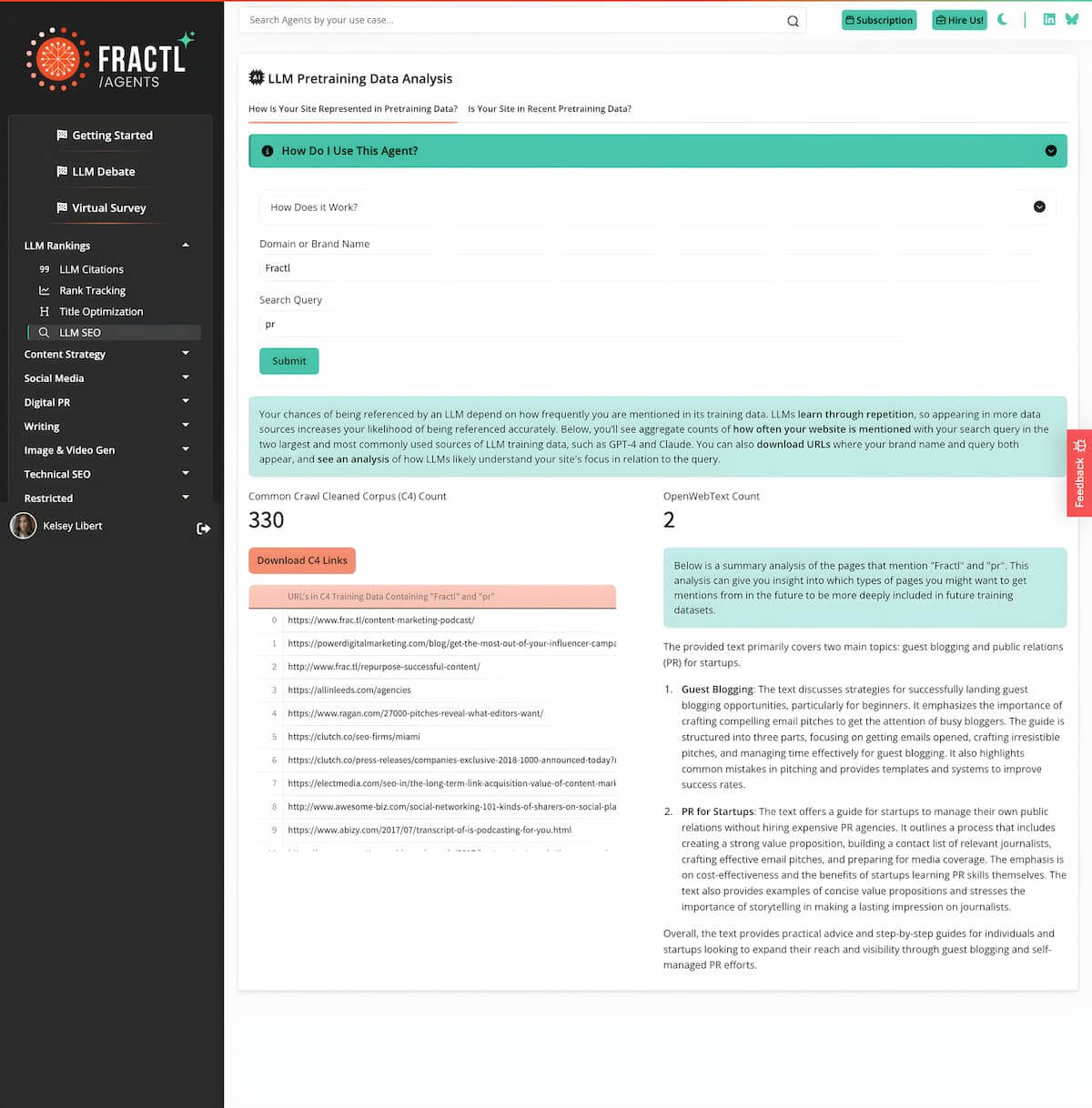
- Track your brand’s presence in LLM training data. Understanding how often and in what contexts your brand appears gives you insight into how crawlers and machine learning systems perceive your authority.
- Conduct an entity-authority analysis. Pinpoint content gaps by identifying which target keywords and topic areas are owned by your competitors. For example, does your brand or a competitor own the entity association for “sustainable packaging” or “affordable CRM software”?
- Analyze the content types LLMs favor in your vertical. Do models lean on your in-depth research and statistics, quote your experts, or default to quick listicles from niche blogs? Understanding these preferences helps you shape your content strategy for maximum AI visibility.
- Map which publishers dominate LLM coverage. Identify where you’re underrepresented so you can shape future campaign topics and digital PR targets accordingly. This kind of keyword research for the AI era is essential for closing visibility gaps.
Fractl Agents: AI-Powered Tools for LLM Brand Visibility
Tracking your brand’s AI search visibility manually would be overwhelming. That’s exactly why we built Fractl Agents — a suite of AI-driven tools designed to give brands the metrics and competitive insights they need to win in the AI era. Think of it as SEO analytics scaled for large language models.
LLM Brand Mentions Agent
We’ve built custom agentic workflows that query every major LLM on your brand keywords, product names, and industry questions, then log how your brand is represented across models — and how it stacks up against competitors. This gives you a real-time view of your brand’s AI search visibility that traditional SEO tools like Semrush or Ahrefs alone can’t provide.
LLM Citations Agent
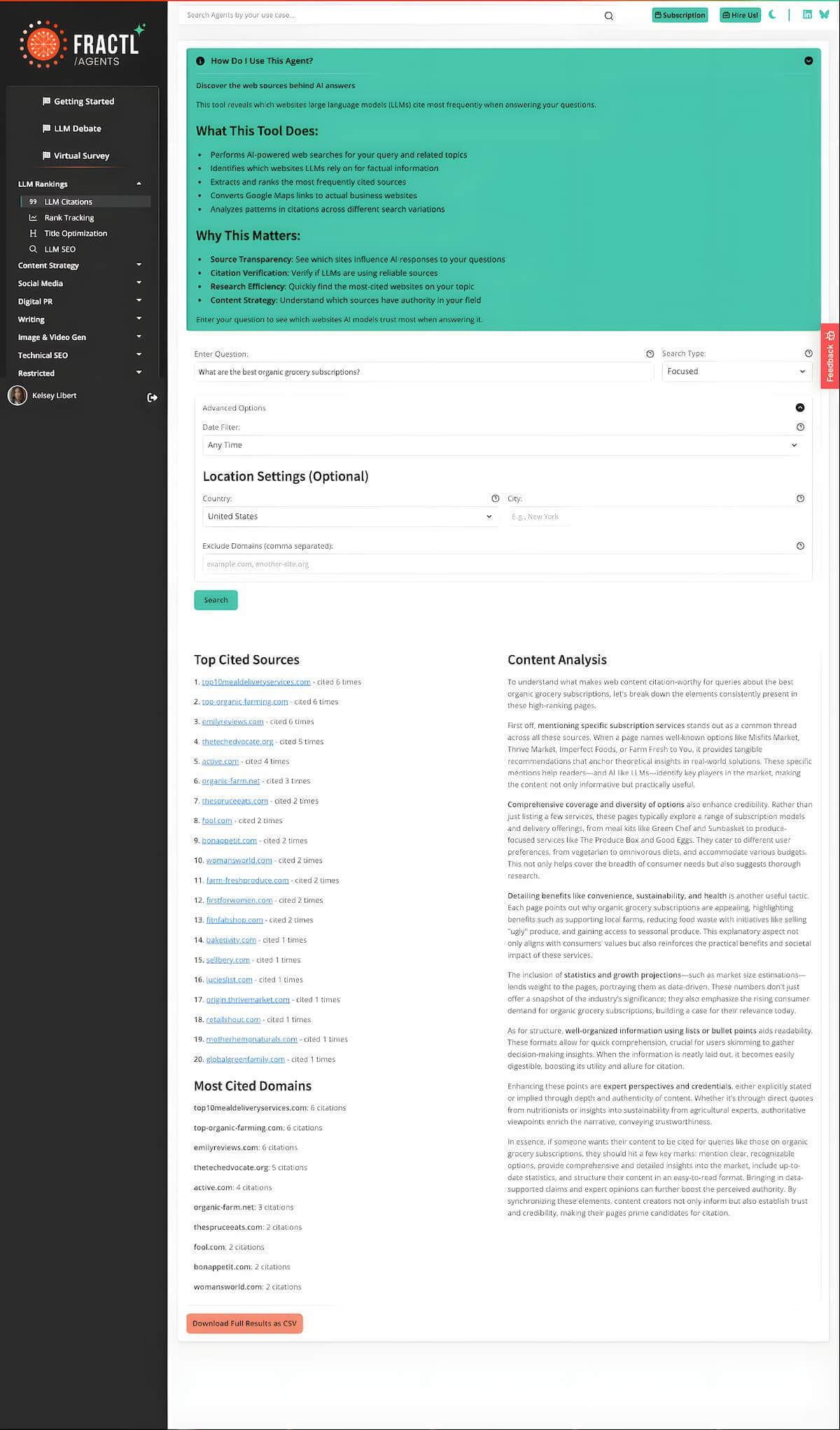
This agent uncovers which publishers and specific webpages LLMs rely on when answering any given query. It empowers you to reverse-engineer AI trust signals and sharpen your content optimization and digital PR outreach strategy based on what the models actually cite.
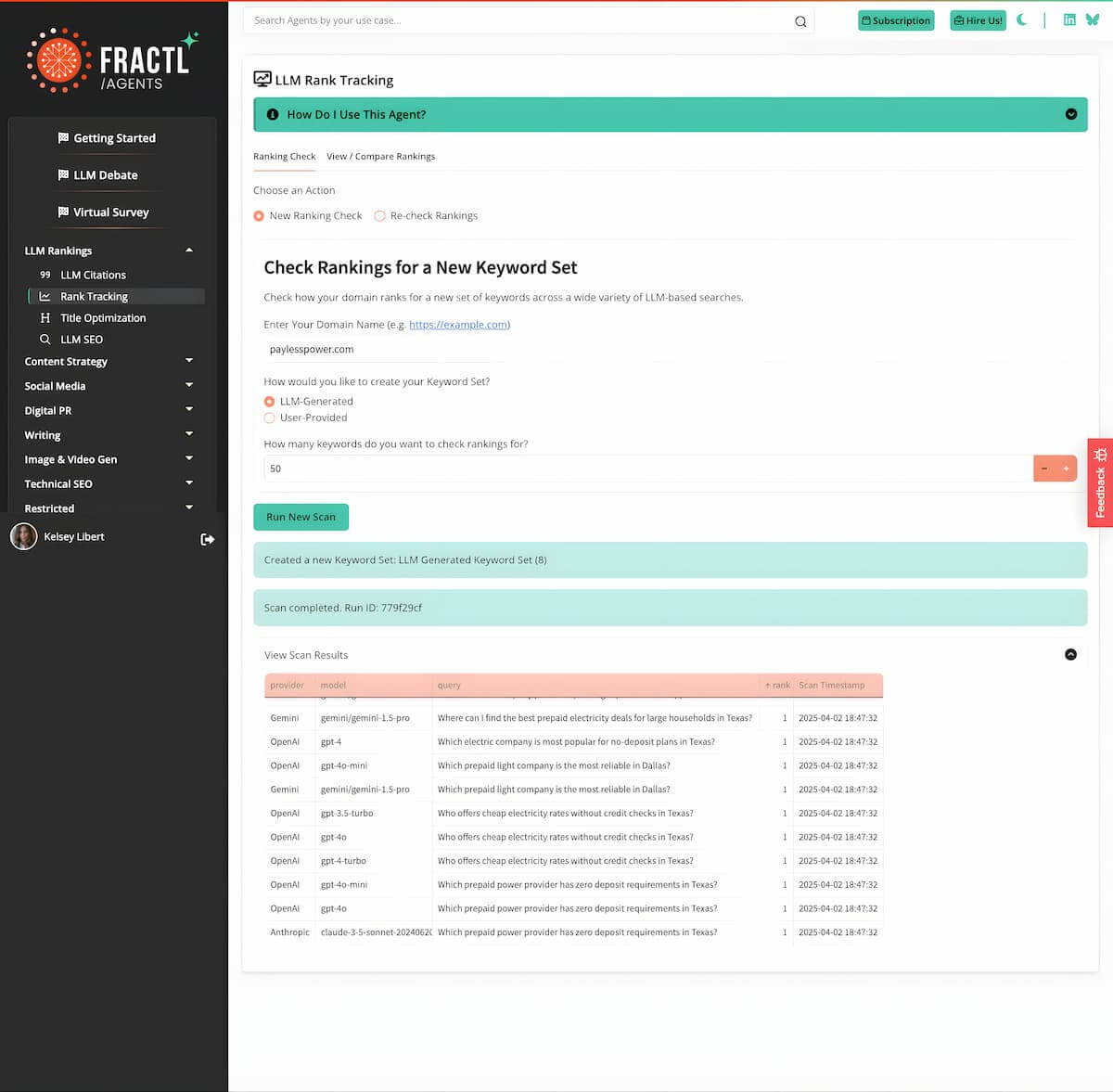
Rank Tracking Agent
The AI Search Visibility Agent continuously tracks your brand’s keyword rankings across major LLMs, surfaces shifts over time, and delivers competitive insights so you can keep your content discoverable in AI-driven search. It’s rank tracking built for the generative AI era.
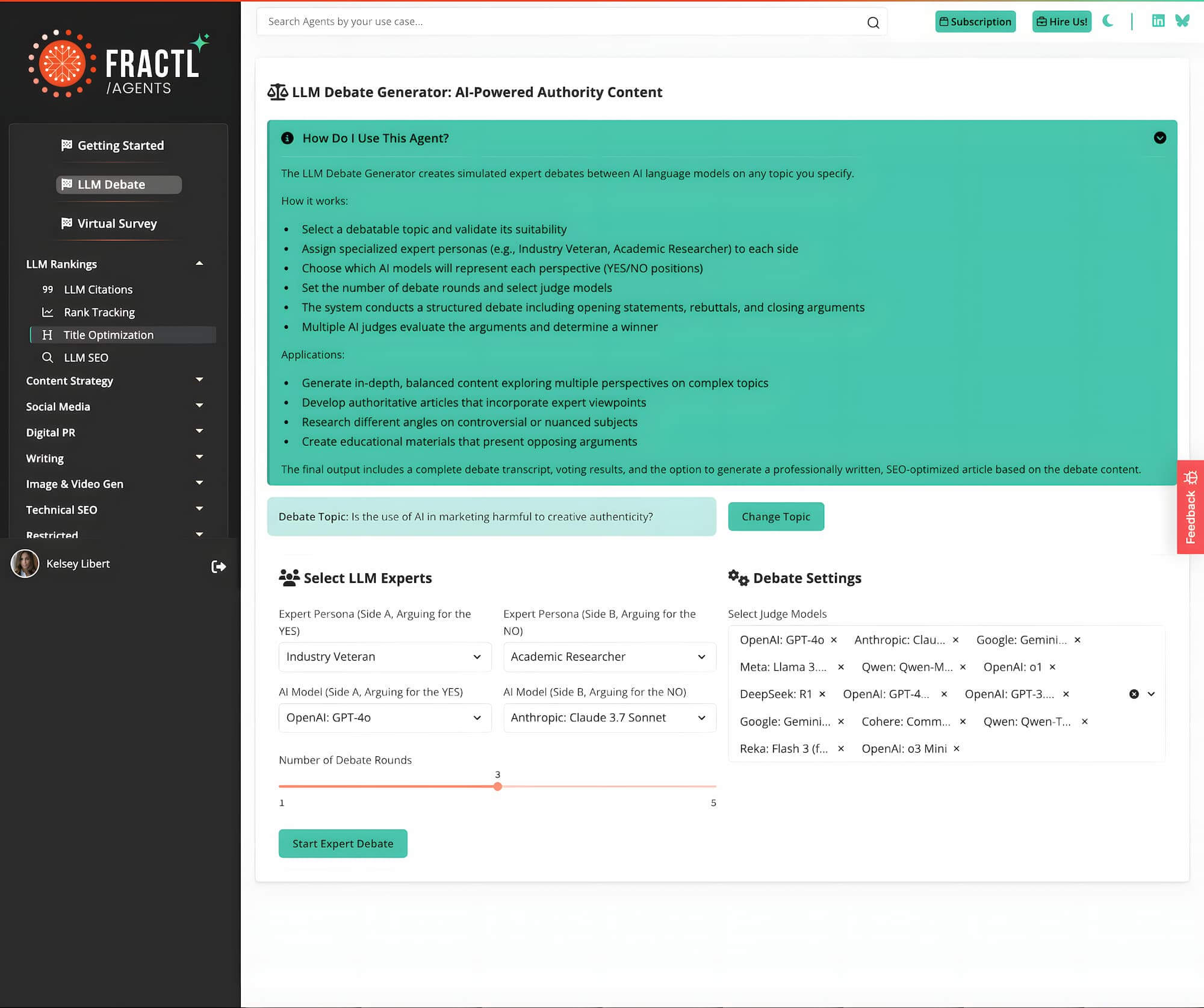
Debate Agent
The AI Debate Engine orchestrates structured LLM “debates” among expert personas to produce in-depth, E-E-A-T-aligned articles that fuel your content strategy and help dominate high-intent search engine results pages. It’s one of the most innovative approaches to AI-assisted content generation we’ve seen.
How AI Has Transformed Agency Workflows at Fractl
Over the past four years, we’ve used artificial intelligence to scale every proven workflow at Fractl. The result: we’ve exceeded our agency KPIs with our largest client roster and smallest team ever, powered by more than 100 Fractl Agents and custom GPTs.
Here are a few examples that illustrate how AI tools integrate into day-to-day agency operations:
Campaign Ideation Agent
We still gather as a team to brainstorm our best ideas — but it all starts with our Ideation Agent. Feed it a topic like “remote work trends,” and within 30 seconds, it generates half a dozen data-driven hooks, visual concepts, and attention-grabbing headlines based on our proprietary research and years of training around what makes content newsworthy.
E-E-A-T Agent
We’ve created an enterprise-grade SEO strategist that simulates a senior consultant’s SERP analysis and E-E-A-T evaluation. It parses target keywords or competitor URLs to dissect user intent, content formats, schema usage, technical SEO and UX best practices, link-building profiles, and freshness signals — then delivers prioritized, data-driven recommendations to outpace ranking pages.
Pitch Strategy Agent
This digital PR agent ingests your study or campaign data and automatically identifies the top 10 newsworthy stats, crafts and prioritizes 10 high-impact subject lines, generates a structured initial pitch and follow-up email, and curates a targeted list of 10 media outlets with DA scores and rationale. It streamlines every element for maximum journalist engagement.
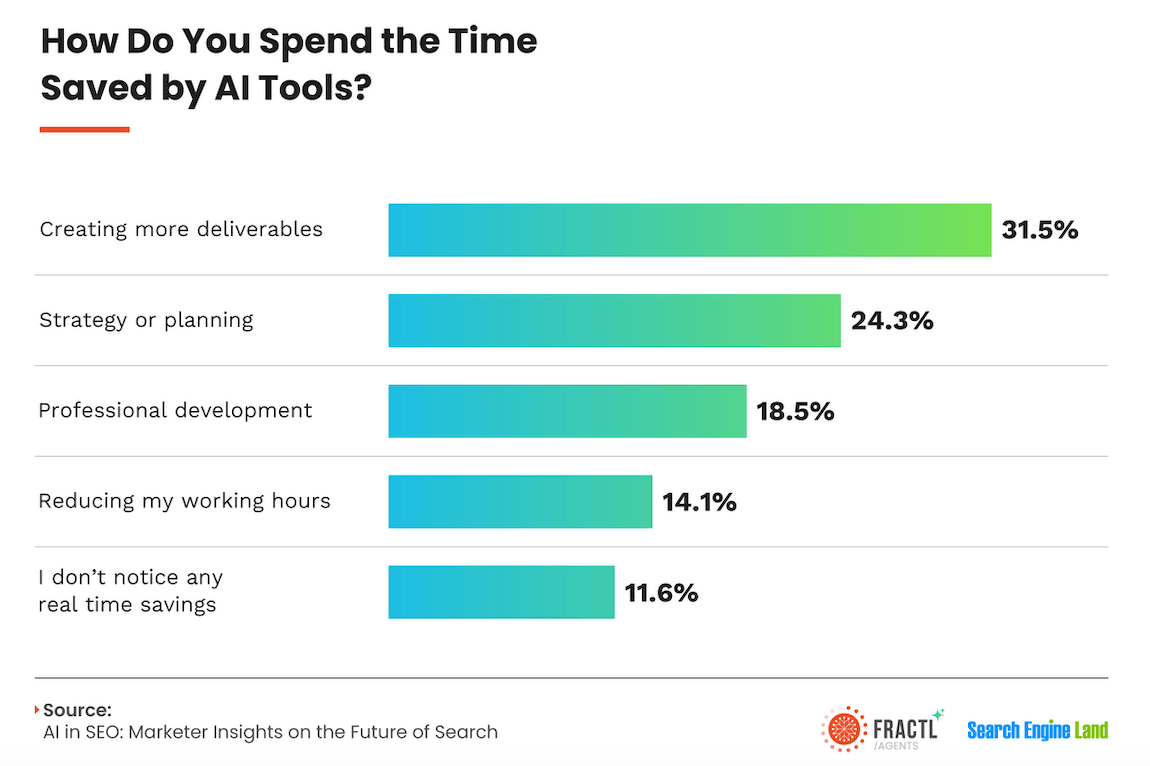
The lesson from our experience is about how you handle the time and energy they free up. Build guidelines for how saved time should be spent: more strategy, more upskilling, or actual time off. Reward innovation rather than simply extracting more output, and your team’s results will follow.