




Table of Contents
- Data Journalism Campaign Examples
- Reactive PR and Newsjacking Examples
- Video and Visual Content Marketing Examples
- Social Media and User-Generated Content Marketing Examples
- Interactive Tools and Evergreen Resource Examples
- B2B Thought Leadership Content Examples
- Proactive PR and Expert Quote Examples
- How To Build a Content Marketing Strategy That Drives Brand Visibility
- Your Content Marketing Should Earn Attention, Not Just Occupy Space
- FAQs
Content marketing isn’t just about publishing more. It’s about creating something worth reading and citing.
At its best, content marketing builds brand visibility and thought leadership by earning attention from the sources your audience already trusts, from mainstream media to niche industry publishers. That means going beyond blog posts and checklists, and investing in data studies, expert-led insights, interactive tools, and timely narratives that get picked up, referenced, and shared.
The examples below didn’t just drive traffic. They earned high-authority placements, increased referring domains, and built brand recognition that compounds over time. At Fractl, we’ve spent years studying what actually drives qualified brand traffic across channels. From data journalism and reactive PR to interactive tools and B2B thought leadership, these examples show that content performs best when it earns visibility, not just fills a calendar.
Data Journalism Campaign Examples
Data journalism is original, data-driven research on topics with broad consumer appeal, visualized as shareable assets and paired with digital PR outreach to earn press coverage and high-authority backlinks and brand mentions at scale. It’s one of the most effective content marketing strategies for building brand authority and visibility because it gives journalists something new and newsworthy to write about, rather than just another opinion piece or product page.
The earned media from a single data journalism campaign can generate dozens of brand mentions and backlinks from high-authority news outlets. Those placements compound: Each high-authority link strengthens domain authority and entity authority, improving your brand visibility across search, social, and GenAI platforms.
As I wrote in my Search Engine Land column on what makes content go viral, the campaigns that earn the most coverage share a common thread: they surface surprising, data-backed findings that journalists can’t get anywhere else.
Lance Surety Bonds: “88% of Drivers Have Road Rage”

We produced a national survey on road rage for Lance Surety Bonds that explored the surprising connections between driving behavior, car brands, and music preferences. The research surveyed American drivers on their road rage habits, then cross-tabulated the results against the vehicles they drive and the music they listen to behind the wheel.
The key findings gave journalists multiple angles to cover: 88% of drivers admitted to road rage behaviors, certain car brands were disproportionately associated with aggressive driving, and specific music genres correlated with higher (or lower) rates of road rage incidents. The combination of relatable consumer data and unexpected car brand and music connections made the study irresistible to automotive, lifestyle, and regional news editors.
The campaign earned 46 referring domains and 77 backlinks (98.7% dofollow), with placements at TheStreet (DR 86), El Economista (DR 84), TorqueNews (DR 66), NJ1015 (DR 74), MotorBiscuit (DR 73), and 40+ regional news outlets across multiple states. The study also earned international coverage in Spain, Finland, and Romania.
Why it worked: The campaign combined universally relatable data (everyone has a road rage opinion) with specific, surprising findings that could be localized by regional outlets. Each state-level newsroom could spin the data into a local story, which is exactly what happened across dozens of Townsquare Media stations covering road rage trends in their markets.
Payless Power: “The Most BBQ-Obsessed Cities in Texas”
For Payless Power, we produced a data-driven analysis of which Texas cities are most obsessed with BBQ. The study evaluated 40 Texas cities with populations over 100,000 across four weighted metrics: BBQ restaurants per capita (30%), Google search interest from 2023-2025 (25%), highly-rated venues on Yelp (25%), and affordable BBQ options (20%).
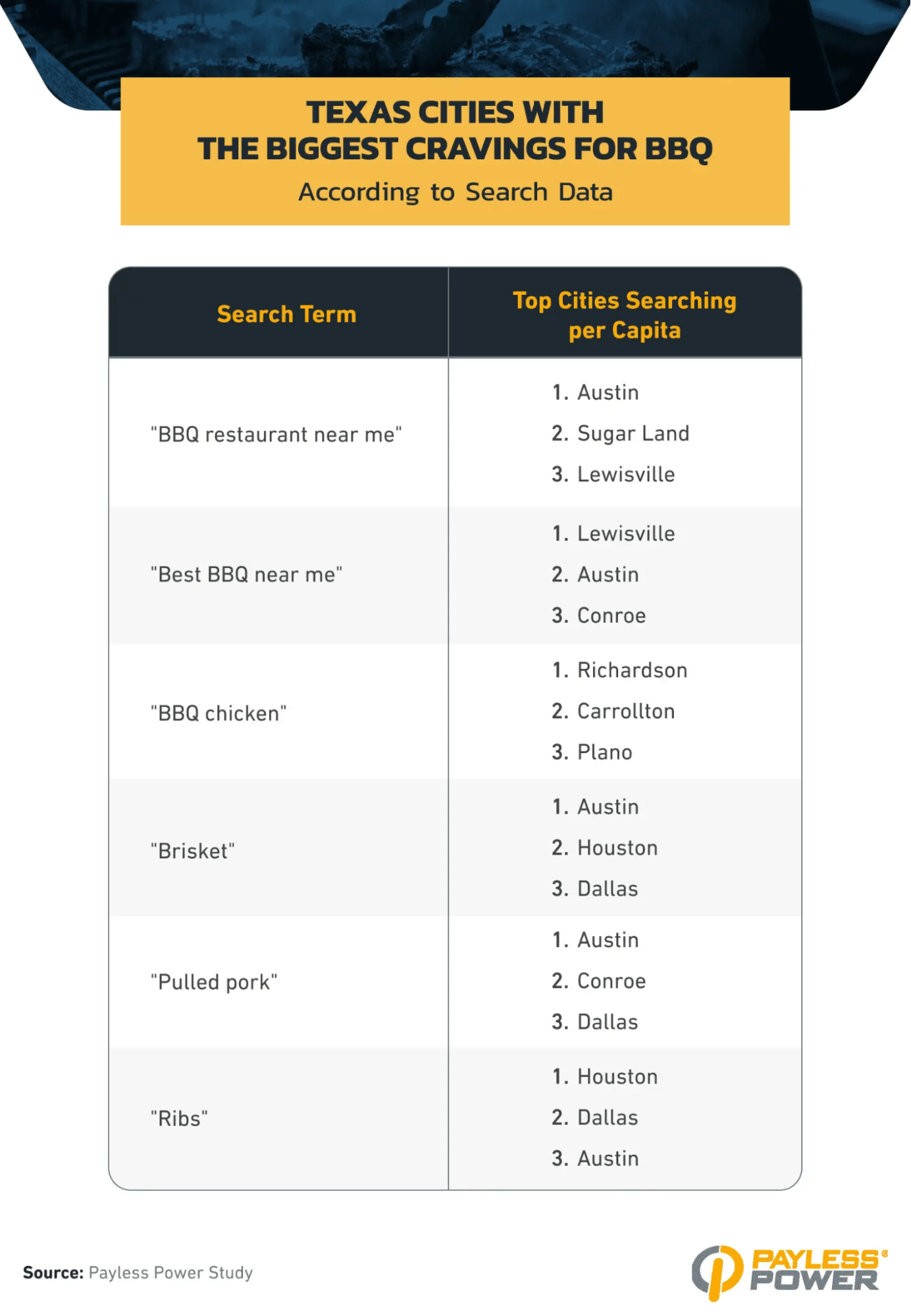
The findings ranked New Braunfels, Sugar Land, and Lewisville as the top BBQ-obsessed cities, with Austin placing fourth despite dominating BBQ-related searches per capita. The data revealed that the cities with the most BBQ restaurants aren’t necessarily the ones searching for them the most, and that smaller cities often have higher concentrations of top-rated spots than major metros.
The campaign earned 75 referring domains and 649 backlinks, with placements at NewsBreak (DR 83), MySanAntonio (DR 80), and dozens of Texas-market radio stations and news sites. The localized angle drove widespread regional pickup across Townsquare Media properties serving Texas audiences, directly aligning with our client’s goal to build visibility and trust among the Texans they power.
Why it worked: BBQ isn’t just food in Texas, it’s identity. By turning that pride into a competitive, city-by-city ranking, the campaign tapped into something inherently shareable. Every market on (or left off) the list became a built-in headline for local coverage. The methodology struck the right balance, credible enough to earn trust, but provocative enough to spark debate and drive sustained pickup across key influential publishers in our client’s niche.
QS Supplies: “Comparing Bathroom Habits in the UK and US”

We produced a cross-cultural comparison of bathroom habits for UK bathroom retailer QS Supplies, surveying consumers in both the United Kingdom and the United States on their hygiene routines, bathroom preferences, and daily habits. The study explored everything from shower frequency to toilet seat etiquette, producing a data set full of shareable, surprising comparisons between the two countries.
The campaign earned 24 referring domains and 130 backlinks, with placements at AOL.com (DR 91), AOL UK (DR 84), NJ1015 (DR 74), and coverage across the US, UK, Czech Republic, and Germany. For a niche B2C retailer, the campaign punched well above its weight class in terms of the authority and geographic diversity of the linking domains.
Why it worked: Cultural comparison data is inherently shareable because it taps into curiosity and national pride. People want to see how their habits stack up, and they’re quick to share the results. The UK vs. US framing created built-in dual-market relevance, allowing one dataset to earn coverage on both sides of the Atlantic. For a client operating in global ecommerce, that kind of cross-market visibility is critical. It builds brand recognition in multiple regions at once, reinforces international relevance, and drives awareness among diverse audiences without needing separate campaigns for each market.
Reactive PR and Newsjacking Examples
Reactive PR (also called newsjacking) creates timely, research-driven content that taps into breaking news or cultural moments to earn rapid press coverage and high-authority backlinks. The speed is what makes it powerful: Concepts get approved within 24 hours and produced in 24 to 48 hours, staying ahead of the news cycle while competitors are still brainstorming. That urgency drives massive brand exposure in a short burst, reaching new audiences through the outlets already covering the story.
I’ve written about how AI is accelerating reactive PR, and the core principle hasn’t changed: the brands that respond fastest with the most useful data win the coverage. A well-timed reactive campaign can earn placements in publications that might take months to pitch through traditional outreach.
Tebra: “Inside ChatGPT Health: Patient-Provider Trust”

When ChatGPT’s use in health care became a mainstream conversation, with patients increasingly turning to AI chatbots for medical advice and providers debating whether to integrate the tools into clinical workflows, we helped Tebra react quickly with a consumer survey on patient trust in ChatGPT for health information. The study explored how patients feel about using AI for medical questions, whether they trust ChatGPT’s health advice compared to their doctor’s, and how providers should respond to the shift.
The campaign launched in March 2026 and earned a placement from eMarketer (DR 91) in its first week in promo, one of the most authoritative sources in digital marketing and health care industry analysis. For Tebra, a health care technology platform, the placement reinforces their positioning as a thought leader at the intersection of health care and AI, reaching exactly the provider and practice management audience they serve.
Why it worked: The campaign capitalized on a news cycle that was already dominating health care media: the rapid adoption of ChatGPT for health questions and the trust implications for patient-provider relationships. By surveying patients directly, Tebra provided data that journalists covering the AI-in-health-care beat couldn’t get from press releases or opinion pieces. The reactive timing meant the data arrived while editors were actively looking for fresh angles on the story.
Video and Visual Content Marketing Examples
Video and visual content are among the most engaging content formats for building brand awareness. The range is wide: short-form social media content on TikTok, long-form documentary-style series on YouTube, interactive infographics, and data visualizations that earn press coverage.
The best video and visual content doesn’t just get views. It gets covered. Here are two examples of brands that turned visual content marketing into earned media and lasting brand recognition.
Red Bull’s Content-First Media Strategy
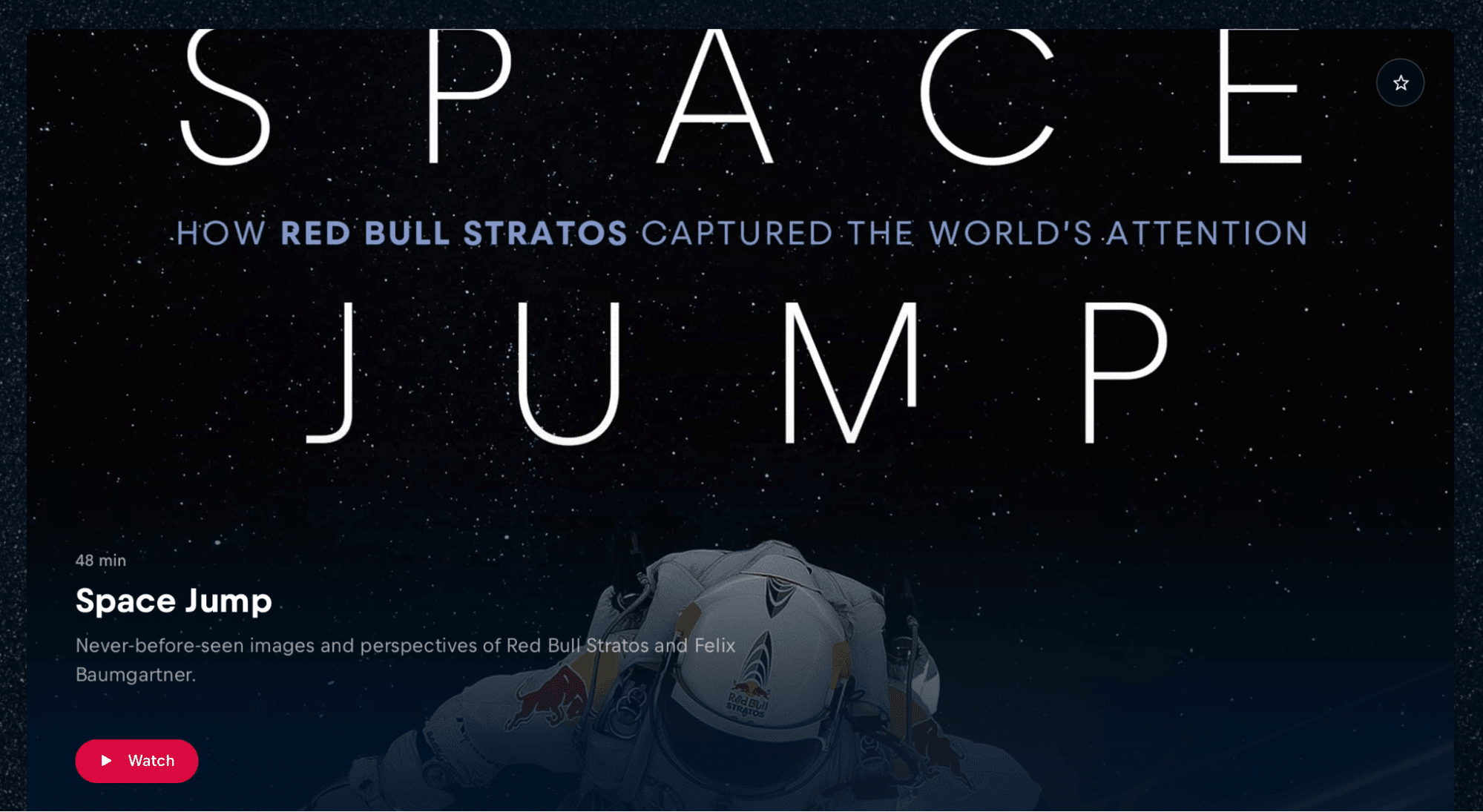
Red Bull stopped being an energy drink company years ago (at least from a content perspective). Red Bull Media House produces documentaries, live event broadcasts, and athlete-driven storytelling that positions the brand as synonymous with extreme sports and adventure. Their YouTube channel has over 27 million subscribers, and the content earns press coverage from mainstream outlets, not just sports media.
The flagship example is the Stratos campaign: Felix Baumgartner’s 2012 space jump, livestreamed on YouTube, drew over 8 million concurrent viewers (a platform record at the time) and generated global press coverage across every major news outlet. But Red Bull’s approach isn’t built on one viral video. It’s built on consistent content production across video series, social media channels, and live events that keep the brand top-of-mind for its target audience.
Why it worked: Red Bull created a content marketing strategy so robust that the brand essentially became a media company. The content isn’t promotional; it’s genuinely entertaining, which is why it earns organic press coverage, social sharing, and sustained brand visibility year after year. That’s the difference between content that occupies space and content that builds an audience.
Patagonia’s Values-Driven Visual Content

Patagonia’s content marketing doesn’t look like content marketing. Its film division produces feature-length documentaries about environmental activism, indigenous communities, and conservation. The brand’s “Don’t Buy This Jacket” New York Times ad told consumers to consume less, and yet it generated massive earned media coverage and actually increased sales. The brand’s entire content strategy reinforces a single idea: Patagonia cares more about the planet than about selling you a fleece.
That positioning has earned them consistent coverage from outlets that don’t typically cover outdoor apparel brands. When your content marketing stands for something bigger than your product, journalists treat you as a thought leader rather than an advertiser.
Why it worked: Patagonia proved that values-driven content earns more media attention than product-driven content. By making environmental activism the center of their visual storytelling, they built brand recognition that extends far beyond their customer base. The content earns press because it’s genuinely newsworthy, not because it’s optimized for clicks.
Social Media and User-Generated Content Marketing Examples
Social media content and user-generated content (UGC) place your customers at the center of your brand’s storytelling. The most effective social media marketing goes beyond targeted ads and scheduled posts to create community, conversation, and authentic content that builds brand visibility organically. UGC is particularly powerful because it builds trust through authenticity: when real customers share their experiences, it carries more credibility with potential customers than any branded campaign.
Clarify Capital’s Reddit-Sourced Small Business Growth Guide
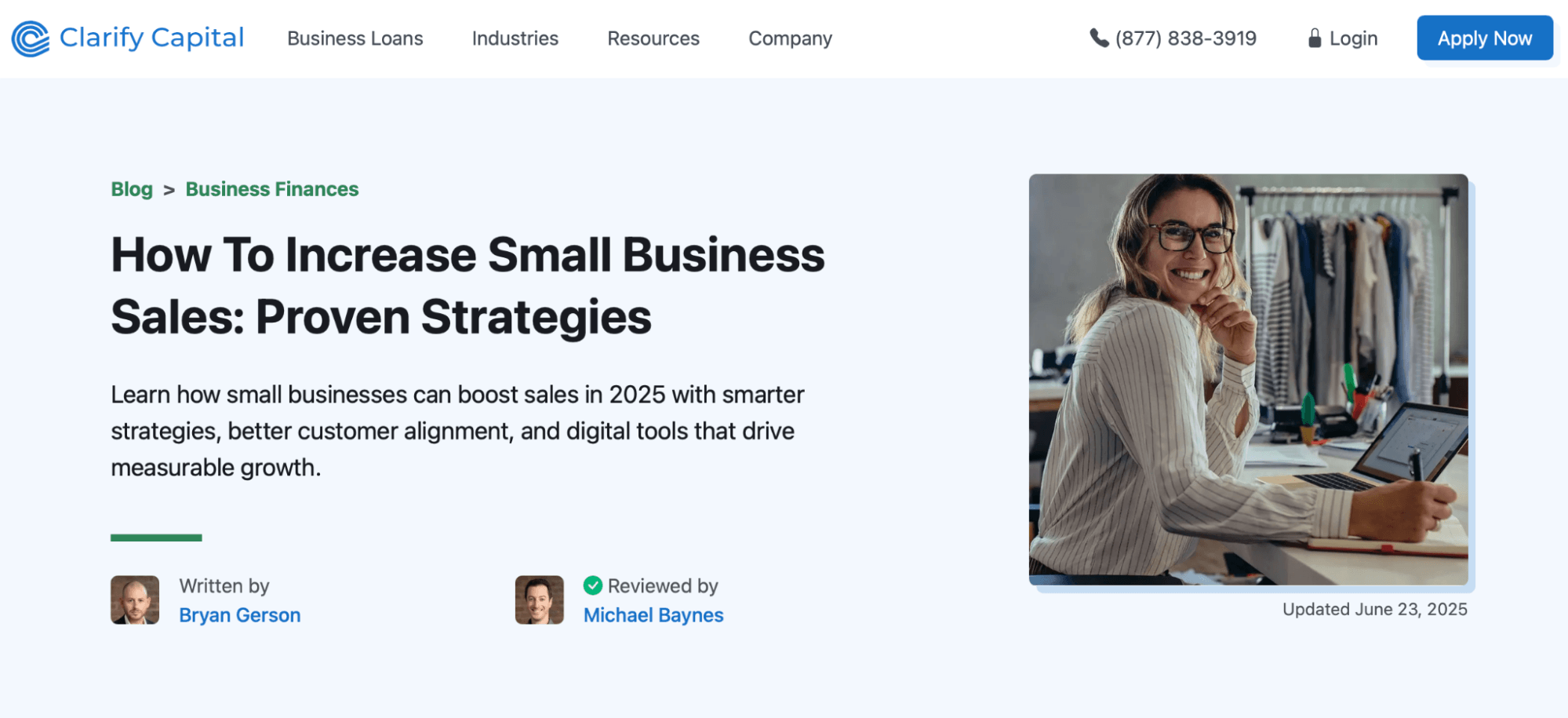
Clarify Capital’s guide to increasing small business sales is a strong example of how user-generated content can strengthen a brand’s content marketing strategy. Rather than relying solely on expert advice, the article integrates real Reddit case studies from anonymous small business owners sharing direct growth experiences.
The approach works on multiple levels. For business owners searching for practical growth strategies, the Reddit stories provide social proof that these tactics actually work in the real world. For Clarify Capital, the UGC positions the brand as a resource that listens to and amplifies the small business community rather than just lecturing at it.
Why it worked: By sourcing real stories from small business communities and embedding them alongside professional guidance, Clarify Capital created content that feels authentic and practical. The Reddit quotes add a layer of customer relationships and trust that purely editorial content can’t replicate, and the page drives qualified traffic from business owners already researching how to grow.
Payless Power’s Customer-Voice Prepaid Electricity Guide
Payless Power’s guide on switching to prepaid electricity uses a similar approach: Incorporating a Reddit quote from a real customer who switched to prepaid because the rate was roughly 3 cents per kWh cheaper, alongside transparent cost comparison data showing the financial trade-offs.
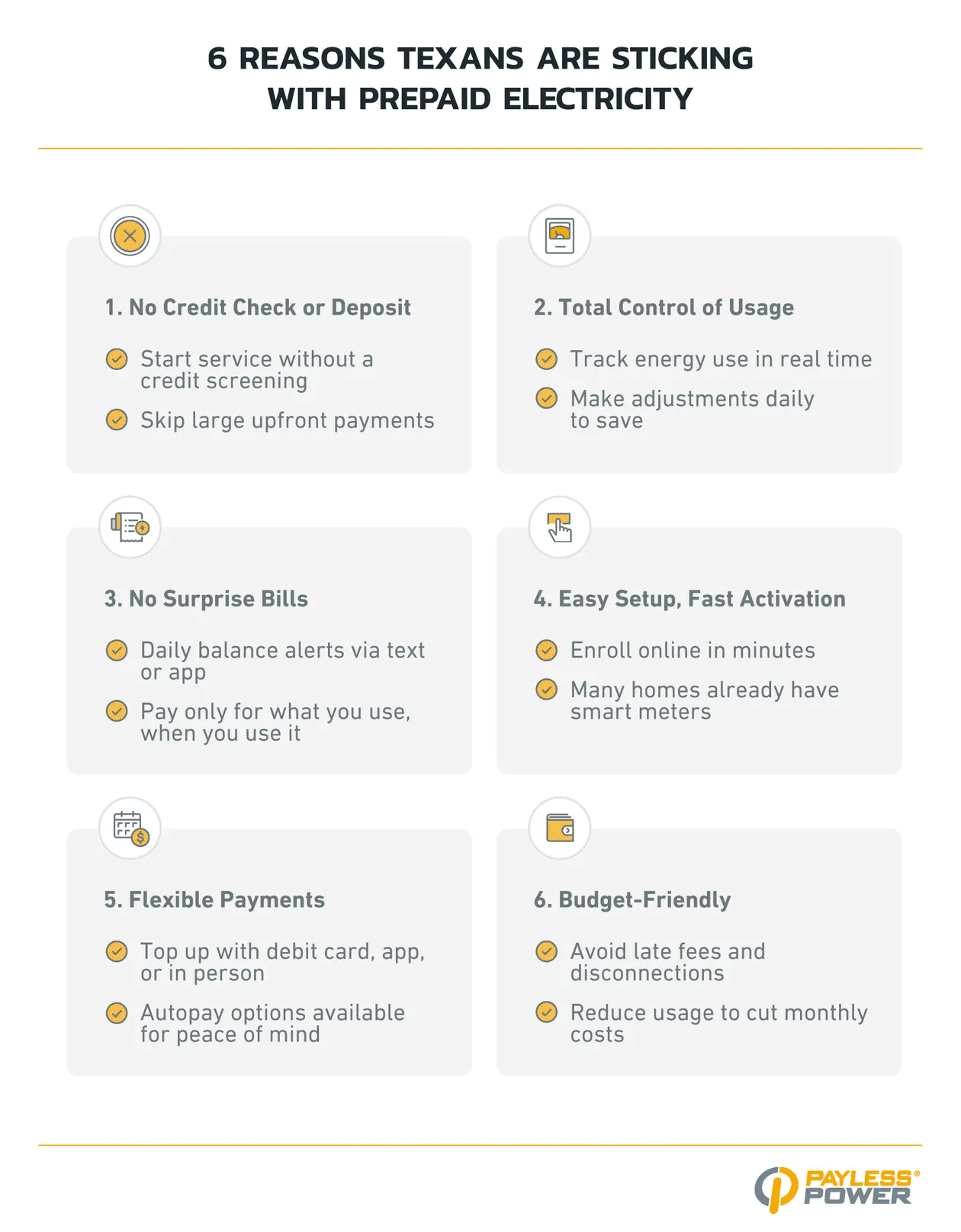
The customer testimonials and third-party validation give the content a credibility edge over competitors whose prepaid electricity pages read like sales brochures.
Why it worked: Payless Power let its customers tell the story. The combination of user-generated quotes, transparent pricing data, and existing customer reviews creates a piece of content that builds trust with the exact audience searching for prepaid electricity options. It’s a content marketing example that proves you don’t need a viral moment to drive brand visibility; sometimes, the right audience finding genuinely useful, community-informed content is more valuable.
Interactive Tools and Evergreen Resource Examples
Interactive tools and evergreen resources are content marketing formats designed for long-term brand visibility. Calculators, quizzes, and data explorers drive deeper engagement and generate leads by giving users personalized, actionable outputs. Comprehensive resource guides and statistics pages continue earning backlinks and organic traffic long after publication, compounding their search engine optimization value over time. These content types don’t chase news cycles; they build lasting authority.
Clarify Capital’s Interactive Calculator Suite
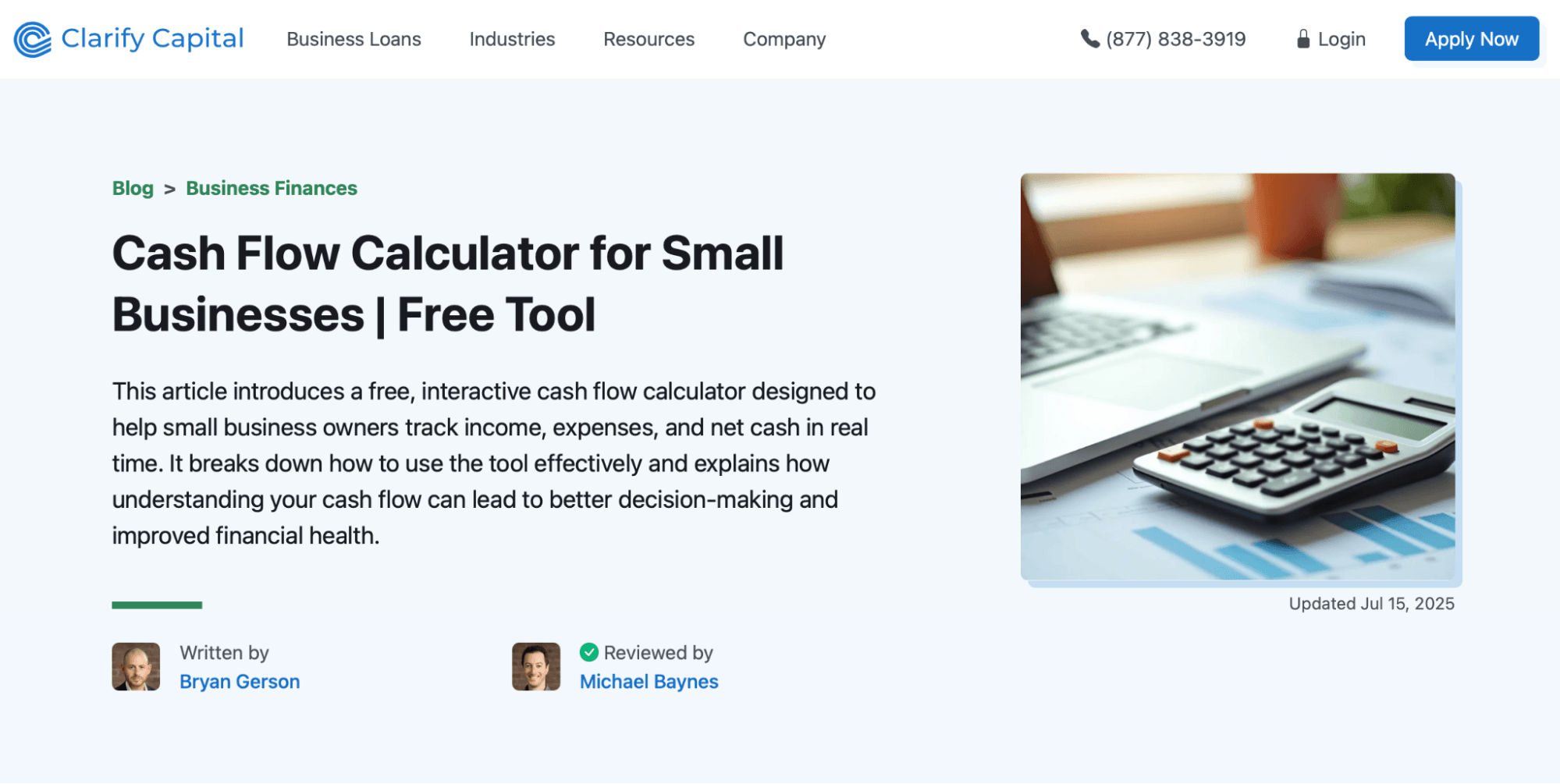
Clarify Capital built a suite of interactive financial calculators that serve small business owners at different stages of the buyer’s journey. The Cash Flow Calculator lets users input income sources, expenses, and loan obligations to get real-time net cash projections and performance trends. The SBA Loan Calculator estimates monthly payments, total interest, and total loan cost, helping borrowers understand what to expect before they apply. And the Net Working Capital Calculator instantly computes the difference between current assets and liabilities, paired with a full explainer on why that number matters.
Each tool combines utility with educational content. The Cash Flow Calculator page, for instance, frames the tool around a critical pain point: 82% of small businesses fail due to cash flow problems. The step-by-step usage guide and interpretation framework (positive, negative, break-even scenarios) turn the page into a resource users are likely to bookmark, return to, and share.
Why it worked: These calculators capture high-intent traffic from users actively researching financial decisions. The tools provide immediate value (a personalized calculation), the educational content builds authority and trust, and the conversion elements (CTAs, loan application links) move users naturally toward becoming customers. It’s content that serves business goals at every stage: SEO rankings, lead generation, and brand credibility.
B2B Thought Leadership Content Examples
B2B content marketing builds credibility with business owners and decision-makers through a buyer’s journey that’s longer, more research-driven, and more skeptical than B2C. Thought leadership content (original research, case studies, in-depth guides, webinars, podcasts) is what separates a trusted authority from just another vendor. Companies like HubSpot have built entire content ecosystems around this principle: blogs, email newsletters, podcasts, certifications, and templates that educate and nurture leads at every stage of the customer journey while reinforcing the brand’s position as an industry leader.
The most effective B2B thought leadership doesn’t just share opinions. It produces original data and analysis that give the industry something new to cite and discuss. LinkedIn’s B2B Institute has demonstrated this well, publishing research-driven reports that position the platform as more than a social media network. On the agency side, we’ve taken the same approach with our own content, producing research that serves both our audience and our clients.
Fractl on Generative Engine Optimization: What 22,000+ Domains Reveal About Brand Visibility in AI Search
Our research study analyzed 8,090 keywords across 25 verticals, revealing 22,410 leading domains in AI search results. The study, originally presented on the BuzzStream Podcast, examines how brands appear in both AI Overviews and LLM-generated responses, providing the kind of proprietary findings that no one else in the industry can replicate because no one else collected the data.
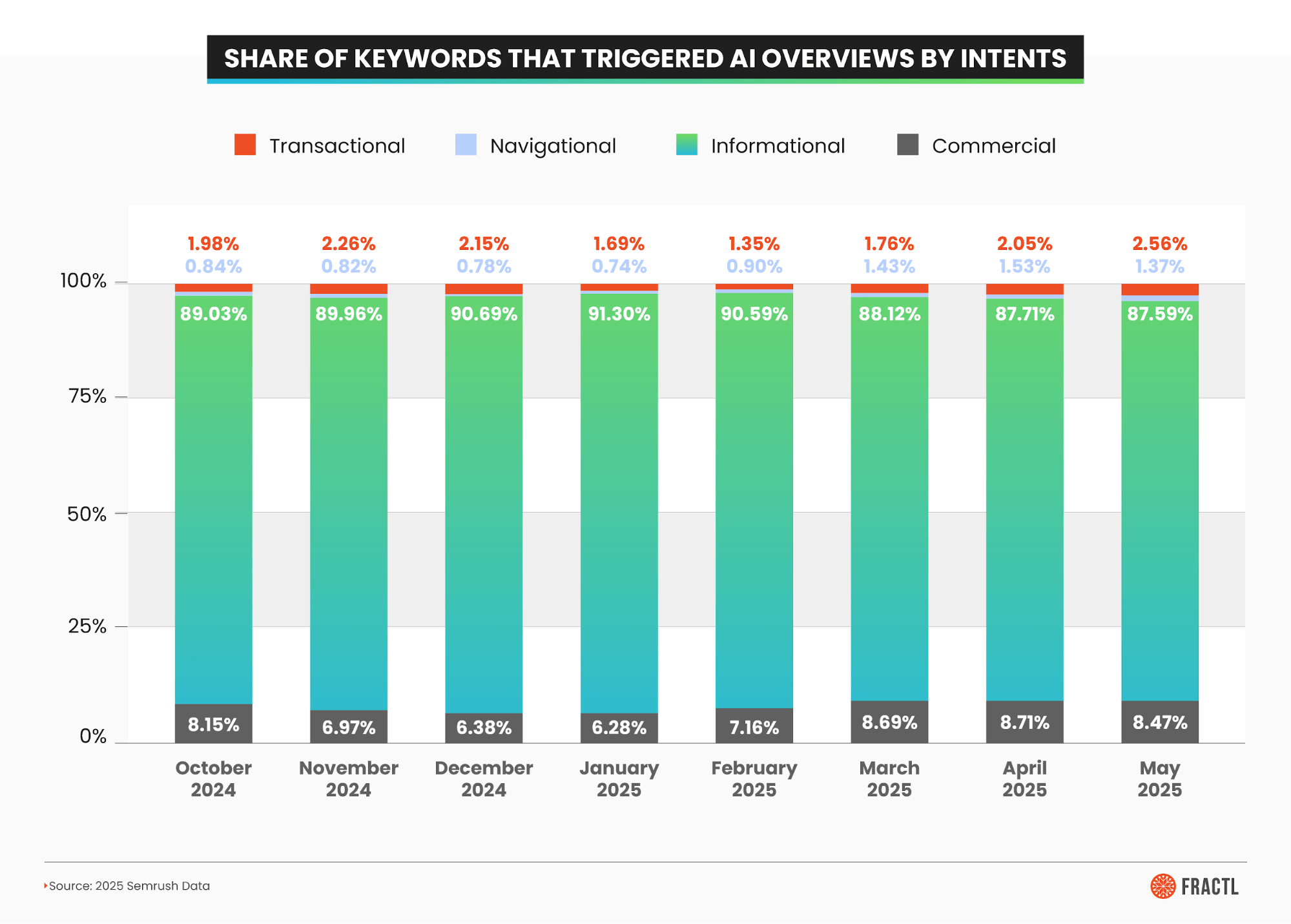
The findings reshaped how marketers think about AI search visibility. Among the headline stats:
- Brand web mentions correlate 3x more strongly with AI Overview visibility (0.664 correlation) than backlinks (0.218), and top-mentioned brands earn up to 10x more AI Overview citations.
- 70.7% of domains appearing in AI results show up only in AI Overviews, 22.1% appear only in LLMs, and just 7.2% appear in both, meaning the two systems surface very different sources.
- On the consumer side, our survey of 2,000 consumers found that 82% find AI-powered search more helpful than traditional SERPs, and 66% believe AI search will eventually replace Google.
Why it worked: Original research at this scale creates an inherently linkable asset: other publications, blogs, and industry analysts cite it as a primary source. The “GEO” framing arrived as the term was surging from under 5,000 monthly searches to 74,000 in six months, positioning Fractl at the center of the conversation. When your brand owns the research on a topic the entire industry is scrambling to understand, you own the thought leadership.
Fractl on Content Discoverability in 2026: How To Build Visibility Across Search, AI, and Social
Another thought leadership piece we produced, originally presented on Majestic’s “How To Set an SEO Strategy for 2026” livestream, examines how content gets discovered across traditional search, AI platforms, and social channels. The article synthesizes data from a study of 75,000 brands, an analysis of 17 million AI citations, and consumer behavior surveys to map the shifting dynamics of content discoverability.
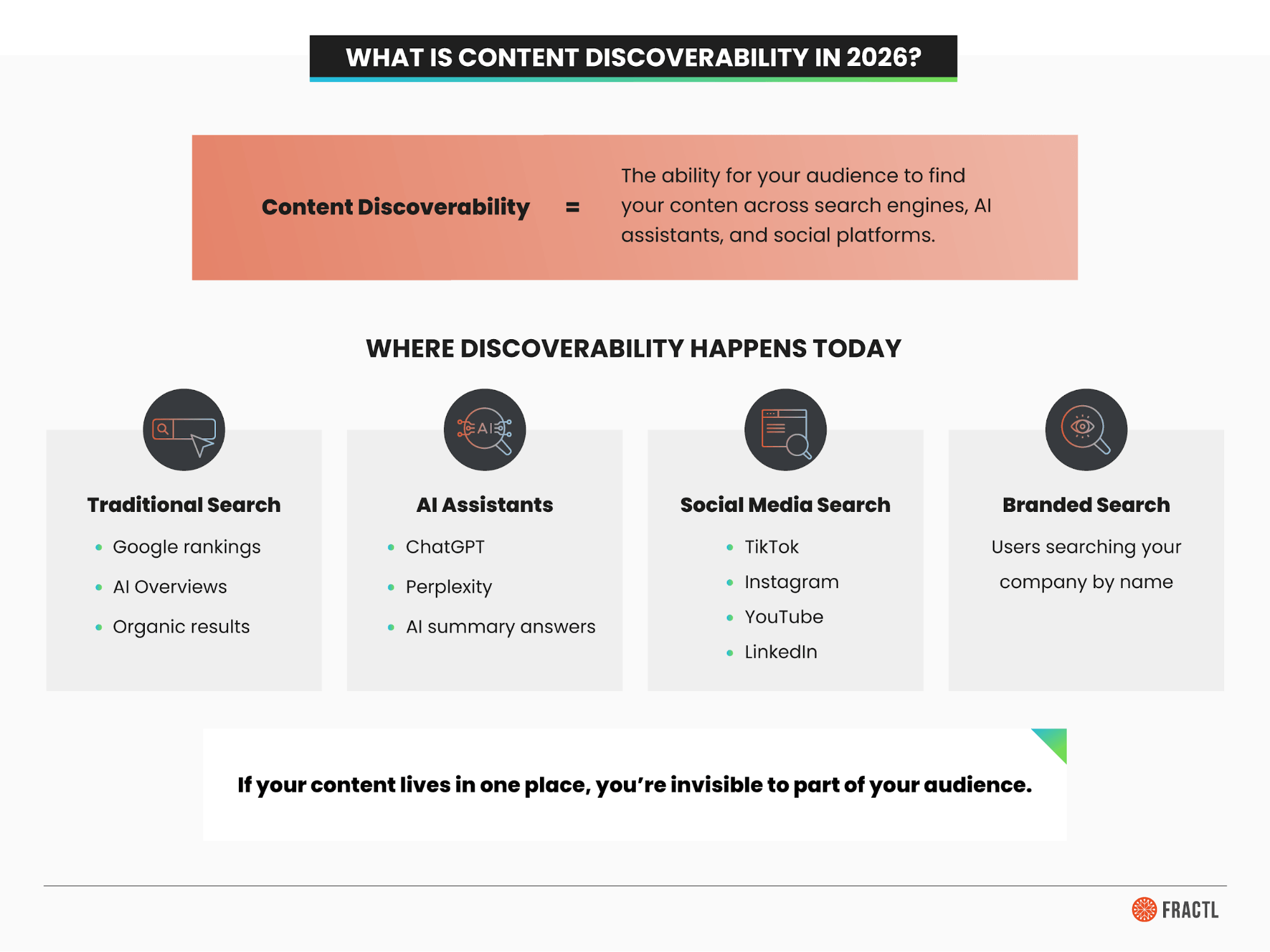
The data shows where attention is moving:
- 41% of consumers now rely on AI summary boxes instead of clicking through to websites, and 13% skip search engines entirely in favor of chatbots.
- Among Gen Z, 66% use ChatGPT to find information, nearly matching the 69% who still turn to Google.
- Nearly four in 10 marketers report organic traffic has declined since AI-powered answers rolled out, even when rankings hold steady.
- AI-cited content is 25.7% more recently updated on average than content in Google’s regular top results, making content freshness a measurable ranking signal in AI search.
Why it worked. By synthesizing multiple original data sources into a strategic framework (with five specific KPIs for 2026), this content gives marketers something immediately actionable rather than another opinion piece about AI disruption. The multi-platform lens (search, AI, and social) reflects how content discoverability actually works now, positioning Fractl’s perspective as the comprehensive one while competitors focus on single channels.
Thought leadership content works best when it arrives before the consensus forms, giving readers a framework they’ll reference as the landscape evolves.
Proactive PR and Expert Quote Examples
Proactive PR is a content marketing strategy where brands actively seek opportunities to be quoted by journalists on topics they want to be known for. Rather than waiting for a story to break, proactive PR monitors platforms where journalists seek industry experts, then develops quotes on behalf of the client’s leadership team and pitches them to relevant publications. Each placement reinforces the brand’s position as a go-to source, and the cumulative effect on brand mentions, backlinks, and brand recognition compounds over time.
A Couponing-Focused Client’s Seasonal Expert Quote Strategy
We positioned one of our clients’ Senior Trends Analysts as a go-to expert across eight different seasonal angles in a single holiday season. Each pitch targeted a different publication and topic, building Clay’s visibility as a trusted consumer savings voice across mainstream and financial media.
The placements spanned a range of outlets and seasonal topics:
| Better Homes & Gardens Secondhand gifting strategies for holiday shoppers. | U.S. News Holiday savings strategies for consumers. |
| Scripps News Keeping holiday meal costs down with smart grocery budgeting. | The Sun Black Friday deals analysis. |
| GoBankingRates Finding deals on Amazon gifts during the holiday season. | BizJournals Holiday party budgeting for small business owners. |
| Scary Mommy Discount store shopping strategies. |
Why it worked: One spokesperson, eight publications, eight distinct angles, all within a single season. The scalability of proactive PR is what makes it so effective: Clay didn’t need a new campaign for each placement. He needed the right quotes, targeted to the right journalists, on the right topics.
The cumulative effect positioned our client as a trusted source that reporters returned to throughout the holiday season and beyond, increasing the brand’s reach across new audiences with each placement.
Payless Power’s Holiday Energy Expert Positioning
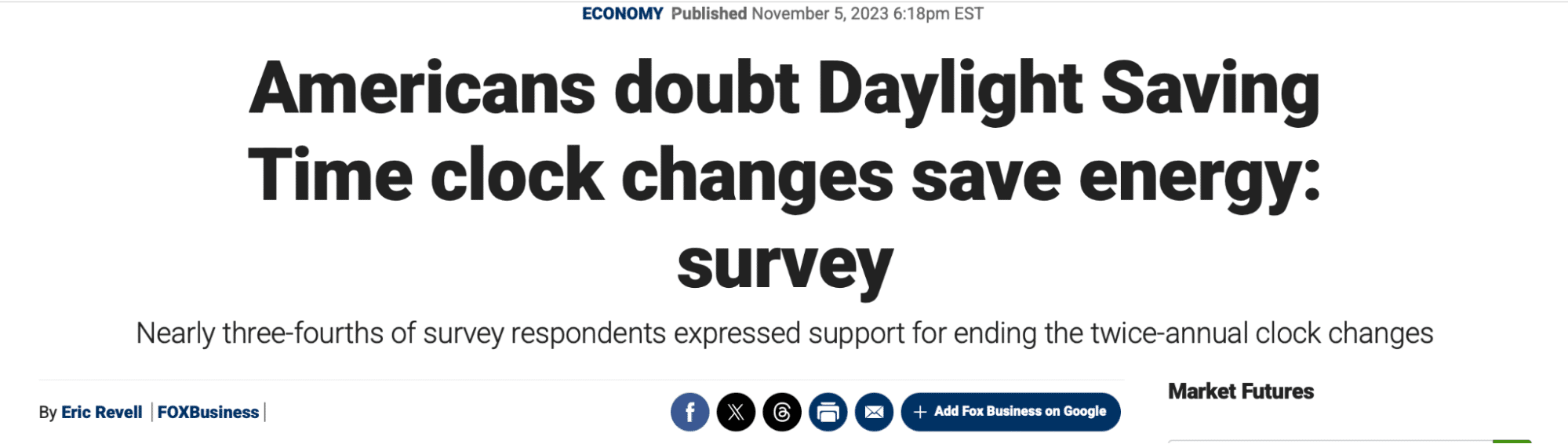
We used a similar proactive PR approach for Payless Power, positioning CEO Brandon Young as an expert on energy costs during holidays and seasonal weather events. A GoBankingRates placement quoted Brandon on why electric bills spike during the holidays, while a Fox Business placement featured Payless Power data on Americans’ opinions about daylight saving time and energy savings.
Over a 16-month full-service engagement, Payless Power secured 1,208 press mentions (450 from high-authority publishers with a domain authority above 60), a 25% increase in organic traffic, and a $57,351 monthly increase in traffic value. Proactive PR was one piece of that strategy, but the expert quote placements were critical for building the brand’s thought leadership positioning in the energy space.
Why it worked. Energy costs are a perennial consumer concern, spiking predictably around holidays and weather events. By having quotes ready before each seasonal moment, Payless Power became the expert source journalists reached for when they needed credible commentary on energy topics. That kind of brand presence doesn’t happen from one placement; it’s the result of consistent proactive PR across multiple news cycles.
How To Build a Content Marketing Strategy That Drives Brand Visibility
The examples above span different content formats, industries, and goals. But they share a common foundation: a clear content marketing strategy that ties content creation to measurable brand visibility outcomes.
Here’s the framework we use when building strategies for our clients:
- Define your business goals and KPIs. Start with what you’re trying to achieve. Brand awareness, thought leadership, lead generation, and search engine rankings each call for different content formats and distribution strategies. Your KPIs should reflect the goal: measuring backlinks and press mentions for earned media campaigns, organic traffic and rankings for SEO content, conversion rates and website traffic for bottom-of-funnel tools.
- Know your target audience. Build buyer personas that map pain points to content types across the customer journey. A small business owner researching cash flow problems needs a different piece of content than a CMO evaluating agency partners. The right audience gets the right content at the right time.
- Choose the right content formats. Match formats to goals: data journalism for earned media and brand mentions, interactive tools for lead generation, long-form guides for search engine optimization, short-form social media content for brand awareness, video for reaching new audiences, webinars and podcasts for nurturing existing customers.
- Create a content calendar. Plan content production around a mix of evergreen resources (which compound in value) and timely, reactive opportunities (which capitalize on news cycles). A successful content marketing strategy balances both.
- Distribute and repurpose across channels. Maximize your brand’s reach by repurposing content across social media platforms, email newsletters, LinkedIn, and partner channels. A single data journalism campaign can become blog posts, infographics, social media posts, podcast episodes, and email content. One piece of quality content fuels multiple content formats.
- Measure what matters. Track metrics tied to brand visibility: organic traffic, backlinks, brand mentions, social media engagement, conversion rates, click-through rates, and search engine results rankings. Use social listening to monitor how your brand presence evolves over time. I wrote about building a cross-channel brand visibility playbook that covers this in more depth, including how to measure visibility across traditional search, AI platforms, and social channels.
Your Content Marketing Should Earn Attention, Not Just Occupy Space
Every example in this article shares a common trait: the content earned something. Press coverage. Backlinks. Customer trust. Industry authority. Organic traffic that compounded over months and years. That’s what separates content marketing that drives brand visibility from content that simply exists.
If you’re ready to build a content marketing strategy that earns measurable results, explore our case studies to see the outcomes we’ve driven for brands like Adobe, McAfee, and Payless Power. When you’re ready for us to start planning your next campaign, reach out to our team at Fractl.
FAQs
What are examples of content marketing?
Content marketing spans a wide range of formats, each suited to different business goals and audiences:
- Blog posts and long-form guides
- Video content (short-form social clips, YouTube series, documentaries)
- Podcasts and webinars
- Infographics and data visualizations
- Social media content and user-generated content campaigns
- Case studies and white papers
- Email newsletters
- Interactive tools (calculators, quizzes, data explorers)
- Data-driven research campaigns (data journalism, surveys, original studies)
The most effective examples build brand visibility and thought leadership through valuable, audience-first content rather than direct promotion. A great piece of content solves a problem, answers a question, or surfaces new information that your target audience can use.
What are the 5 C’s of content marketing?
The 5 C’s of content marketing are clarity, consistency, creativity, connection, and conversion. Clarity means communicating your message without jargon or confusion. Consistency means publishing on a reliable cadence so your audience knows what to expect. Creativity means finding fresh angles and content ideas that stand out. Connection means building genuine relationships with your audience rather than broadcasting at them. Conversion means designing your content marketing efforts to move readers toward a specific action, whether that’s subscribing, sharing, or buying.
What is the 3-3-3 rule in marketing?
The 3-3-3 rule simplifies content marketing strategy: focus on three key messages about your product or service, deliver those messages in three different content formats (such as a blog post, a short-form video, and an infographic), and distribute them across three marketing channels (such as your website, LinkedIn, and email). It’s a practical framework for business owners and marketing teams who are brainstorming their content marketing plan and want a structured starting point. The takeaway is that repetition across formats and channels is what builds brand recognition and keeps your brand identity consistent across touchpoints.