SERVICES
At Fractl, organic growth strategy connects SEO, content, and digital PR to help brands grow market share without relying on acquisitions or paid media dependency. We focus on sustainable demand, brand authority, and qualified pipeline growth that compounds over time.
Our strategies are built around your business goals, not vanity metrics. We plan, execute, and measure work so progress shows up in organic traffic, search visibility, and revenue impact. With clear reporting and repeatable frameworks, you see where growth is coming from and where to invest next.
From planning to promotion, we build brand authority and qualified traffic that compounds.

An organic growth strategy expands a business using internal resources rather than mergers or acquisitions. Growth comes from strengthening brand visibility, reaching new customers, and increasing demand through channels like SEO, content marketing, and earned media.
In marketing, organic growth means:
When executed well, organic growth becomes a durable advantage that supports pricing power, pipeline stability, and long-term valuation.
Organic growth today is driven by visibility, trust, and relevance across search and discovery platforms.
High-quality content mapped to search intent helps brands reach customers earlier in the buying journey. Digital PR and earned media reinforce authority, helping that content rank, spread, and influence perception.
Ad-heavy pushes, scattered content, and disconnected campaigns limit visibility and stall momentum.
Consistent publishing, strong internal linking, and targeted outreach improve rankings, attract qualified traffic, and surface insights that inform pricing, positioning, and product strategy.
Examples of organic growth: A common example of organic growth is launching a research or resource hub that answers buyer questions, earns backlinks, and attracts organic traffic without acquisitions.
Organic growth theory centers on reinvestment. Returns are reinvested into product, content, and customer experience, creating cumulative gains that widen market share over time rather than relying on one-time deals.
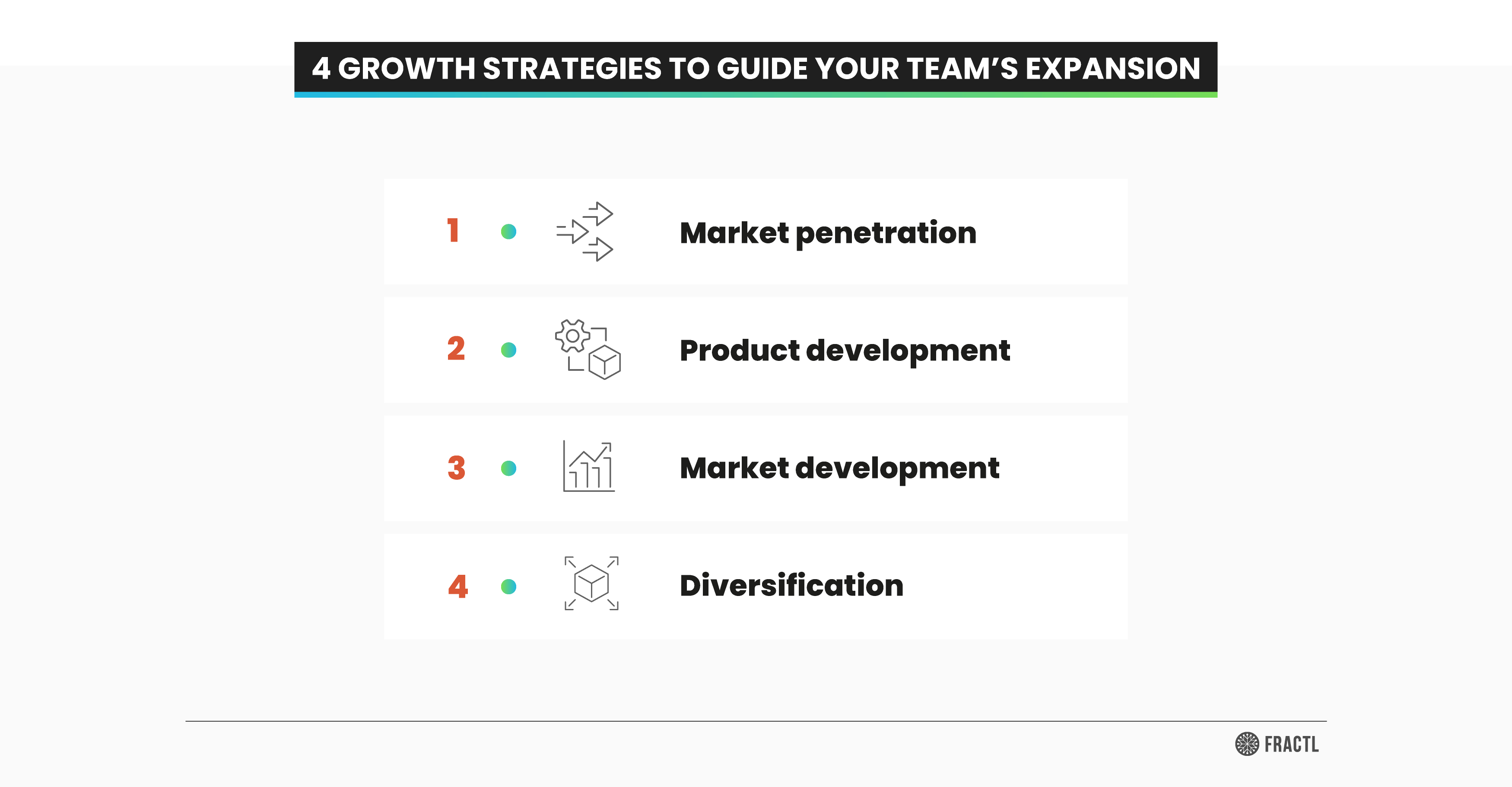
Business growth requires clear choices. You can expand through four core growth strategies that match your plan and resources. Each type of growth guides marketing efforts, surfaces growth opportunities, and keeps work aligned with your business strategy.
Increase share within your existing market. SEO supports this by targeting high-intent keywords, improving rankings, and strengthening retention through better content coverage and user experience.
Introduce new products or expand existing ones for the same audience. Search data and customer questions help validate demand, guide messaging, and shape pricing before launch.
Bring existing products into new markets or segments. Localized pages, category content, and partnerships help assess demand and establish relevance with new audiences.
Launch new products in new markets. SEO and content validate opportunities, reduce risk, and provide early traction before scaling investment. Each strategy benefits from organic growth programs that surface demand signals and build authority ahead of expansion.
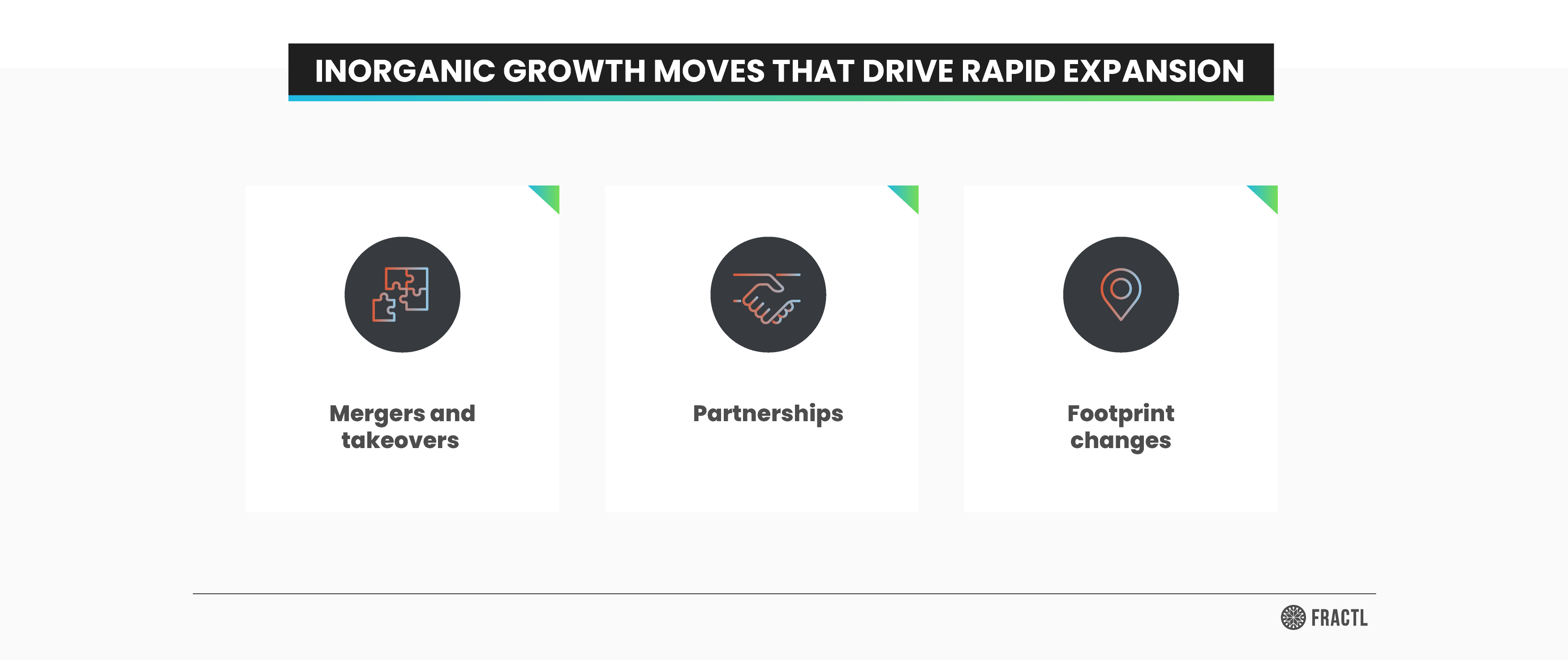
Inorganic growth delivers big jumps, not gradual gains. You expand through inorganic growth strategies that sit outside daily operations. When timing and fit are right, these moves can shift market share.
Common moves include:
Well-executed mergers and partnerships can raise valuation through scale and efficiencies. They can also pressure cash flow in the short term during integration. A focused integration plan lowers risk and positions the business to capture the upside.
Organic growth strategies sustain demand before and after mergers and takeovers. Your content and digital PR efforts earn authoritative backlinks with credible citations. Those signals support ranking and steady demand, which helps new assets ramp faster after a deal closes.
Most brands blend both approaches. Inorganic moves bring speed or access. Organic programs compound results, retain customers, and keep growth predictable.
We focus on outcomes you can measure: rankings, organic traffic, referring domains, and qualified pipeline contribution.
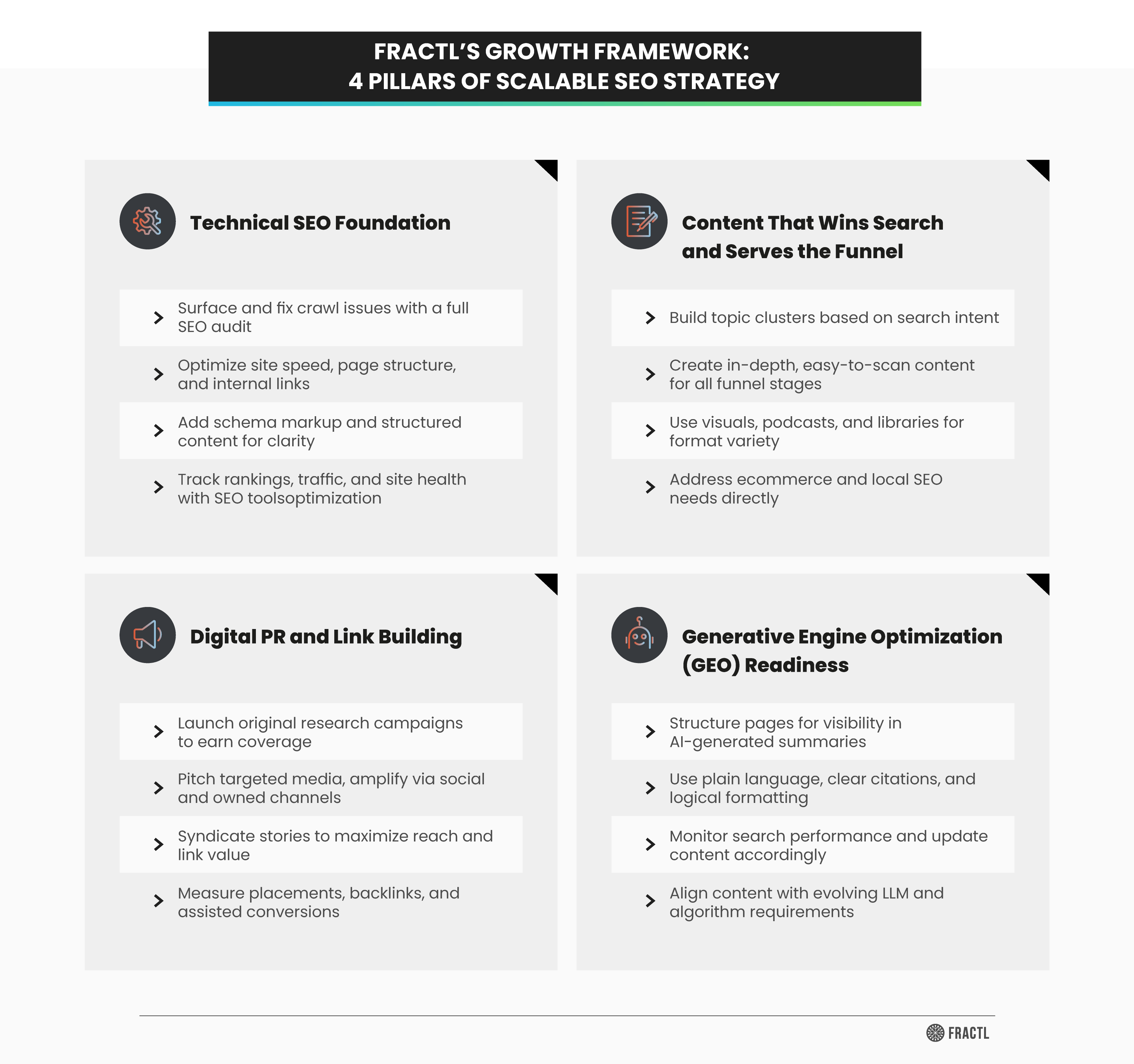
Our plan for your business connects four pillars that work together across search and earned media. We build a technical SEO foundation, publish quality content, earn news coverage and backlinks, and optimize your site for AI-driven discovery.
Progress measurement is clear and transparent. For each pillar, you'll see keyword rankings, organic traffic, referring domains, search visibility, and qualified pipelines.
The goal is sustainable growth aligned with your business strategy and visible movement in market share and revenue growth.
Technical SEO aligns your website with search engine optimization goals and your business strategy. We start with an SEO audit to surface issues that block crawlers and bots. Work spans website performance and page speed, so pages load quickly and index cleanly. Metrics guide priorities and track gains.
On-page SEO covers the essentials. Pages need clear headings, accurate alt text, and strong page titles. Title tags and a concise meta description help set expectations. Internal links connect related topics and fix broken links. Schema markup and structured content clarify meaning for crawlers and support E-E-A-T.
Measurement keeps the work accountable. Google Search Console and Google Analytics show keyword rankings, website traffic, and bounce rate. Ahrefs and SEMrush round out the SEO tools set for auditing, monitoring, and opportunity finding. Each ranking factor is documented so changes tie back to metrics you care about.
One line for compliance and clarity. We optimize templates, internal links, and crawl paths using proven optimization strategies. Off-page SEO then supports authority through earned coverage and backlinks, which pair with your ongoing initiatives. The result is a crawlable, fast site that lifts visibility and gives future content a better chance to rank.
Content marketing starts with topic mapping. We plan clusters around search queries and search terms so your content creation tracks customer needs and supports current product lines. Each piece fits an effective SEO strategy and a clear stage in the sales funnel.
We build articles and resources that answer real questions for your target audience. Pages go in-depth where it matters and stay easy to scan for readability. Clear sections and direct answers help a web page earn snippets and reach the first page of search engine results pages.
Formats match intent and channel.
E-commerce and local SEO get dedicated attention. Category explainers, buying guides, and store pages map to specific keywords and common objections. Local pages address service areas, proof, and contact options so visitors can act.
Measurement closes the loop. We review coverage gaps, expand winning clusters, and retire weaker topics. Brand visibility improves as clusters mature and connect across the site, giving new visitors a clear path from research to request.
As clusters mature, internal links strengthen authority and guide visitors from research to request.
Digital PR turns original research into news coverage that earns authoritative backlinks. We run data journalism campaigns that analyze datasets, surveys, and public records. Reporters gain timely angles with clear citations. Your site gains off-page SEO in the form of brand mentions on authoritative sites, which drives keyword rankings in organic search and brand visibility across genAI platforms.


Promotion is a multichannel effort.
Backlinks compound value when stories travel. Syndication spreads results. Roundups and weekly newsletters carry findings to new audiences. Even AI-generated summaries draw from cited sources, which rewards clear methodology and transparent data notes.
Results tie back to growth. Strong coverage builds authority that helps you enter new markets and form partnerships. Startups gain credibility faster. High-growth teams defend positions while expanding categories. Each campaign adds to a library of assets that reporters can reference again and again.
We measure placements, referring domains, and assisted conversions. Insights feed the next campaign so coverage stays timely, relevant, and aligned to commercial goals.
In addition to traditional SEO strategies, Fractl prepares your site for GEO. This enables your pages to surface in generative AI overviews across AI models such as Google's AI Overviews, Bing, Perplexity, Perplexity AI, ChatGPT, and Gemini.
The goal is simple for GEO strategy: align content and structure to user queries and user intent so AI-powered search engines can select and cite your work.
What you get:
Our approach to optimizing content keeps pace with how AI systems analyze information through natural language processing. As generative search expands and more platforms use AI to deliver AI-generated responses, your site remains structured, credible, and ready to earn visibility in this new search landscape.
As pages mature and clusters deepen, compounding effects emerge. Brands gain defensible market share, predictable acquisition, and clearer demand signals across segments.
Success shows up in the numbers you review each week. SEO performance improves, search traffic rises, and qualified leads move through the pipeline. As rankings strengthen and referring domains grow, you see steady gains in market share and clearer demand signals across segments.
Month-over-month growth in traffic across search, social, and AI discovery.
Authoritative backlinks and brand mentions drive brand authority.
Increased visibility across organic search through improved keyword rankings and featured snippets, as well as greater visibility in GenAI as a result building your entity recognition and knowledge graph.
Qualified organic traffic growth, form fills, demo requests, and increased conversions.
Campaign metrics roll up to revenue growth. Stronger visibility drives better lead quality and a healthier pipeline. Content and digital PR open growth opportunities in categories that matter to your target accounts. Teams make decisions with confidence because metrics tie directly to initiatives and timelines.
Over time, compounding effects appear. Pages mature, clusters deepen, and coverage expands into new topics. These outcomes support valuation by showing durable acquisition, defensible market share, and consistent search traffic. The framework gives you a clear view of what is working now and where to invest next, so results keep building.
Fractl supports brands across B2B SaaS, finance, health, real estate, consumer, and e-commerce. Programs adapt to your target market and the stage you are in. Startups launching new products get clear plans for new markets and new business. Established teams scale what works with repeatable workflows.
Where we focus:
Demand content, category pages, and partner plays.
Authority building with cited research and service pages.
Local SEO, location content, and review signals.
Category explainers, buying guides, and comparison pages.
Each engagement connects search goals to business goals. Planning support, clear timelines, and reporting keep work on track. Local SEO supports regional growth. E-commerce pages answer shopper questions and capture intent.
Launch programs align content, PR, and outreach so new products enter new markets with a clear path to your target market.
Our step-by-step process keeps your SEO efforts accountable and tied to outcomes. An SEO expert guides each stage with clear metrics.
A clear partnership and a team focused on outcomes. You know who does what, how work moves, and which metrics matter.
Account manager, SEO strategist, content lead, PR lead, and design or analysis support as needed.
Quarterly roadmap, content calendar, and campaign schedule with simple checkpoints.
Senior editor review for AP style, fact checking, and source notes to support E-E-A-T.
Dashboard tracking ranking, organic traffic, referring domains, leads, and pipeline contribution.
Slack and email for fast feedback. Stakeholder reviews at key stages.
Content refreshes, link reclamation, and internal link updates that keep momentum.