




Table of Contents
- What Is SEO and Why Does It Matter for Businesses?
- Average Cost of SEO in 2026
- SEO Pricing Models Explained
- Comparing SEO Agencies to Freelancers and In-House Teams
- Factors That Influence the Cost of SEO
- How To Budget for SEO Services
- Set the Right Budget for SEO Pricing in 2026
- FAQ About SEO Pricing
Search engine optimization (SEO) is one of the most effective long-term investments a business can make, but SEO pricing in 2026 varies widely. The SEO cost for a full-service agency won’t look the same as that of a solo freelancer, and the right option often depends on your marketing strategy, goals, and budget.
This guide explains SEO pricing — everything from monthly retainers to one-time SEO audits and full content marketing or digital PR campaigns. If you want to grow organic traffic with technical SEO or boost brand visibility through high-quality content and backlinks, this resource provides realistic benchmarks and practical planning tips.
Business owners, startups, and marketing teams will learn what drives SEO cost, how pricing models work, and how to choose services that align with their SEO strategy. Our goal is to help you build an SEO budget that supports long-term search engine optimization success without wasting spend.
What Is SEO and Why Does It Matter for Businesses?
Search engine optimization (SEO) is the process of improving a website’s visibility in search engine results pages (SERPs) to attract organic traffic. It includes both technical enhancements and content strategies that help your site appear for relevant keywords.
Investing in SEO services supports long-term growth by improving discoverability, attracting qualified leads, and reducing reliance on paid ads. As part of a broader digital marketing strategy, SEO is essential for businesses that want to stay competitive online.
Four Types of SEO
A successful SEO strategy includes multiple approaches that work together to improve rankings and reach. The four types of SEO are:
- On-page SEO. Optimizing page content, title tags, headers, and internal linking to improve relevance and keyword targeting.
- Off-page SEO. Building backlinks and brand mentions from reputable sites to boost authority and trust signals.
- Technical SEO. Improving site speed, crawlability, indexing, and structured data to help search engines better understand your website.
- Local SEO. Targeting local search queries through Google Business Profile optimization, local citations, and geographically relevant content.
Together, these types support comprehensive SEO efforts, ensuring that your website meets algorithm expectations while delivering high-quality content.
SEO Return on Investment
When you look at SEO cost, it’s important to also look at the return — in other words, what your investment buys in terms of organic search results. A strong SEO strategy helps lift your website’s rankings and visibility in the SERPs, which then drives more organic traffic and gives you more opportunities to convert visitors into customers.
By delivering high‑quality content, optimizing user experience, and earning authoritative backlinks, you support your business goals of growth and revenue. For example, one backlink from a reputable site may improve your domain authority and help you rank for a keyword that brings qualified leads, improving the ROI of your SEO efforts.
In many cases, SEO also complements social media and other channels by amplifying long-term visibility rather than just short-term ad spend. Because organic traffic isn’t subject to per‑click fees like PPC, the upfront cost of SEO can pay off over time as you build equity in your site’s content and linking profile.
Average Cost of SEO in 2026
Here’s a breakdown of typical pricing models for SEO in 2026, and how costs vary by business size and tactic.
Differences by Business Size
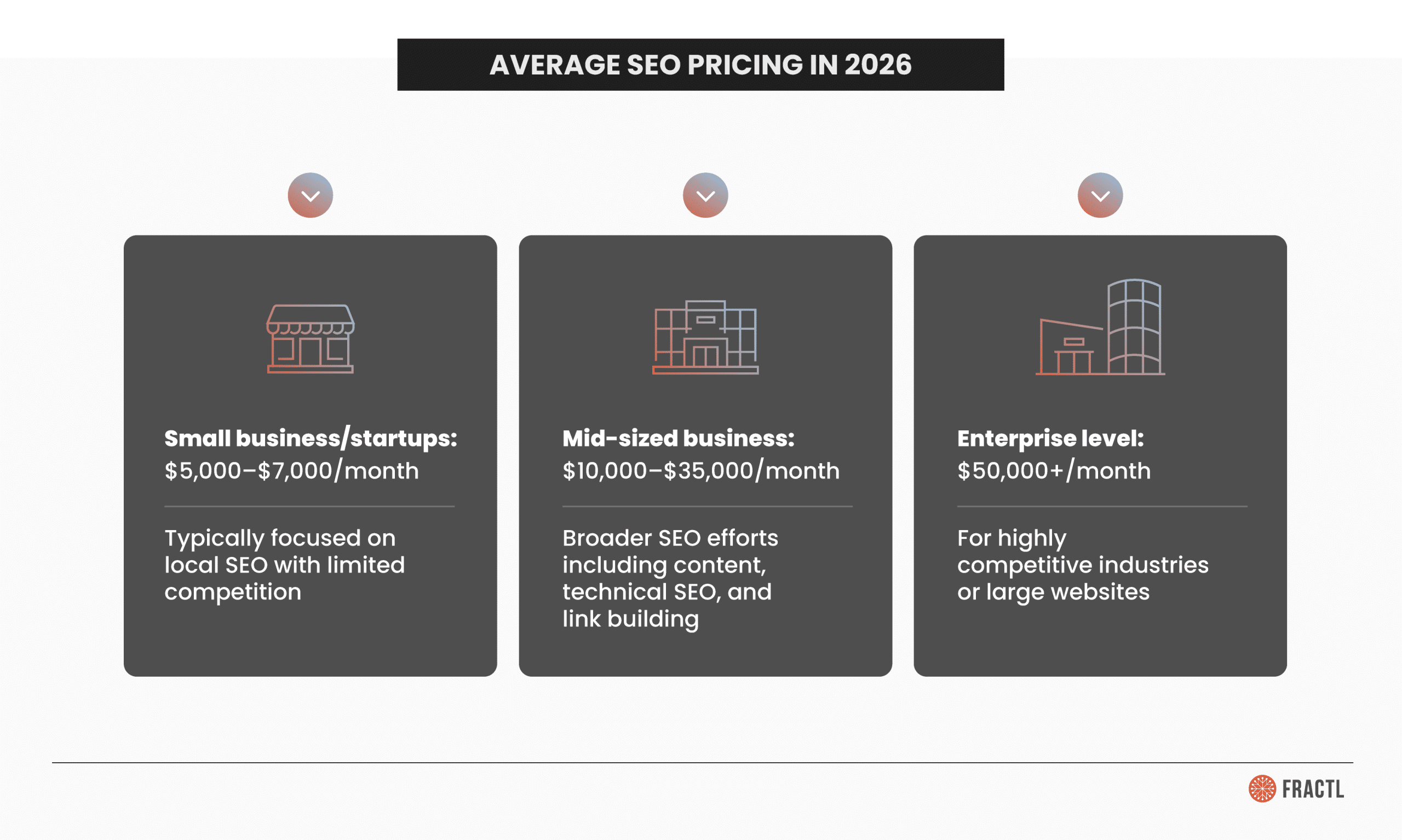
Price can also depend on the size of the business.
- Small business/startups: For smaller websites with limited competition, costs can range from $5,000-$7,000 per month. Results may be more limited to something like local SEO only.
- Mid‑sized business: Common budgets range from $10,000-$35,000 for larger-scale, broader SEO efforts, including content, technical SEO, and link building.
- Enterprise level: For highly competitive industries or large websites, monthly retainer costs may exceed $50,000, going higher depending on scale.
Comparing SEO Costs With Other Marketing Tactics
While PPC (pay-per-click) often requires ongoing spend tied directly to clicks, SEO is more of a long-term investment where, once you build ranking and authority, your “cost per visit” may drop over time.
For example, a one-time optimization project may cost $5,000-$10,000, but the resulting traffic may continue for months or years if maintained — unlike paid ads, which stop when the budget stops. This means that, for a given marketing budget, investing in comprehensive SEO may yield more durable results than strictly PPC spending.
Variables That Affect SEO Cost
Several key variables cause significant cost variation:
- Scope of services (content creation, technical fixes, link building)
- Level of competition and keyword difficulty
- Location and market of target business (local vs. national vs. global)
- Size of website and number of pages
- Quality and experience of the SEO provider
Because of these factors, two businesses might both “need SEO,” but one pays $5,000 per month while the other pays $15,000 per month. It’s important to align your marketing budget with realistic expectations based on your goals, market, and service level.
SEO Pricing Models Explained
There’s no one-size-fits-all approach to SEO pricing. Different models suit different business needs. From startups testing the waters to enterprises seeking full-scale strategies, understanding how SEO pricing models work can help you choose the right fit.
Common Pricing Models
Most SEO providers offer one or more of the following pricing models. Each comes with different SEO deliverables, costs, and flexibility — which means the best option depends on your business size and goals.
- Hourly. This model is ideal for short-term or consultative SEO work, such as reviewing a site structure or optimizing a few pages. It’s common among freelancers and smaller providers.
- Monthly retainer. Agencies and full-service providers often use retainers to deliver consistent SEO services. This includes ongoing keyword tracking, technical updates, and content optimization — best suited for businesses with long-term growth goals.
- Project-based. For one-time needs like a site migration or SEO audit, project-based pricing provides a clear scope and deliverables. It’s a popular choice for startups and companies testing a new service provider.
- Performance-based. Some providers charge based on specific results, such as increased rankings or traffic. While appealing, this model can be risky — results may depend on external factors like competition and algorithm updates.
Typical SEO Packages
SEO packages usually combine services into a clear plan. While the services differ by provider, most SEO packages include the following:
- Keyword research. Identifying high-value terms that align with your business goals and search intent.
- SEO audit. Analyzing your site’s technical structure, content, and backlinks to uncover issues and opportunities.
- Content creation. Producing optimized, high-quality content to support target keywords and user needs.
- Link building. Securing backlinks from authoritative sites to improve domain authority and search rankings.
- Reporting. Delivering regular updates on performance metrics like traffic, keyword positions, and Google Business Profile visibility.
- Local SEO services. Optimizing your site for local search with citations, reviews, and location-specific content.
These packages can be tailored to fit business size, SEO experience, and budget. This helps match service scope with specific goals.
Comparing SEO Agencies to Freelancers and In-House Teams
Here’s a comparison of the three main provider models, along with their advantages, drawbacks, and typical cost/ROI implications.
| Agencies vs. Freelancers vs. In-House Teams | ||||
|---|---|---|---|---|
| Provider type | Cost | Expertise | Scalability | ROI potential |
| In-house team | High upfront cost (salaries, tools, training) | Deep brand knowledge, full control | Depends on hiring/structure | Potentially high long‑term if managed well |
| Freelancer | Lower cost hourly/project-based | Flexible, may specialize in one area | Limited bandwidth | Good for minor updates or startups |
| Agency | Mid to high monthly retainer or project fee | Full suite of services, seasoned team | Easily scalable | Best for larger campaigns with broad scope |
When each option fits best:
- Use an in‑house team if your business has steady SEO needs, already has staff, and wants full control.
- Choose a freelancer if you have a limited budget, clear small‑scale deliverables, or need one‑time assistance.
- Opt for an agency if you want full support across content, links, technical SEO, and reporting — especially beneficial for businesses aiming for growth or operating in competitive markets.
Ultimately, aligning your provider choice with your business needs, budget, and goals ensures the best fit and return on investment.
Factors That Influence the Cost of SEO
Several variables play a significant role in determining the cost of SEO services. The cost of SEO fluctuates based on the amount of work required, the competitiveness of your market, and the goals your business aims to achieve.
Here are key cost‑influencing factors:
- Service scope. The more comprehensive the SEO work — like content creation, technical fixes, link building, and reporting — the higher the cost. Projects involving site migration or advanced analytics typically cost more.
- Website size and complexity. Large e‑commerce sites with thousands of pages require more effort than basic brochure‑style sites, which translates to higher SEO costs.
- Competition and market reach. Local businesses in low-competition markets often pay less than national or global companies targeting saturated industries.
- Business goals and expected outcomes. More aggressive goals — like rapid growth or major ranking lifts — generally require larger budgets.
- Local SEO vs. national SEO. Local SEO campaigns are typically more affordable than national efforts, which demand broader keyword targeting and more intensive link building.
- SEO provider type. In-house teams involve salaries, tools, and training costs; freelancers often charge less but may have limited bandwidth or tools; agencies charge more but bring comprehensive expertise and scalable solutions.
- SEO tools and expertise. Premium tools like Ahrefs and Semrush, along with experienced strategists, raise the cost — but often deliver stronger results.
- Deliverables and performance metrics. The more deliverables you require — such as content, backlinks, technical fixes, and reports — and the higher the expected performance, the more you’ll need to invest.
How To Budget for SEO Services
Setting a realistic SEO budget means matching your marketing budget with your business goals, current online presence, and competitive landscape. Follow these steps to help with your budgeting process:
- Assess your current SEO standing and business goals. Determine where you are (site condition, website traffic, rankings) and where you want to be (growth, geographic reach, conversions).
- Estimate the scope of services needed. Based on your goals, identify deliverables such as content creation, link building, technical fixes, and user‑experience improvements.
- Allocate a portion of your marketing budget to SEO. For many businesses, SEO represents a meaningful portion of digital marketing spend, ensuring you allocate enough to meaningfully impact organic search.
- Compare pricing models and providers. Decide whether hourly, project‑based, or retainer‑based models align with your budget and project goals.
- Calculate expected return on investment (ROI). Estimate how organic traffic growth, improved rankings, and conversions link to revenue — then compare to your budgeted spend.
- Keep your budget flexible. SEO often takes six to 12 months to show results. Plan to scale or adjust once performance data comes in, rather than locking in one rigid number.
- Monitor key metrics and adjust. Track organic search growth, conversion rate, backlink acquisition, and user experience improvements. Use data to refine your budget for future phases.
By following these steps, you build a strategic SEO plan that ties directly to business goals, aids in forecasting results, and allows alignment with your expected outcomes.

Set the Right Budget for SEO Pricing in 2026
When properly executed, an SEO strategy delivers long-term cost-effectiveness by driving organic search traffic, improving rankings, and supporting business goals rather than relying solely on ads.
To get the most value, match the right pricing model (hourly, project‑based, retainer) to your business size, goals, and internal capacity. Interested in support from SEO experts? Explore Fractl’s SEO and content marketing services — we tailor plans to your budget and growth ambitions.
FAQ About SEO Pricing
Below are some of the most common questions business owners ask about SEO project costs. These help clarify decision‑making factors for local businesses and startups that aim to make high‑quality content pay off.
Why do SEO prices vary so much?
SEO pricing can differ significantly based on several factors. Here are the most common reasons for the wide range in costs:
- Level of expertise. Agencies typically charge more than freelancers due to broader resources and experience.
- Scope of services. Comprehensive campaigns, which include backlinks, technical SEO, content creation, and UX work, cost more than basic on-page optimization.
- Location and market. Local SEO tends to be more affordable than national or enterprise-level strategies, which often involve higher levels of competition.
- Perceived value. Higher prices don’t always guarantee better outcomes — evaluate the provider’s track record, deliverables, and fit with your business goals.
Are monthly SEO packages worth the investment?
Yes. Bottom line: Monthly SEO packages often provide more substantial ROI for small businesses and startups because they support consistent growth over time. Ongoing services like content updates, link building, and technical improvements build equity in your website and help sustain organic traffic gains.
Compared to one‑time projects, monthly plans allow for adaptation and scaling as results come in. If you only need a one‑off fix (e.g., site audit), then a project‑based model may suffice — but for sustained growth and long‑term organic traffic, monthly packages tend to be the better choice.